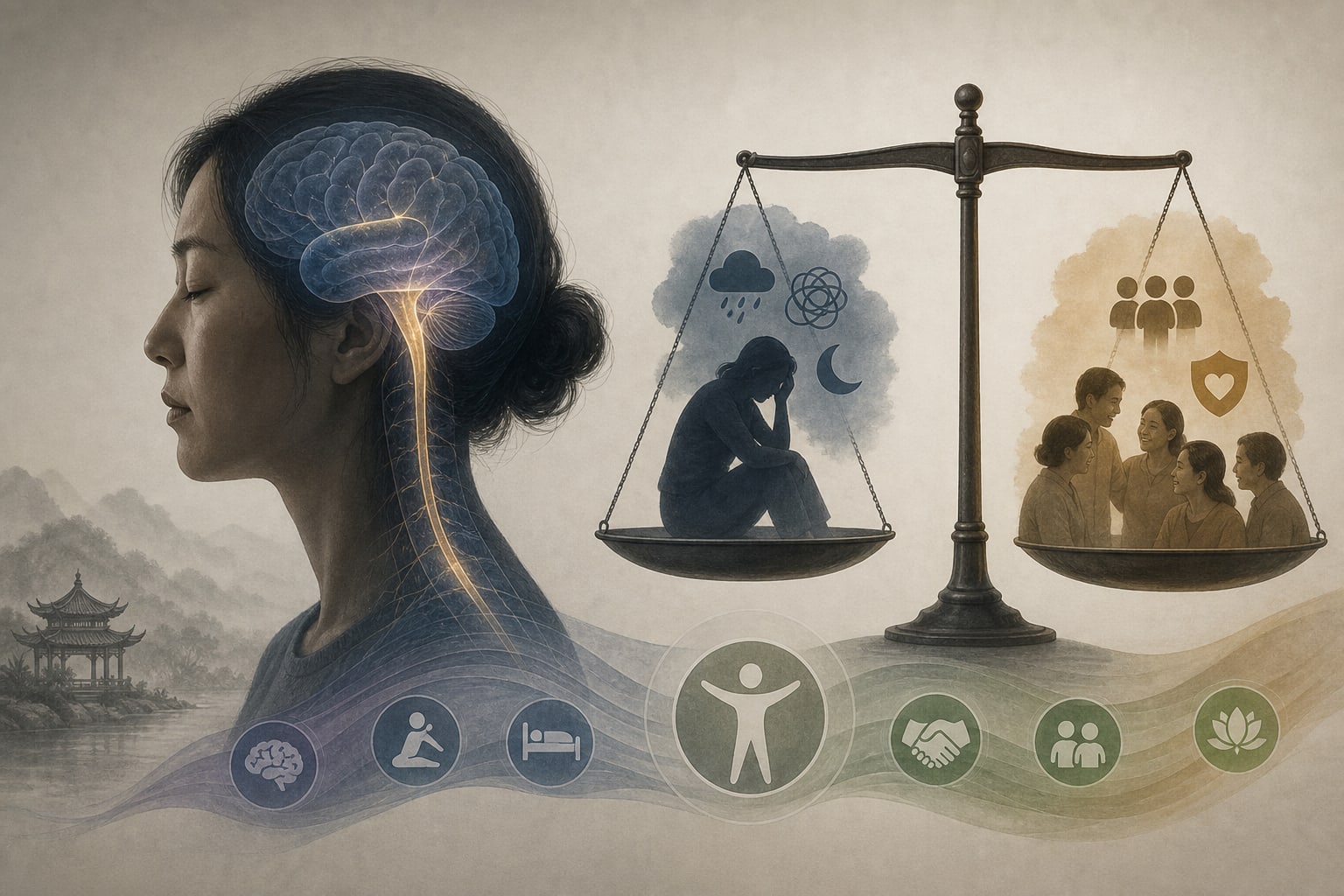
To examine health-related quality of life (HRQoL) and its biopsychosocial determinants in Chinese patients with neuromyelitis optica spectrum disorder (NMOSD).
Approach:
Key Findings:
The cohort had a median age of 37, with 85.2% being female.
Significantly reduced median PCS (55.5) and MCS (51.0) were observed, with role-physical (25.0) and role-emotional (33.3) being the most impaired.
Older age, depressive symptoms, social avoidance, and poor sleep were independently associated with worse PCS.
Depressive symptoms, social avoidance, poor sleep quality, and lower resilience were significant factors for MCS.
Interpretation:
Psychosocial factors critically influence HRQoL in Chinese NMOSD patients.
Conclusion:
Multidimensional, culturally sensitive interventions targeting mental health, sleep, and social functioning may improve patient outcomes.