Pathological stratification and therapeutic implications for post-stroke depression based on a multidimensional biomarker panel: a narrative review - Summary - MDSpire
Advertisement
Pathological stratification and therapeutic implications for post-stroke depression based on a multidimensional biomarker panel: a narrative review
To summarize current evidence on multidimensional biomarkers and related mechanisms in post-stroke depression (PSD), emphasizing monoaminergic dysfunction, neuropeptide alterations, neurotrophic signaling, and immune-inflammatory dysregulation.
Approach:
Search Strategy: A structured literature search was performed in PubMed/MEDLINE, Web of Science, Embase, and the Cochrane Library for studies published up to December 15, 2025, focusing on PSD and related biomarkers.
Eligibility Criteria: Studies were included if they involved patients with PSD or stroke survivors at risk of PSD, investigated relevant biomarkers, or provided mechanistic evidence related to the multidimensional biomarker framework.
Key Findings:
Post-stroke depression (PSD) affects approximately 30% of stroke survivors and complicates recovery.
Current treatments, primarily SSRIs, show inadequate response in 30-50% of patients.
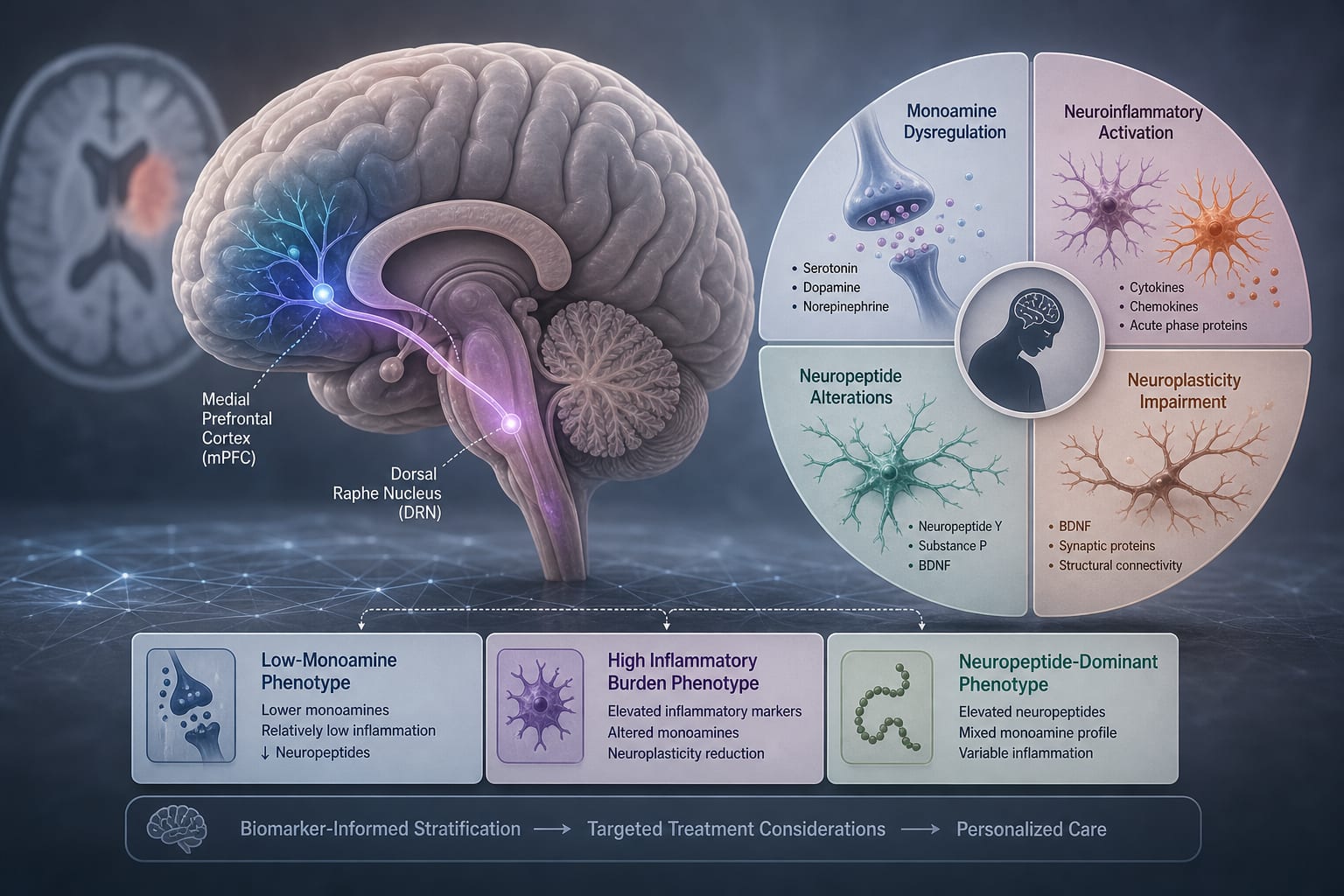
PSD is biologically heterogeneous, necessitating a biomarker-informed phenotypic framework.
Provisional phenotypes include low-monoamine, high inflammatory burden, and neuropeptide-dominant phenotypes.
Biomarkers should be viewed as tools for risk stratification rather than stand-alone diagnostic substitutes.
Interpretation:
This review provides an evidence-informed conceptual framework for future biomarker-guided research in PSD.
Limitations:
Phenotype-treatment links remain preliminary and should be interpreted with caution.
Current biomarkers are not validated clinical treatment categories and should complement clinical assessments.
Conclusion:
The article offers a synthesis of evidence and outlines future directions for research on biomarkers in PSD.