To provide insight into the current understanding of small cell lung cancer (SCLC) biology, including its epidemiology, risk factors, genetic features, and molecular subtypes, with a focus on biomarkers and inhibitors targeting cancer stem cells (CSCs).
Approach:
Review of SCLC Biology: An in-depth review of the genetic and transcriptional heterogeneity of SCLC, including key mutations and regulators.
Biomarker Identification: Discussion on distinct functional biomarkers that aid in early detection, diagnosis, and prognosis of SCLC.
Therapeutic Insights: Exploration of recent therapeutic strategies targeting CSCs to overcome drug resistance.
Key Findings:
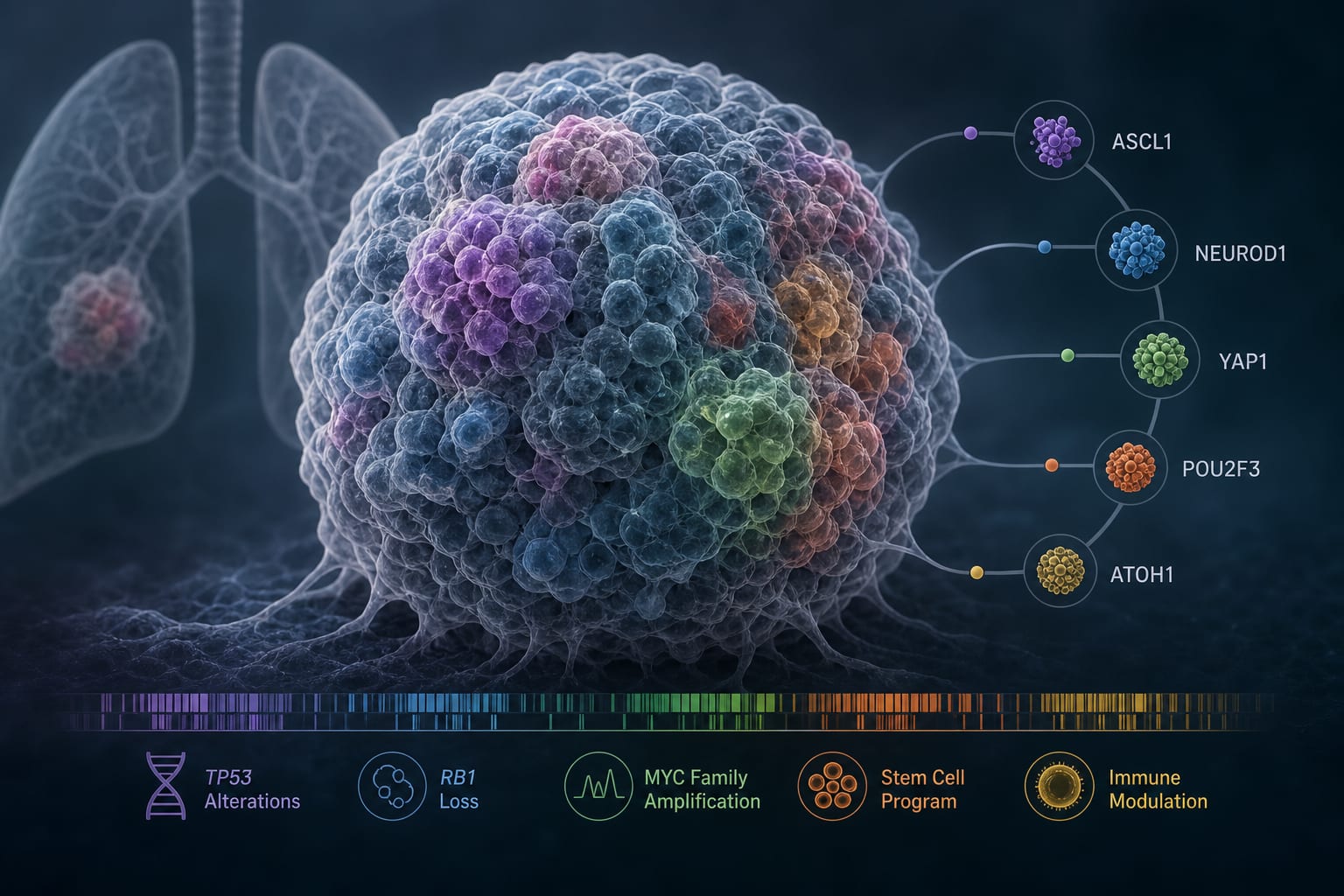
SCLC is characterized by extensive genetic and molecular heterogeneity, including mutations in RB1, TP53, and MYC.
Key regulators such as ASCL1, NEUROD1, YAP1, POU2F3, and ATOH1 have been identified.
Biomarkers including molecular, circulating, miRNA, and LncRNA can aid in early detection and personalized treatment.
Combining molecular diagnosis with targeted therapies may enhance prognosis in SCLC patients.
Interpretation:
The findings highlight the complexity of SCLC and the potential for targeted therapies based on genetic profiling and biomarker identification.
Limitations:
The review does not provide specific clinical trial data or outcomes related to the discussed biomarkers and therapies.
There is limited information on the long-term effectiveness of targeted therapies in diverse patient populations.
Conclusion:
The review emphasizes the need for novel therapeutic strategies and the role of biomarkers in improving management and outcomes in SCLC.