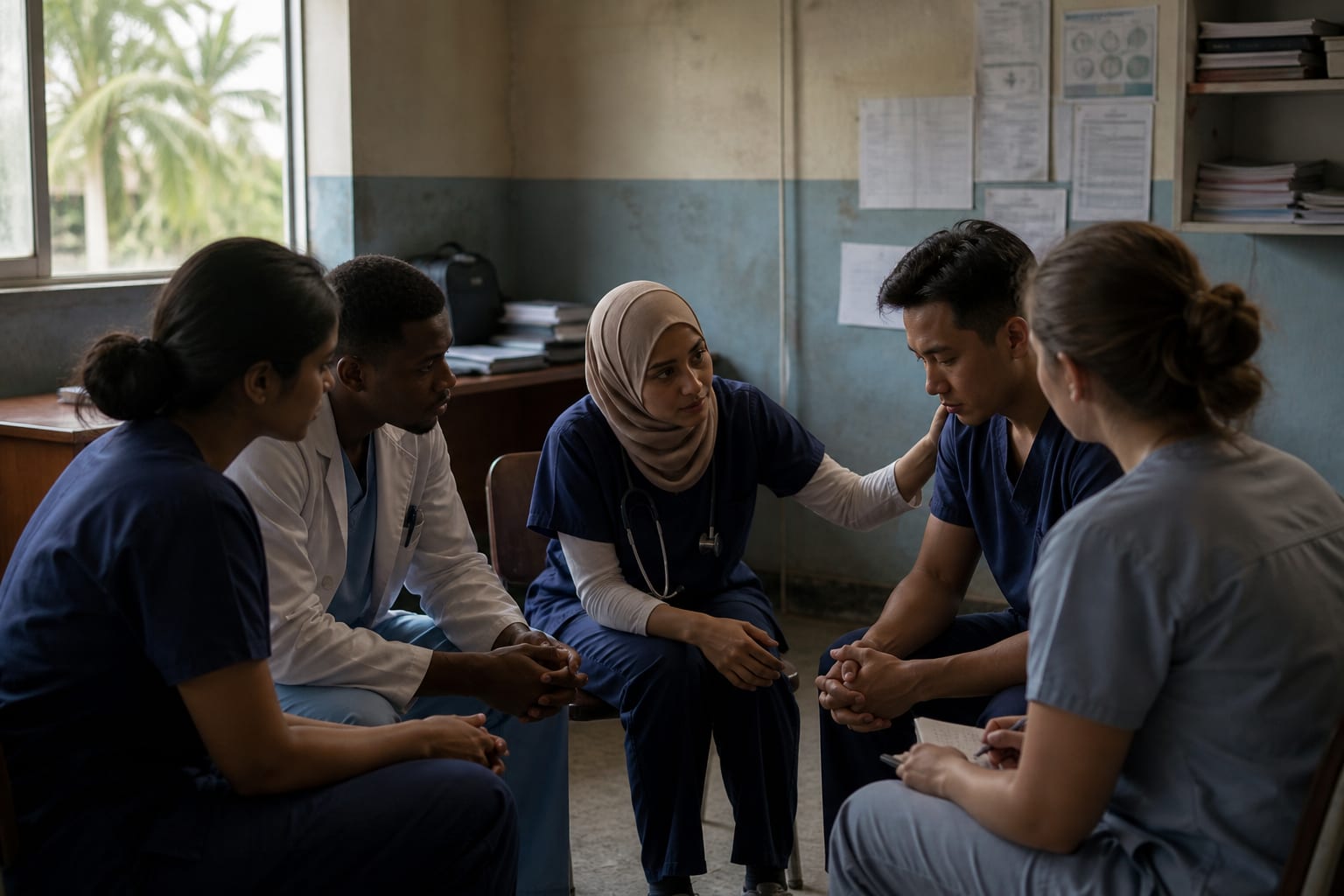
To describe the need to move from fragmented or coordinated mental health services toward integrated, person-centered systems that learn continuously, with lived experience informing system design and evaluation.
Approach:
Lived experience: The editorial argues that people’s lived experience and expertise should inform mental health research, service development, delivery, and evaluation.
Systems change: It contrasts siloed services with integrated systems that share goals, governance, infrastructure, information, policy, and evaluation frameworks.
Journal role: The editors describe IJMHS as a platform for evidence supporting systems change, particularly with an equity focus for low- and middle-income countries.
Key Findings:
The editorial cites an estimate of approximately 1.2 billion people worldwide living with a mental health disorder and projected costs exceeding $6 trillion by 2030.
It describes mental health services in many countries as underdeveloped, under-resourced, fragmented, and constrained by silos.
The authors state that inadequate service-user engagement and retention should be understood as a service or system failure, not a failure of users.
Lived experience expertise combines personal experience with knowledge and skills that can be applied to support others and inform services.
Interpretation:
The authors call for mental health systems to progress beyond coordination toward integrated, person-centered learning systems that use evidence and practice for continuous improvement and respond equitably to need.
Limitations:
The provided text is an editorial describing a vision and argument, not a report of original empirical research.
The supplied article context ends mid-sentence, so its full discussion and any additional qualifications are unavailable.
Conclusion:
The editorial presents inclusion of lived experience and system-wide integration as central elements of the proposed transition to continuous learning in mental health care.