Association between Cabrol shunt and new-onset atrial fibrillation after acute type A aortic dissection surgery: a retrospective study - Summary - MDSpire
Advertisement
Association between Cabrol shunt and new-onset atrial fibrillation after acute type A aortic dissection surgery: a retrospective study
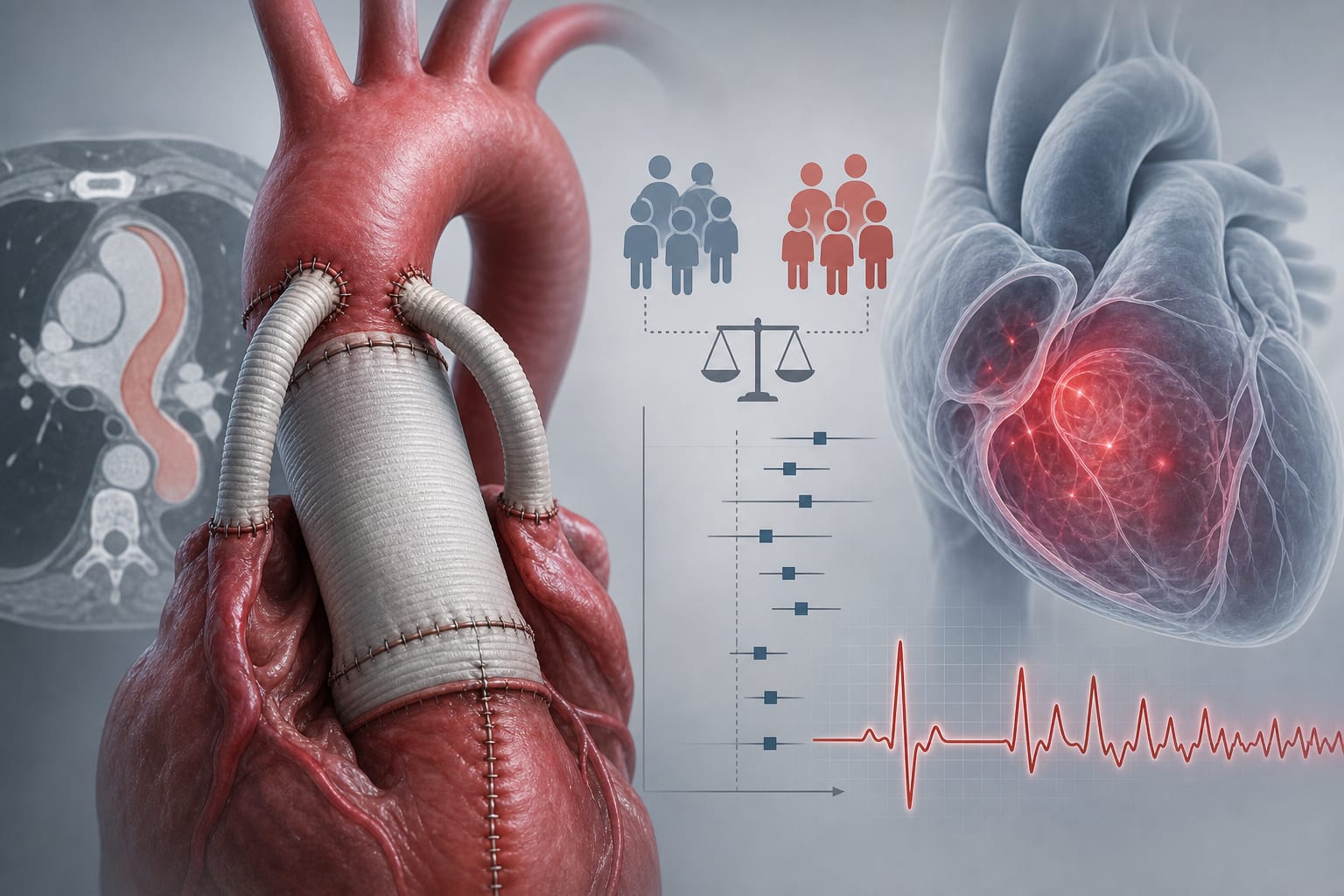
To examine the association between Cabrol shunt and the incidence of new-onset postoperative atrial fibrillation (POAF) after surgery for acute type A aortic dissection (AAAD).
Approach:
Key Findings:
Patients in the non-Cabrol shunt group had a higher incidence of new-onset POAF than those in the Cabrol shunt group (P = 0.013).
Age and aortic cross-clamp time were independent factors influencing the occurrence of new-onset POAF.
Interpretation:
Cabrol shunt use was associated with a lower observed incidence of new-onset POAF in patients undergoing AAAD surgery.
Limitations:
Retrospective design may introduce selection bias.
Missing data related to echocardiographic parameters could affect results.
Conclusion:
The study suggests a potential association between Cabrol shunt use and reduced incidence of new-onset POAF in AAAD surgery.