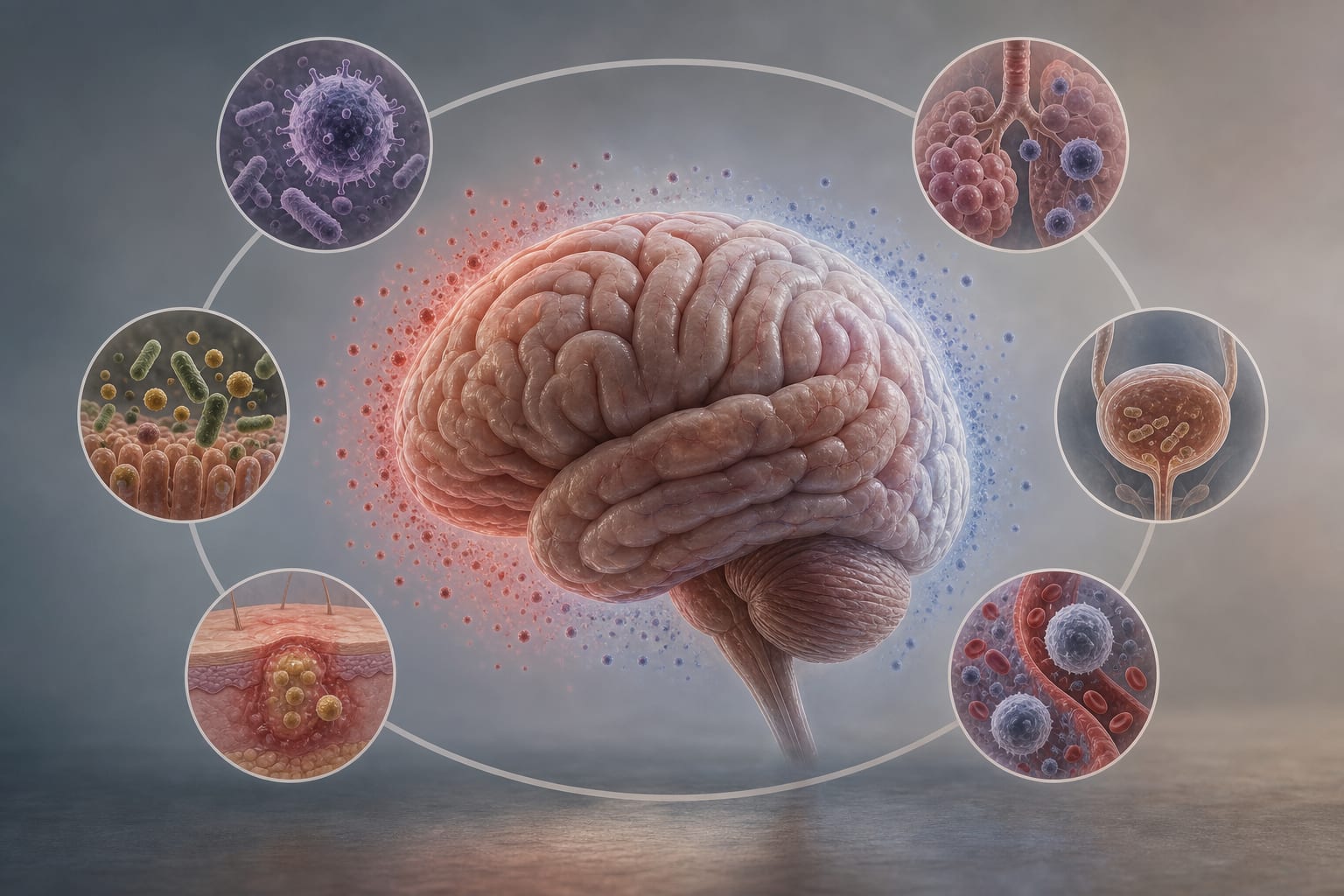
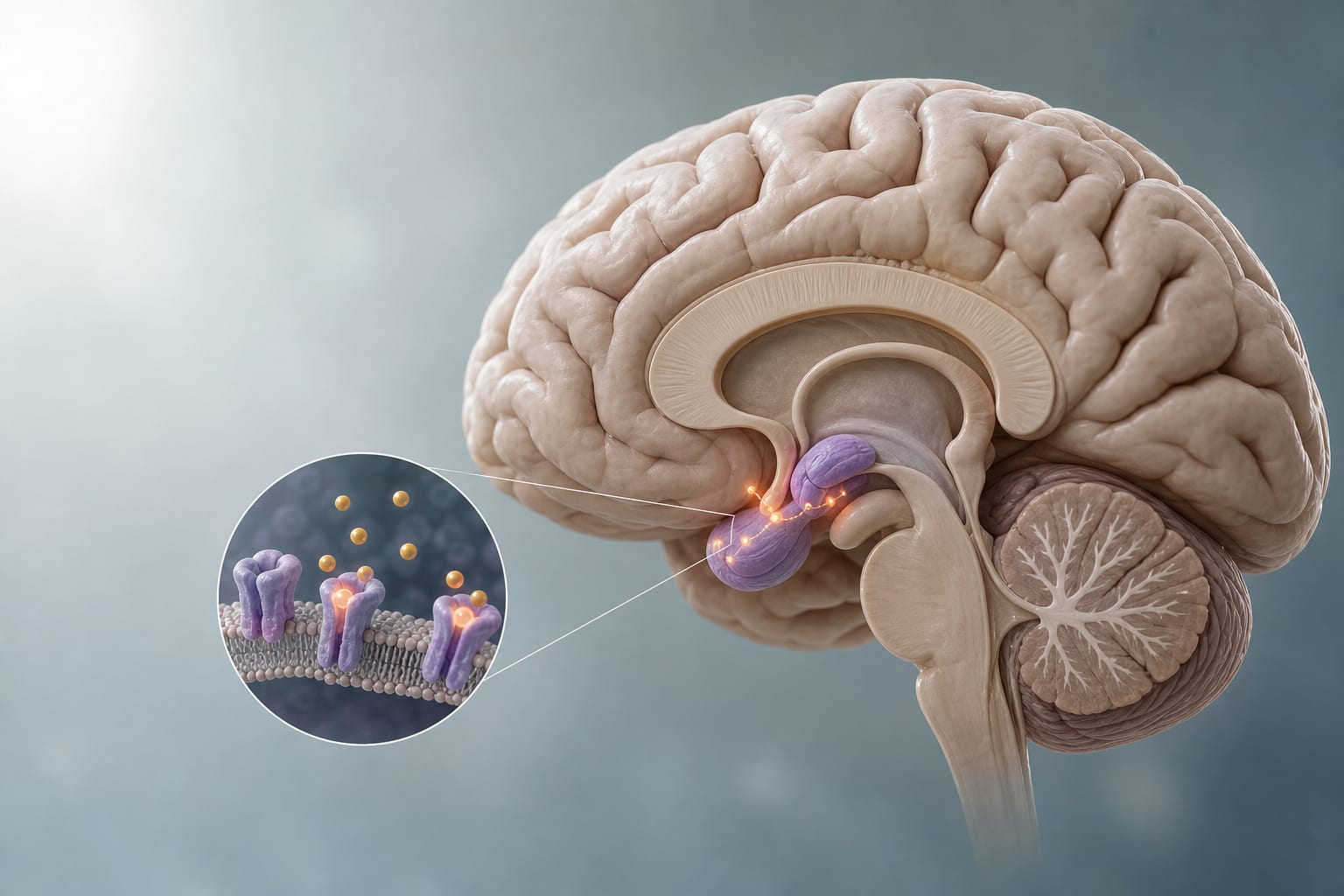
To investigate relationships between acute infections and incident severe mental illness (SMI) using electronic health records from the UK.
Approach:
Study Design: Conducted six matched cohort studies using data from the Clinical Practice Research Datalink Aurum, focusing on adults with various acute infections.
Cohort Matching: Matched adults with infections to up to five individuals without infections based on age, sex, and practice.
Statistical Analysis: Estimated hazard ratios (HRs) for SMI using Cox regression, adjusting for confounders such as deprivation, comorbidities, and lifestyle factors.
Key Findings:
Each infection type was associated with increased SMI risk after adjustment.
Hazard ratios for SMI were: SSTI 1.16 (95% CI 1.08 to 1.24), LRTI 1.28 (95% CI 1.20 to 1.38), UTI 1.44 (95% CI 1.31 to 1.58), GE 1.53 (95% CI 1.42 to 1.65), sepsis 1.69 (95% CI 1.52 to 1.88), and meningitis/encephalitis 3.36 (95% CI 2.61 to 4.32).
Interpretation:
SMI risk is higher among adults with a range of acute infections compared to those without, particularly for severe infections like meningitis/encephalitis and sepsis.
Limitations:
The study relies on electronic health records, which may have incomplete data.
Potential residual confounding despite adjustments for various factors.
Conclusion:
Findings suggest that timely treatment of infections and targeted mental health support may help limit SMI risk.
by Sharon L Cadogan, Georgia R Gore-Langton, Kathryn E Mansfield, John Tazare, Seena Fazel, Ian J Douglas, Caroline Morton, Naaheed Mukadam, Charlotte Warren-Gash