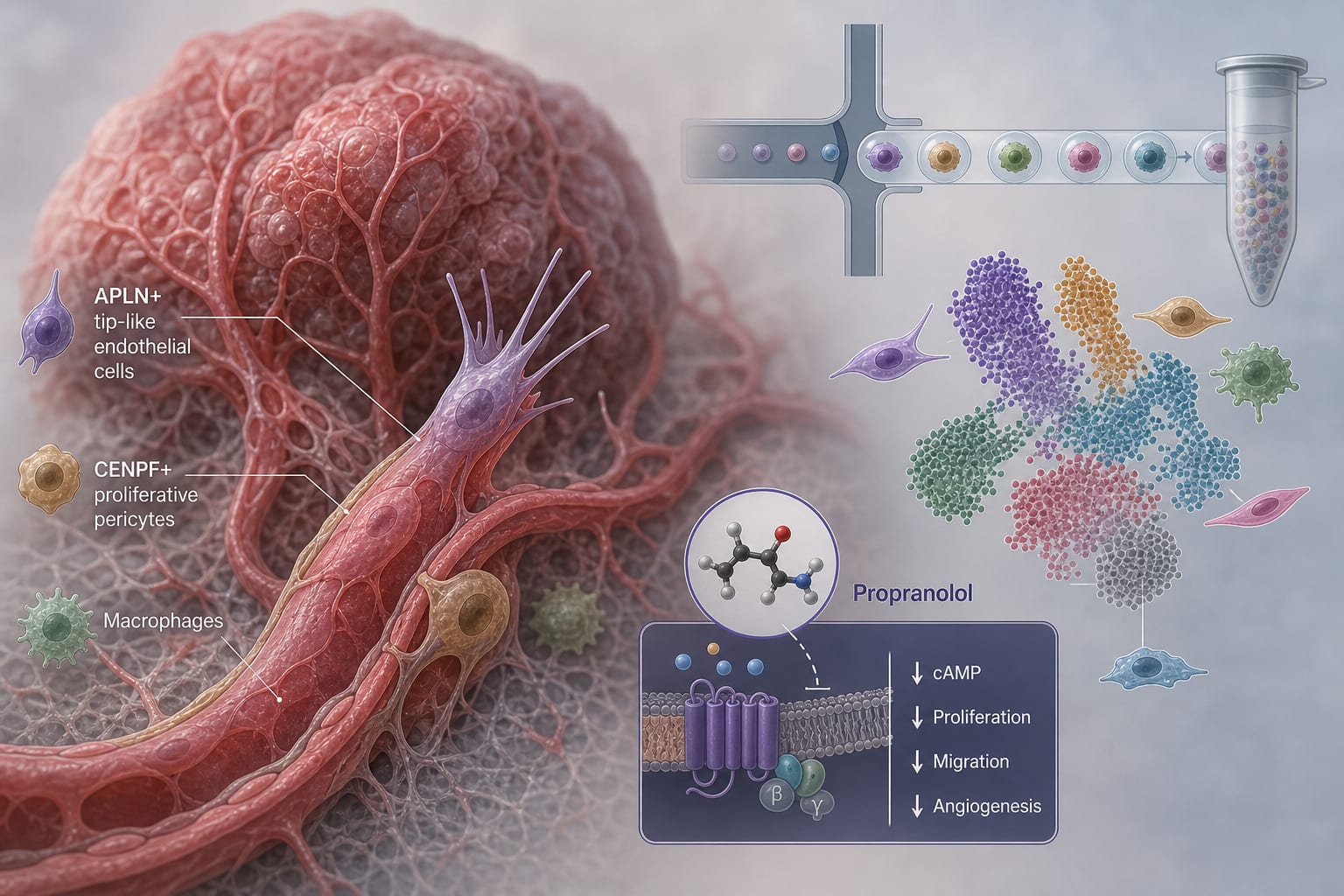
To review advances in understanding the cellular composition of infantile hemangioma (IH) and the mechanisms of propranolol treatment, highlighting their clinical significance through single-cell RNA sequencing (scRNA-seq).
Key Findings:
Identification of APLN-positive endothelial cells and CENPF-positive pericytes as IH-specific subpopulations enriched during the proliferative phase.
CD146-positive mural cells exhibit a dynamic transition from proangiogenic to adipogenic states, contributing to the proliferation-to-involution switch.
Macrophages, mast cells, and telocytes in the stromal microenvironment play roles in lesion progression and drug response, indicating a complex interplay.
Interpretation:
IH progression is driven by shifts in cellular subpopulations rather than solely by endothelial hyperproliferation, suggesting multiple targets for propranolol action and implications for treatment strategies.
Limitations:
Current findings are based on a limited number of scRNA-seq studies, which may not capture the full spectrum of IH pathology.
Further longitudinal studies are needed to comprehensively understand the dynamics of cellular changes over time.
Conclusion:
Insights from single-cell omics may enhance prediction of treatment responses and inform therapeutic strategies for IH, potentially leading to improved patient outcomes.