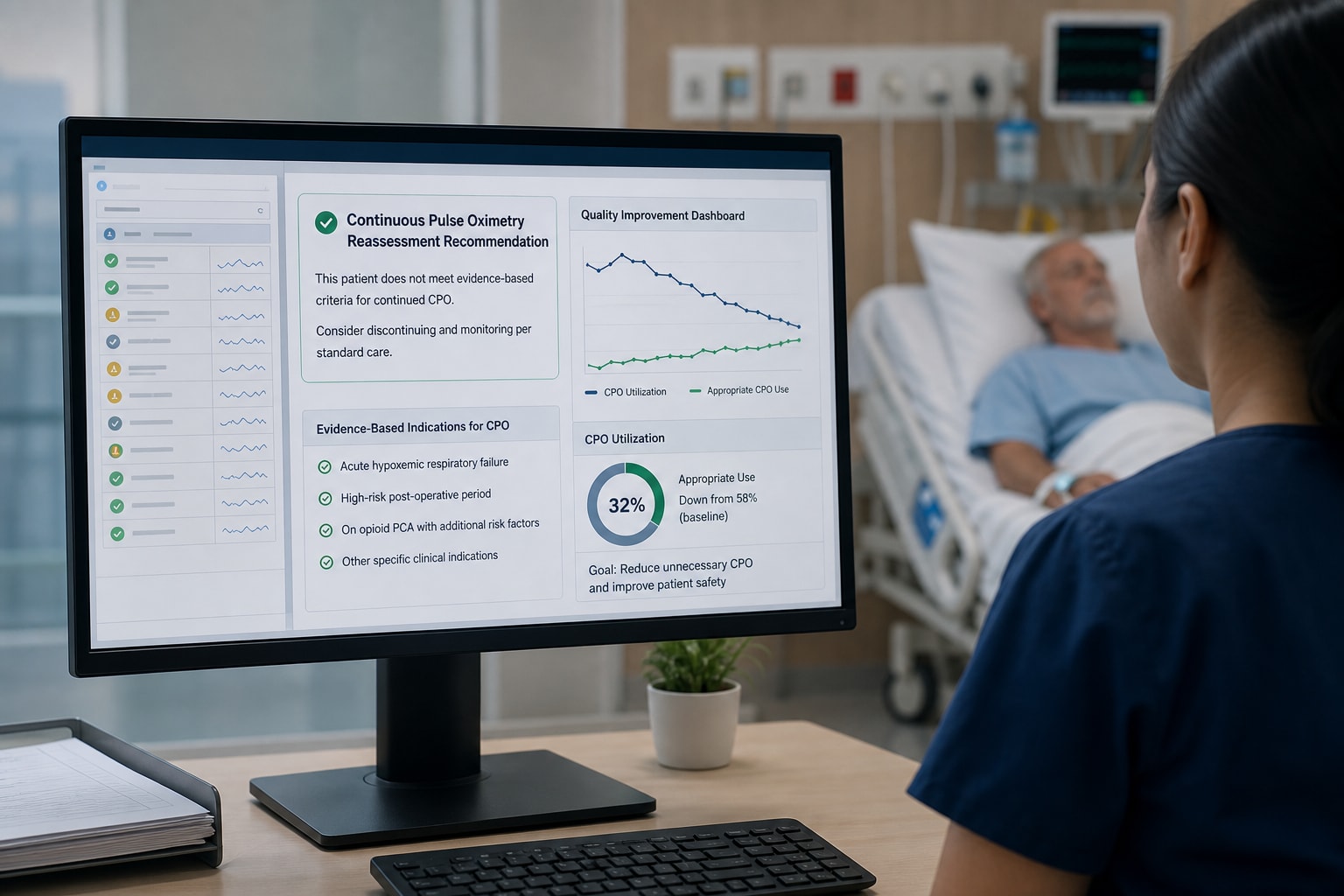
To understand CPO ordering practices and reduce excessive use of continuous pulse oximetry (CPO) without compromising patient safety.
Approach:
Setting and Participants: Conducted at UCSF Medical Center’s Parnassus campus, involving all admitted patients with CPO orders, excluding those in emergency, ICU, procedural areas, and operating rooms.
Intervention Description: Developed a revised EHR-based CPO order and a best practice advisory tool to guide CPO use, including a pre-checked 'discontinue CPO' order for discharge.
Outcomes and Analysis: Compared CPO utilization and safety events over two 12-month intervals using interrupted time series regression to assess the impact of the intervention.
Key Findings:
Over half of CPO orders remained active at discharge, indicating overutilization.
CPO monitoring can restrict patient movement and contribute to delirium.
Excessive CPO alarms lead to alarm fatigue, a recognized safety risk.
Interpretation:
The study highlights the need for clear guidelines on CPO use and the potential for EHR tools to optimize monitoring practices.
Limitations:
Study exempted from formal review may limit generalizability.
Focus on non-ICU settings may not reflect CPO practices in critical care.
Conclusion:
The initiative aims to enhance patient safety by optimizing CPO use through targeted interventions and EHR enhancements.