To summarize recent advancements in mass spectrometry related to protein transport, cancer research, and doping detection.
Approach:
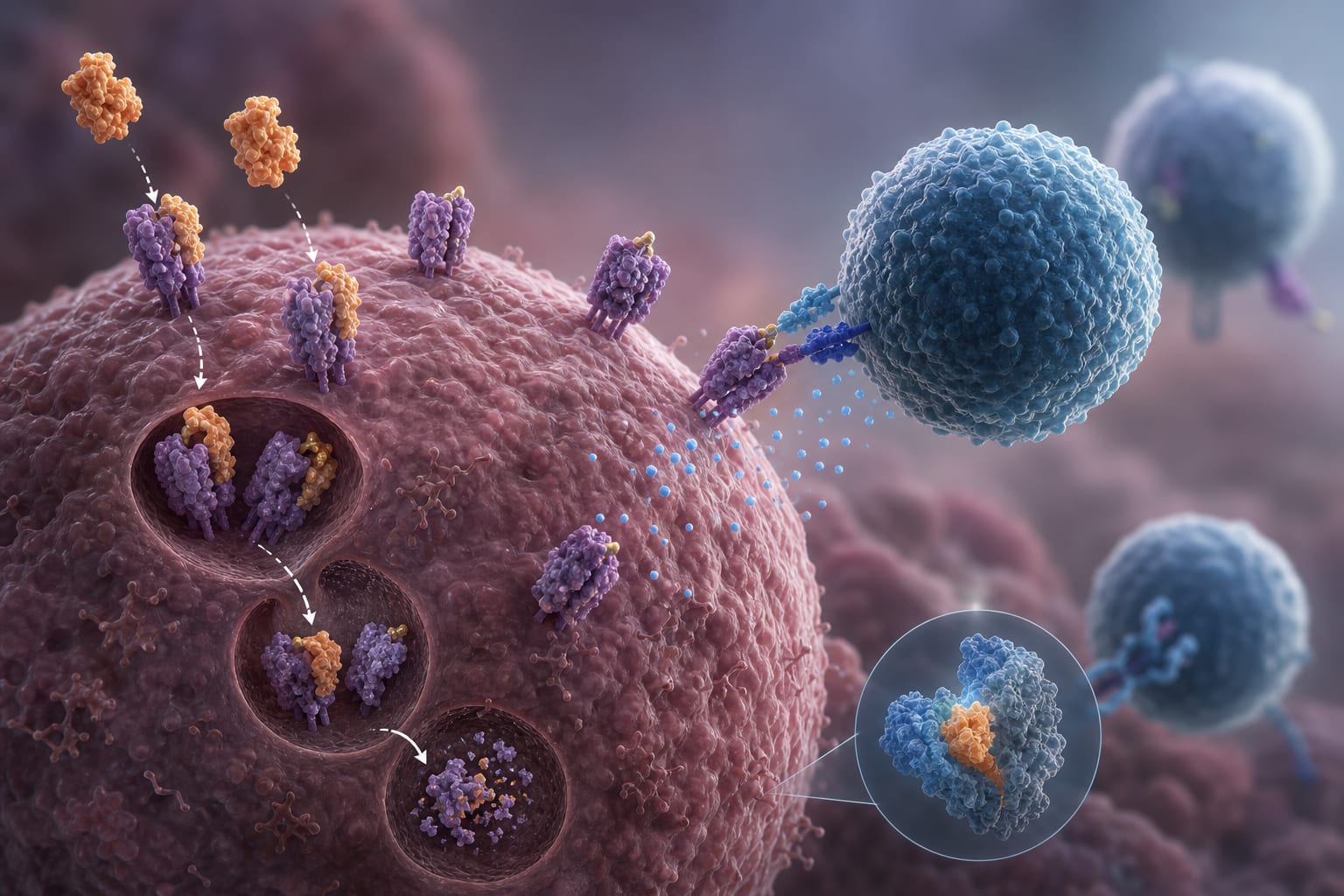
Vesicle Transport Mapping: Researchers at HKUST used vesicle reconstitution and quantitative mass spectrometry to explore protein transport through the Golgi, identifying new cargo clients and regulatory factors.
RNA Condensates in Kidney Cancer: A study at Texas A&M utilized various molecular techniques to investigate RNA condensates in translocation renal cell carcinoma and developed a nanobody tool to disrupt these structures.
Doping Detection Method: A team at the German Sport University Cologne created a simplified LC–MS³ method for detecting anabolic steroid esters in dried blood spots, improving the efficiency of anti-doping analysis.
Key Findings:
CAB45 identified as an AP-1–dependent cargo and ATRAP as an AP-4–dependent cargo.
Disruption of WDR44 or PRRC1 leads to accumulation of AP-4 cargos at the TGN, affecting autophagy.
PSPC1 enhances tumor growth by stabilizing RNA condensates in tRCC.
The engineered nanobody tool effectively dissolves RNA condensates, halting cancer growth.
The LC–MS³ method allows sensitive detection of steroid esters without chemical derivatisation.