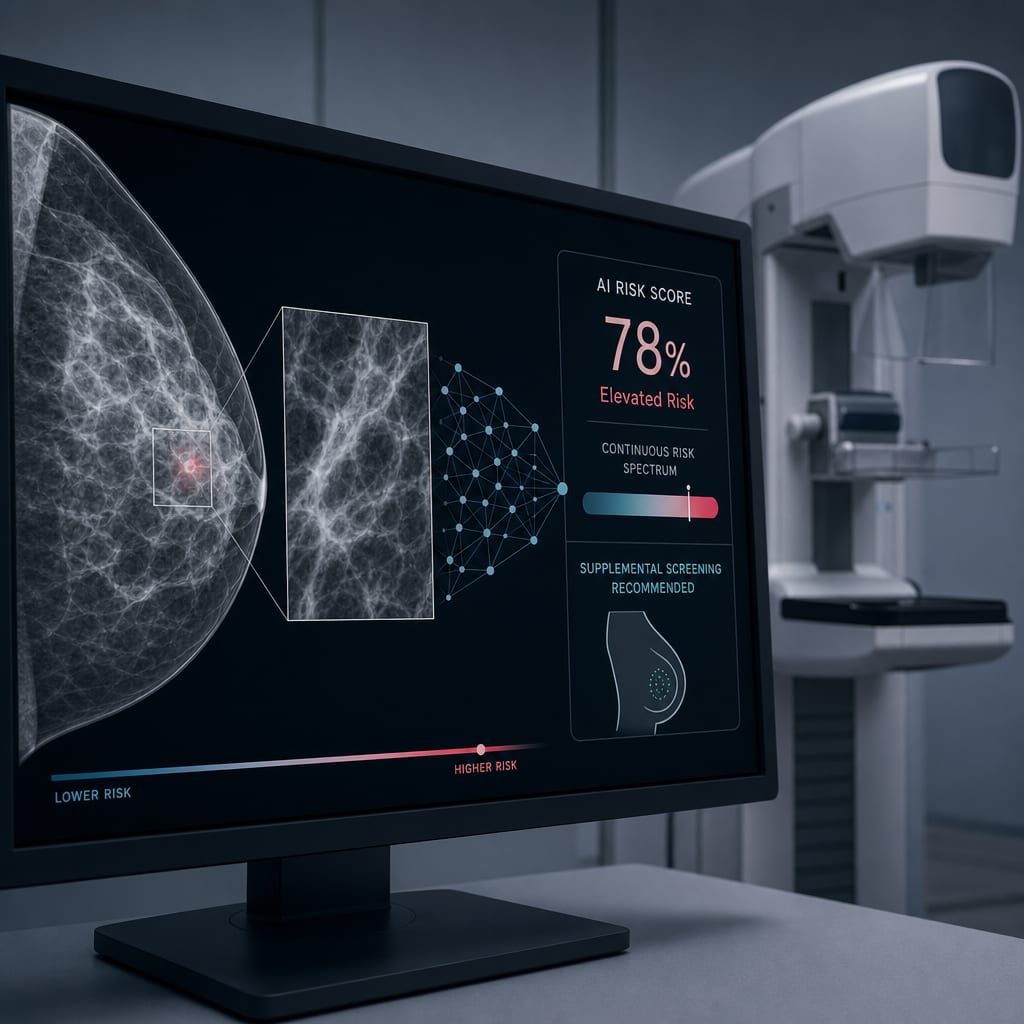
To compare the performance of a deep learning mammography-based risk model (Mirai) with breast density in estimating future breast cancer risk and false-negative screening results, specifically focusing on the accuracy and reliability of predictions.
Key Findings:
The deep learning model significantly outperformed traditional breast density assessments in predicting future breast cancer risk, indicating a shift towards more accurate risk evaluation.
The model offers a more nuanced risk stratification, which could potentially reduce unnecessary supplemental imaging and improve resource allocation.
Interpretation:
The findings suggest that deep learning models like Mirai can substantially enhance breast cancer risk assessment and improve screening accuracy, effectively addressing the limitations of current density-based approaches.
Limitations:
The study's retrospective nature may not account for all variables influencing breast cancer risk, potentially limiting the generalizability of the findings.
The model's 'black box' nature restricts understanding of specific imaging features driving predictions, which may hinder clinical trust and application.
Conclusion:
Implementing advanced deep learning models could lead to more personalized and equitable breast cancer screening practices, ultimately improving patient outcomes.