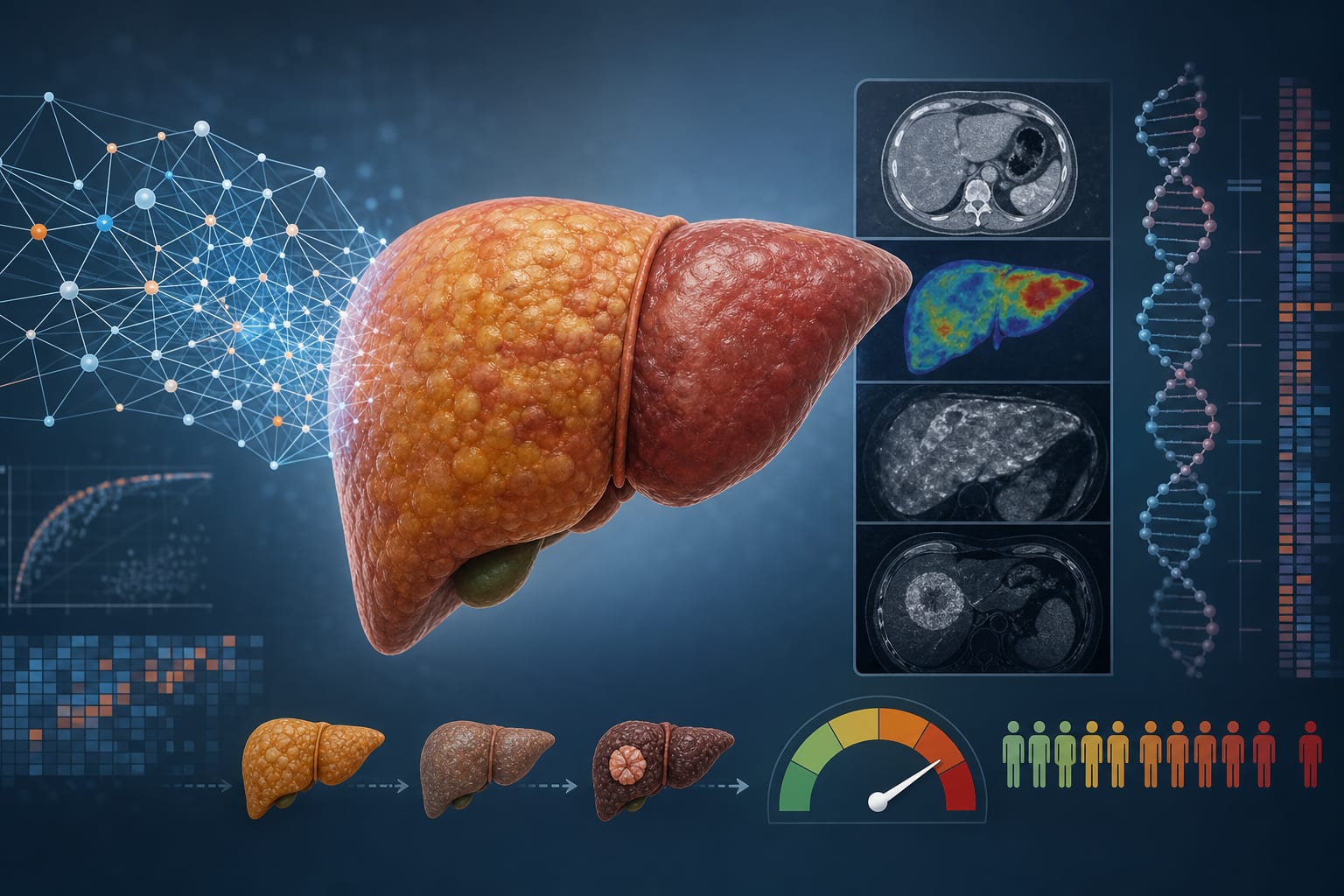
To synthesize evidence on the application of polygenic risk scores (PRS) and AI/machine learning (ML) models for predicting and detecting metabolic dysfunction-associated steatotic liver disease (MASLD), assessing fibrosis, and stratifying risk of hepatocellular carcinoma (HCC) among individuals with MASLD/NAFLD, focusing on studies published between 2020 and 2025.
Approach:
Method: label
Method: text
Key Findings:
Evidence indicates a shift towards integrated, explainable, and clinically validated multimodal models for MASLD/NAFLD and HCC risk stratification.
AI/ML methods show strong potential for MASLD detection, fibrosis assessment, and HCC risk stratification.
Interpretation:
AI-driven methods outperform traditional approaches in predicting HCC risk in MASLD/NAFLD, but translation into clinical practice is hindered by several challenges.
Limitations:
Poor genetic integration and lack of validation specific to the studies reviewed.
Population bias and limited explainability of AI models in the context of MASLD/NAFLD.
Need for standardization and clinical integration for effective personalized surveillance in the reviewed studies.
Conclusion:
Advances in AI and PRS for HCC risk prediction in MASLD/NAFLD demonstrate the potential for improved clinical outcomes, but further validation and integration are necessary for widespread adoption.