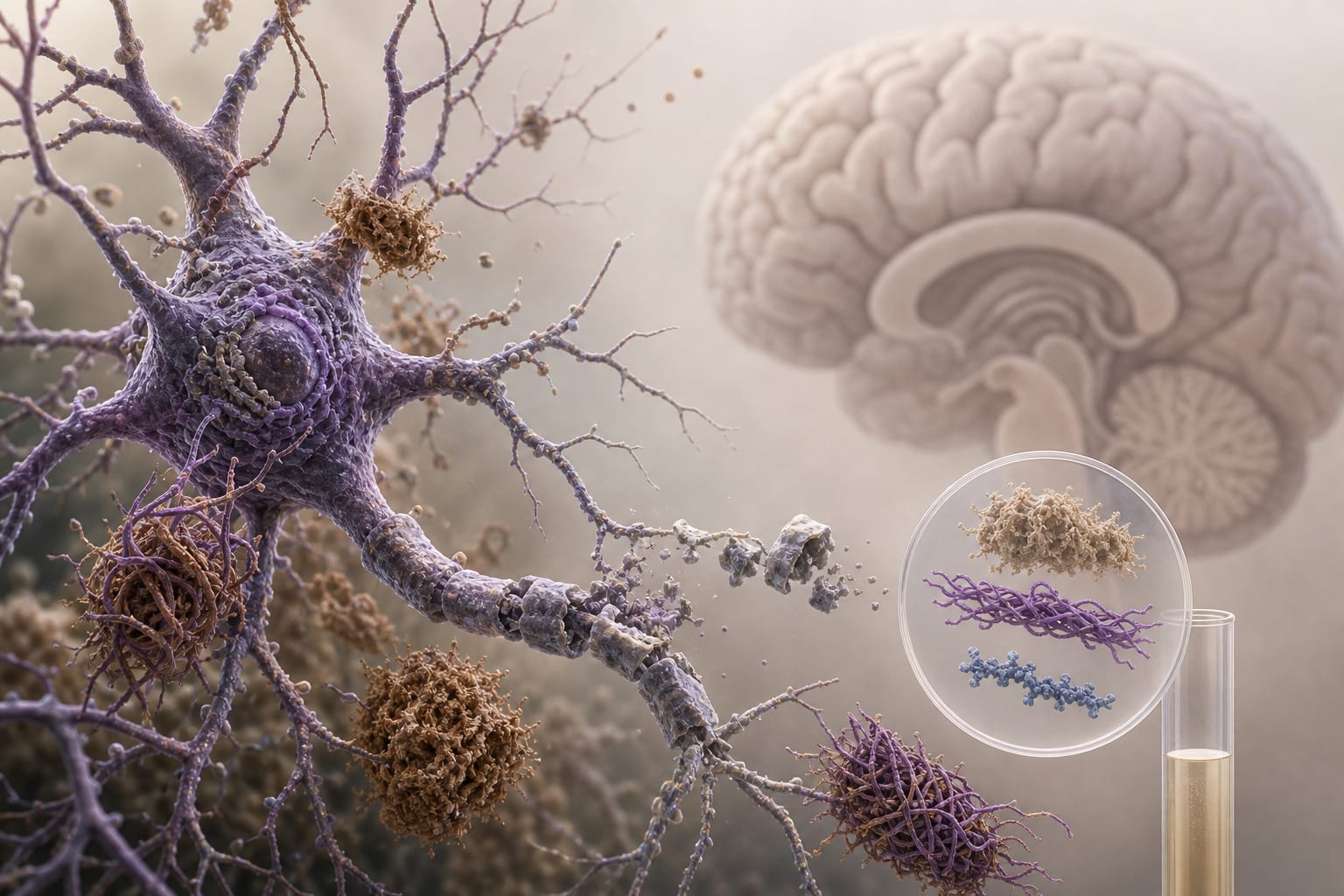
To explore the associations between plasma biomarker profiles and neuropathological features in older adults, particularly in the context of neurodegenerative diseases, emphasizing their potential clinical significance.
Key Findings:
Profile 1 (∼56%): Low levels of p-tau217, NFL, and GFAP, high Aβ42/40; common in cognitively normal individuals but with significant neuropathology, indicating the need for careful interpretation in clinical settings.
Profile 2 (∼35%): Elevated p-tau217 and GFAP; prevalent in mild cognitive impairment and dementia, associated with AD neuropathology, suggesting a potential target for early intervention.
Profile 3 (∼10%): High NFL and GFAP levels, significant vascular pathologies; primarily seen in dementia patients, highlighting the role of vascular health in neurodegeneration.
Interpretation:
Plasma biomarkers can effectively reflect specific brain pathologies in vivo, although gaps remain in identifying certain common neuropathological features, which could inform clinical practice.
Limitations:
Average 4-year lag between plasma sampling and death complicates associations with neuropathology, potentially introducing temporal biases.
Lack of biomarkers for TDP-43 and α-synuclein pathologies limits the comprehensiveness of the findings.
Conclusion:
The study underscores the potential of plasma biomarkers in understanding neurodegeneration while highlighting the need for further research to refine their clinical utility and address the identified gaps.