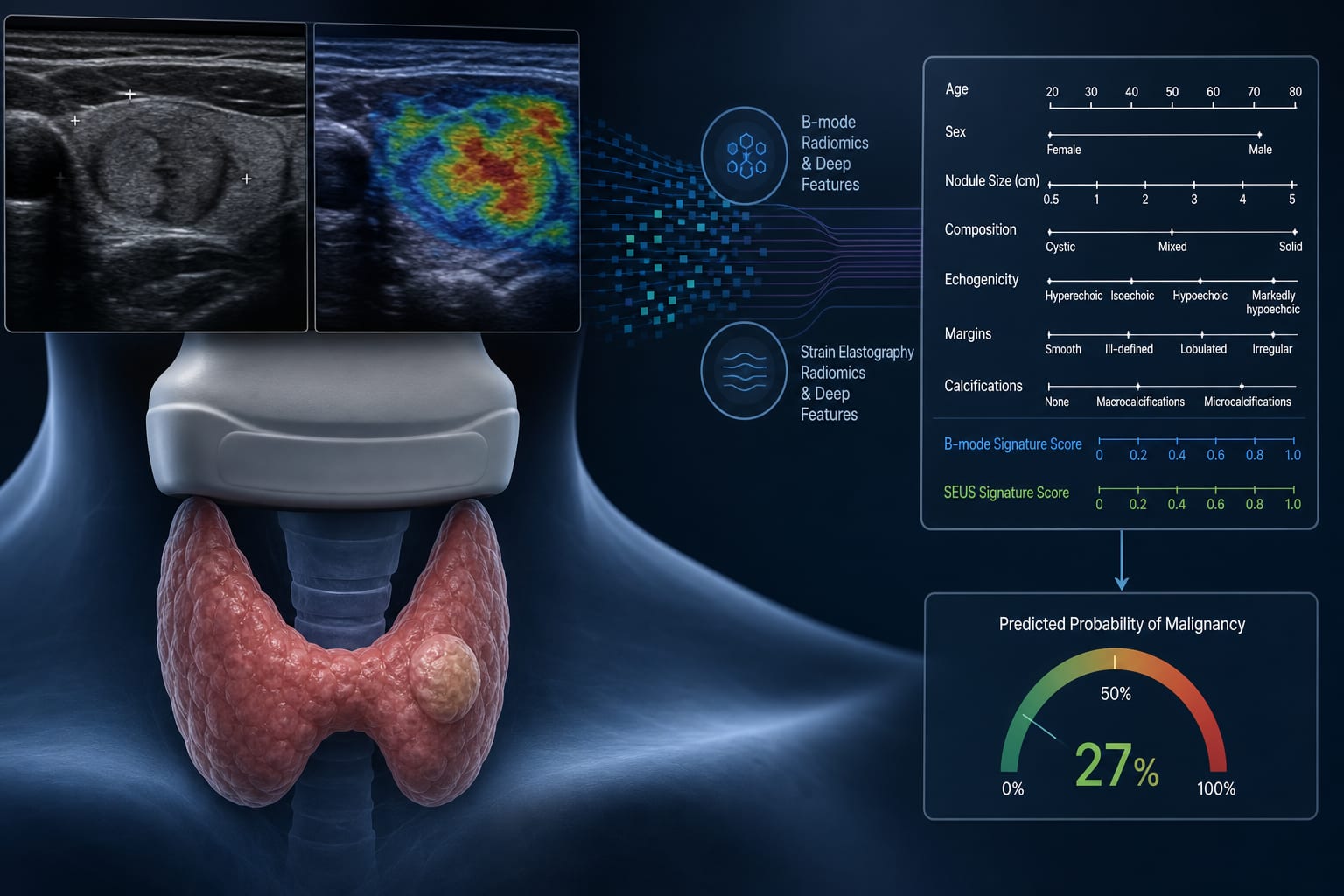
To develop an online nomogram model for precise preoperative assessment of malignancy risk in indeterminate thyroid nodules (ITNs) following fine-needle aspiration.
Approach:
Patient Recruitment: Patients with thyroid nodules were recruited from five centers and divided into training, testing, and validation cohorts.
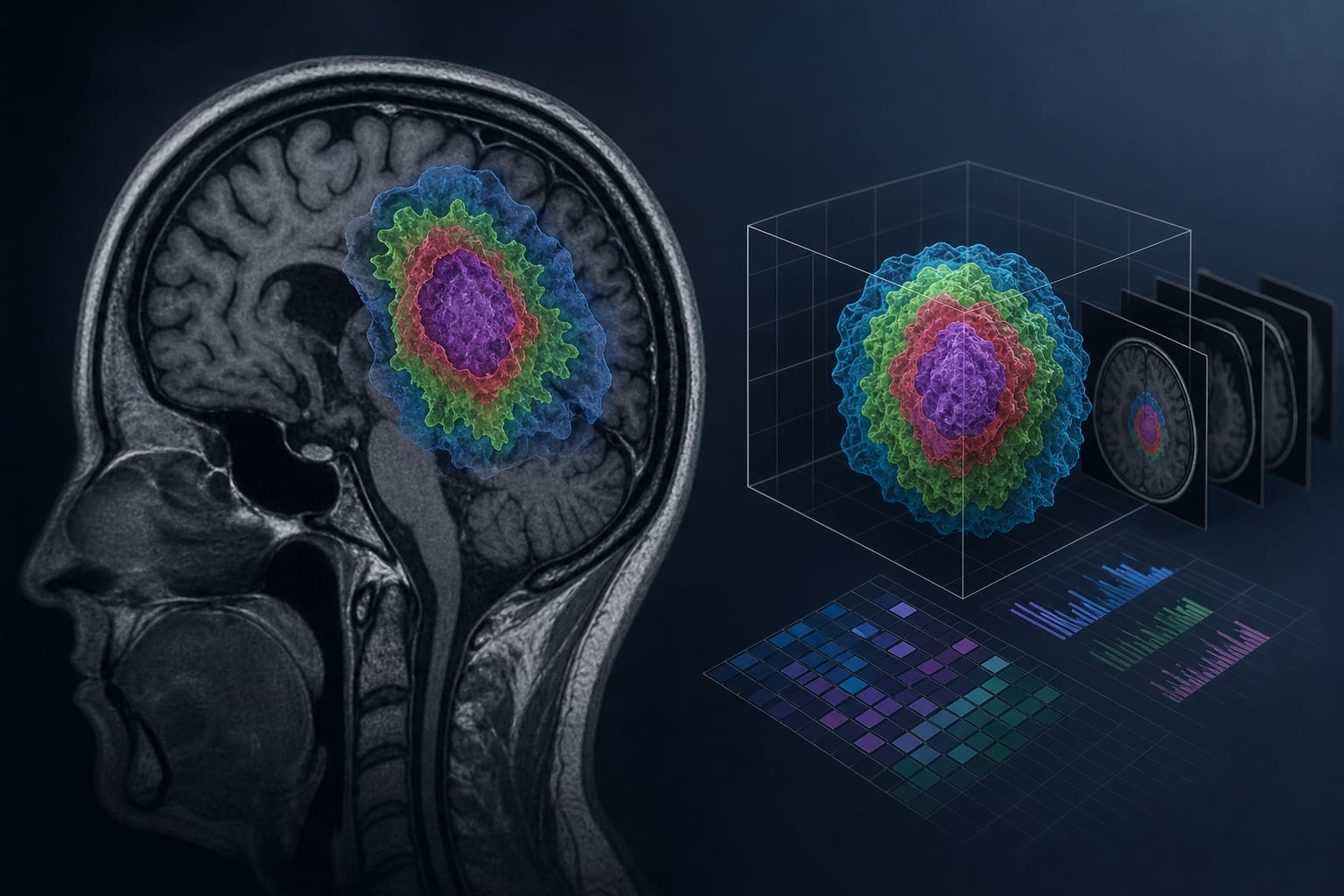
Feature Extraction: Radiomics and deep learning features were extracted from B-mode ultrasound (BMUS) and strain elastography ultrasound (SEUS) images.
Model Development: Malignancy-associated features were selected to construct signature scores, followed by multivariate regression analysis to develop a comprehensive diagnostic model.
Model Evaluation: The model was evaluated for discrimination, calibration, and clinical usefulness.
Key Findings:
Multimodal imaging features, genetic testing, and elastography levels were identified as key biological markers for diagnosing ITNs.
The nomogram model demonstrated strong performance with AUC values of 0.907 (95% CI: 0.877-0.931), 0.885 (95% CI: 0.821-0.932), and 0.860 (95% CI: 0.762-0.929) in training, external test, and prospective validation sets, respectively.
The nomogram outperformed clinical and individual scoring models in terms of performance and calibration.
Interpretation:
The proposed nomogram accurately diagnoses ITNs.
Limitations:
The study is limited to specific patient cohorts from five centers.
Further validation in diverse populations may be necessary to confirm generalizability.
Conclusion:
The online nomogram may improve preoperative evaluation of ITNs.
Harold Burstein, MD, PhD, and Erica Mayer, MD, MPH discuss results from the SERENA-6 trial, which were presented at the 2026 ESMO Breast Cancer Congress.