Detection of MEN1 resistance mutations in cell-free DNA from acute leukemia patients treated with menin inhibitors - Summary - MDSpire

Detection of MEN1 resistance mutations in cell-free DNA from acute leukemia patients treated with menin inhibitors

  • By

  • Neerav Shukla

  • Karmelina Charalambous

  • Shanita Li

  • Kaitlyn H. Ko

  • Hilary Casanova

  • Eric Buehler

  • Cassidy Cobbs

  • Ruchi Patel

  • Angela Rose Brannon

  • Mark D. Ewalt

  • Maria Luisa Sulis

  • William L. Carroll

  • Maria E. Arcila

  • Neeman Mohibullah

  • Michael Berger

  • Ross L. Levine

  • Eytan M. Stein

  • Ronak Shah

  • Sheng F. Cai

  • June 16, 2026

  • 0 min

Share

Objective:

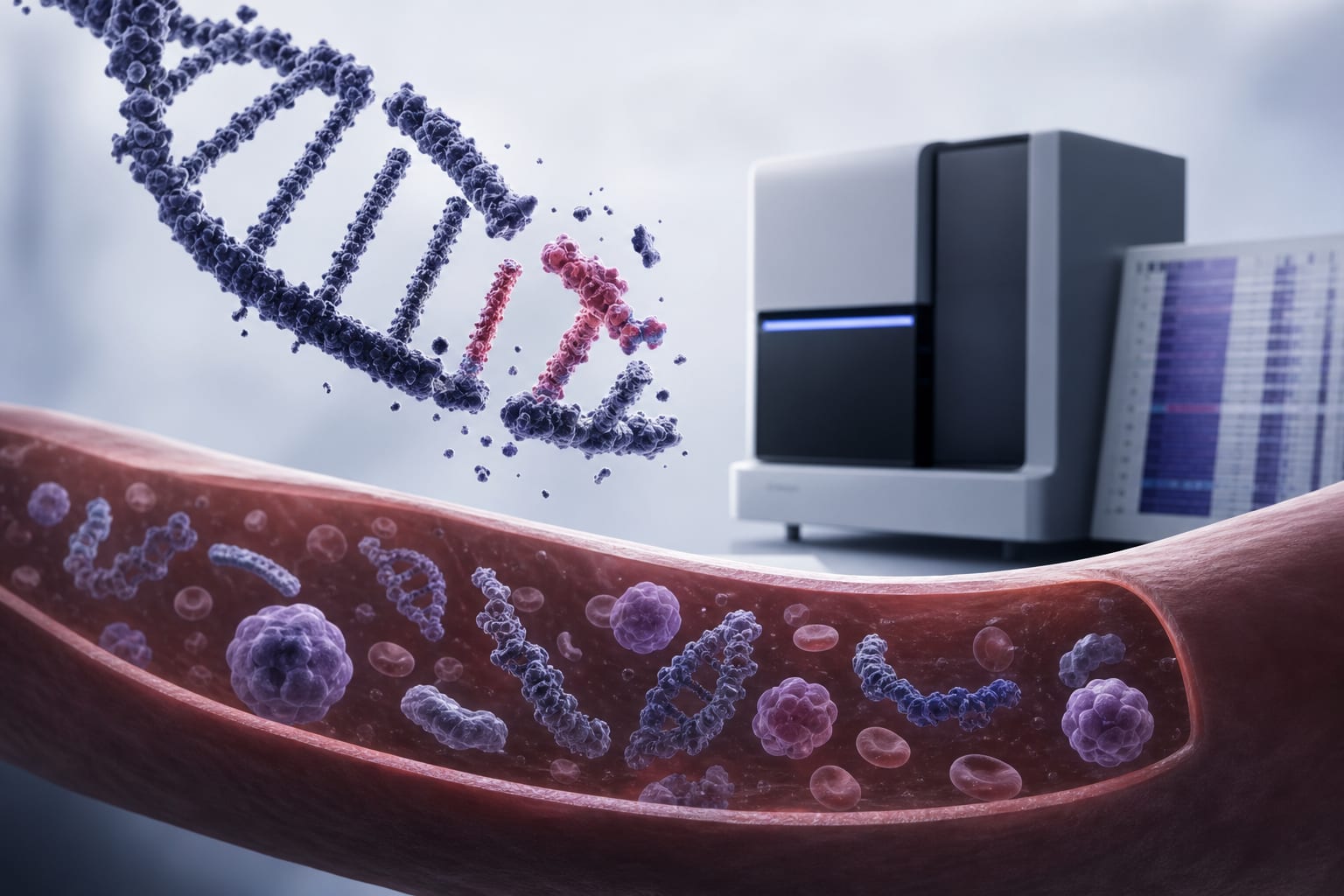
To evaluate the feasibility and utility of an NGS assay for detecting MEN1 resistance mutations in plasma-derived cfDNA from patients treated with menin inhibitors.

Approach:
    Key Findings:
    • MSK-ACCESS MEN1 detected MEN1 resistance mutations in plasma cfDNA even when bone marrow aspirates showed no circulating blasts.
    • The assay demonstrated high concordance with marrow-based sequencing, with a Pearson correlation coefficient of 0.979.
    • MEN1 resistance mutations were identified in plasma cfDNA before they were detectable in bone marrow samples.
    Interpretation:

    The findings suggest that plasma-derived cfDNA analysis can effectively identify MEN1 resistance mutations, offering a less invasive alternative to bone marrow sampling.

    Limitations:
    • The study relied on a limited number of case studies for validation in the context of MEN1 resistance mutations.
    • Further research is needed to establish the broader applicability of cfDNA analysis in diverse patient populations.
    Conclusion:

    MSK-ACCESS MEN1 assay provides a promising approach for monitoring MEN1 resistance mutations in acute leukemia patients undergoing treatment with menin inhibitors.

Original Source(s)

Related Content