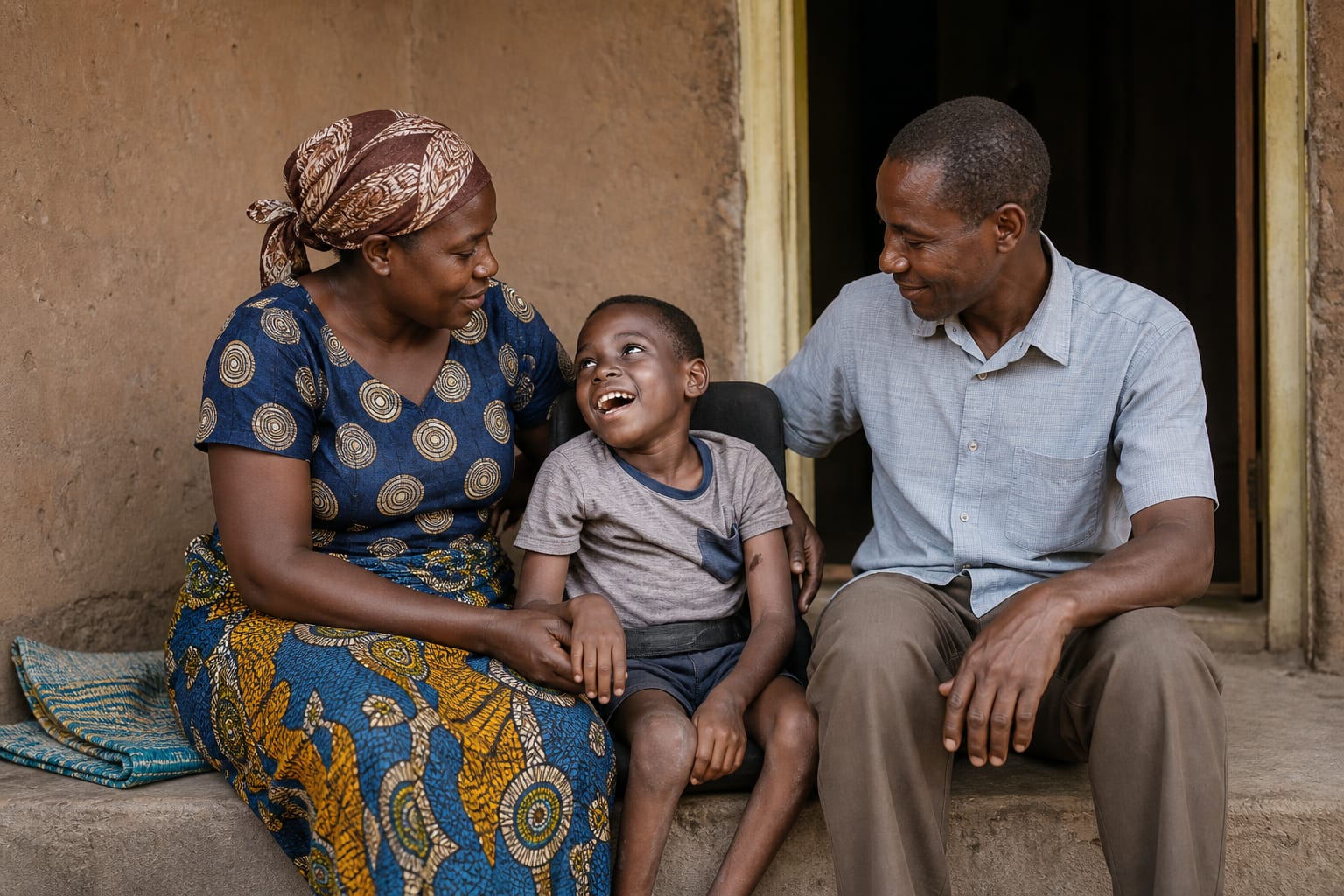
Improving family functioning and wellbeing among families of children with disabilities in Rwanda: an application of the SAFE child protection model - Summary - MDSpire
Coming Soon: Introducing MDSpire News. Learn more
Conexiant’s news site is now MDSpire News. Learn more

Enhancing Family Dynamics and Wellbeing in Rwandan Families with Disabled Children: Utilizing the SAFE Child Protection Framework

  • By

  • Alain Ahishakiye

  • Hannah Gilbert

  • Leila Dal Santo

  • Ann Miller

  • M. C. Smith Fawzi

  • Cat Kirk

  • Candace J. Black

  • Wijnand Van Den Boom

  • Mukeshimana Verena

  • Roberto Baiocco

  • Sarah K. G. Jensen

  • Kim Wilson

  • Vincent Sezibera

  • Theresa S. Betancourt

  • September 14, 2026

Share

Objective:

To examine factors affecting family functioning and guide the development of family-centered interventions for families raising children with disabilities in low-resource settings.

Approach:
  • Methodology: Content analysis informed by the SAFE child-protection model, involving 30 caregivers of children with disabilities and focus group discussions with community workers and ECD advocates.
Key Findings:
  • Four categories of threats to child safety identified: 1) Safety/Freedom from harm, 2) Access to basic physiological needs and healthcare, 3) Family and connection to others, and 4) Education and economic security.
  • Risks include caregiver mental health issues, insufficient resources, stigma, and social isolation.
Limitations:
  • The study is limited to a specific context in Rwanda and may not be generalizable to other settings.
  • The sample size may not fully represent the diversity of experiences among families raising children with disabilities.

Original Source(s)

Related Content