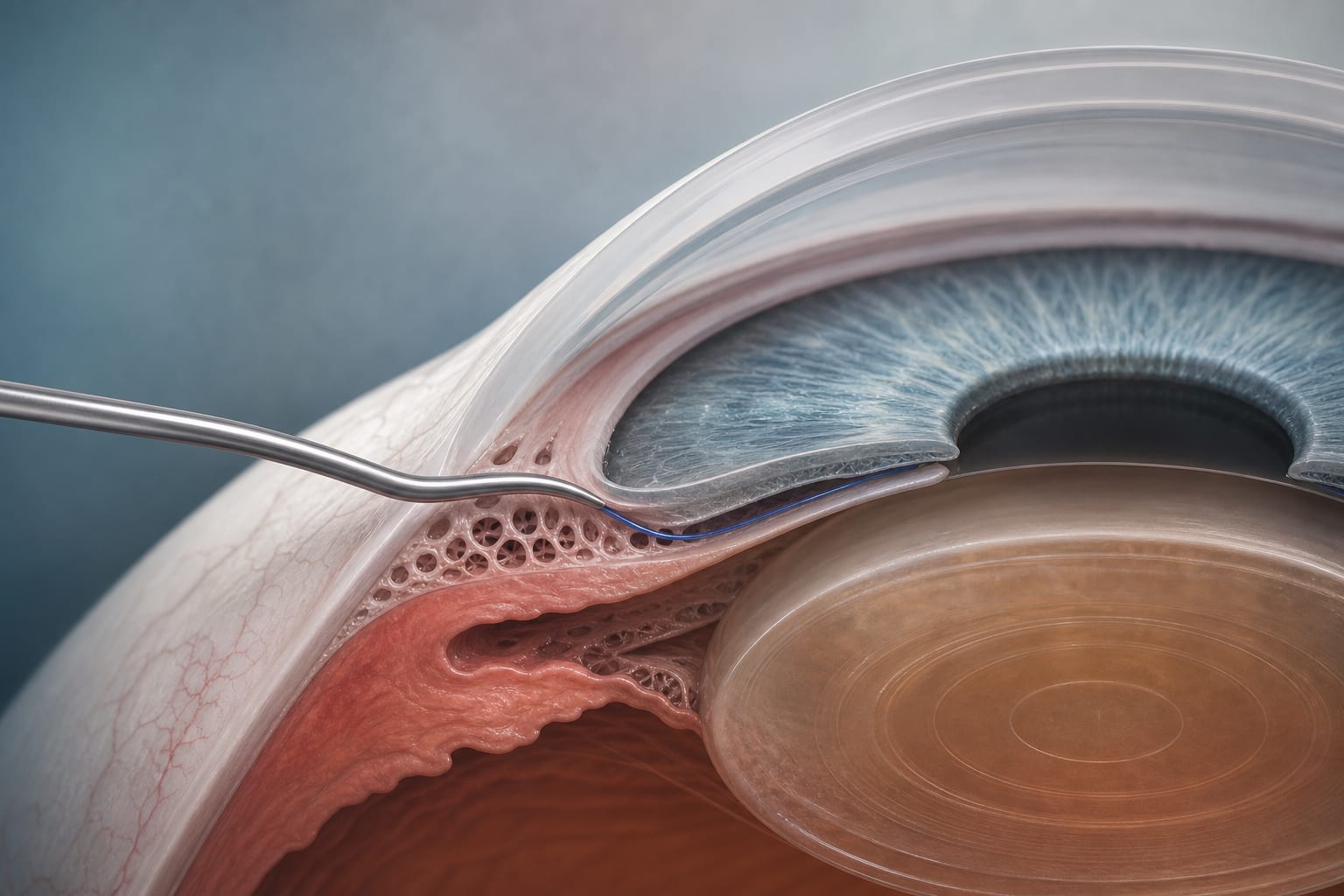
Surgical Roundtable Case 1: Managing Giant Retinal Tears
Mrinali Gupta, MD, FASRS, demonstrates surgical repair of a traumatic giant retinal tear (GRT) detachment in a 50-year-old phakic patient, and a panel of experienced vitreoretinal surgeons discusses approaches to scleral buckling, tamponade selection, laser retinopexy, and techniques to prevent slippage.
To demonstrate surgical repair techniques for traumatic giant retinal tear (GRT) detachment in a clinical setting.
Approach:
Surgical Technique: Mrinali Gupta, MD, FASRS, presents a case involving a 50-year-old patient with a traumatic GRT, detailing the use of a low-lying buckle, complete vitrectomy, and careful management of perfluorocarbon (PFO) during surgery, resulting in a successful postoperative outcome.
Discussion Among Surgeons: Surgeons Christina Weng, Nimesh Patel, and Frank Brodie discuss their approaches to GRT repair, emphasizing the importance of buckling and the risks of proliferative vitreoretinopathy (PVR), while sharing their personal experiences and preferences.
Key Findings:
A low-lying scleral buckle is recommended for phakic GRT repair, as discussed by the surgeons.
Complete vitreous shaving before PFO injection is crucial to minimize complications, according to Mrinali Gupta.
Careful drainage of subretinal fluid is necessary to reduce the risk of retinal slippage, as highlighted in the discussion.
Interpretation:
The discussion highlights varied approaches to managing GRTs, with a consensus on the benefits of using a buckle and the importance of meticulous surgical technique, as expressed by the participating surgeons.
Limitations:
The case presented is singular and may not represent all GRT scenarios.
Surgeons' preferences and experiences may vary, influencing outcomes.
Conclusion:
The roundtable emphasizes the importance of sharing complex surgical cases to enhance surgical techniques and improve patient care.