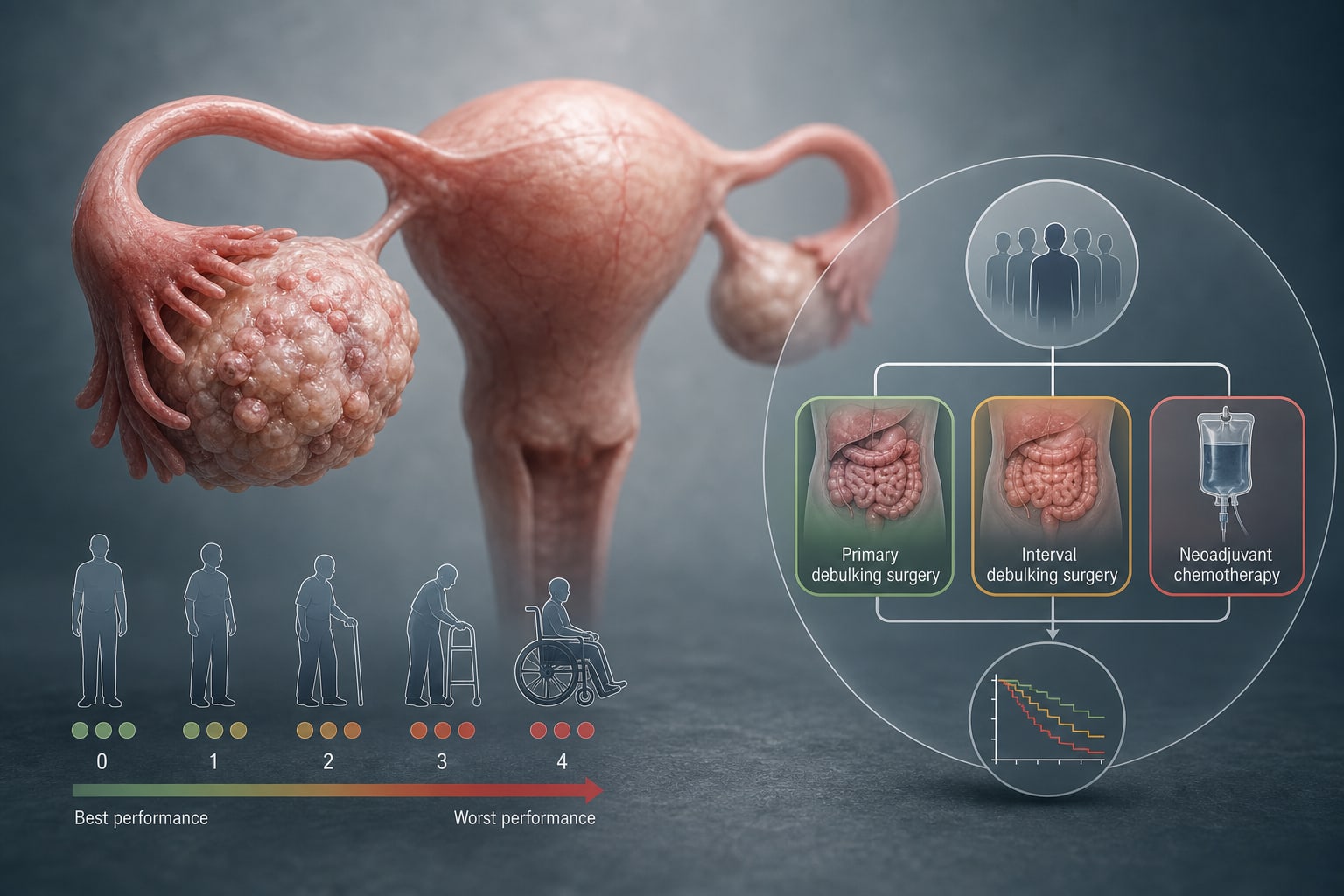
To evaluate the association of clinical factors, primarily ECOG classification, with patient performance status and their use in clinical decision-making for surgical treatment of epithelial ovarian cancer (EOC).
Approach:
Study Design: Retrospective analysis of 228 patients with EOC who underwent debulking surgery at Kuopio University Hospital from 2019 to 2022.
Data Collection: ECOG classification and other clinical parameters were collected from hospital records.
Statistical Analysis: Kruskal–Wallis test for association analysis; Kaplan–Meier for univariate survival analysis; Cox regression for multivariate survival analysis.
Key Findings:
56.6% of patients were ECOG 0, 33% were ECOG 1, and 10.1% were ECOG 2–4.
Age, self-reported walking distance, stair climbing capacity, ASA classification, albumin, prealbumin, and number of comorbidities were significantly associated with ECOG groups.
ECOG classification was not associated with complications or length of hospital stay.