Esophageal submucosal gland duct adenoma: a case report and pooled analysis of demographic differences between eastern and western populations - Summary - MDSpire
Advertisement
Esophageal submucosal gland duct adenoma: a case report and pooled analysis of demographic differences between eastern and western populations
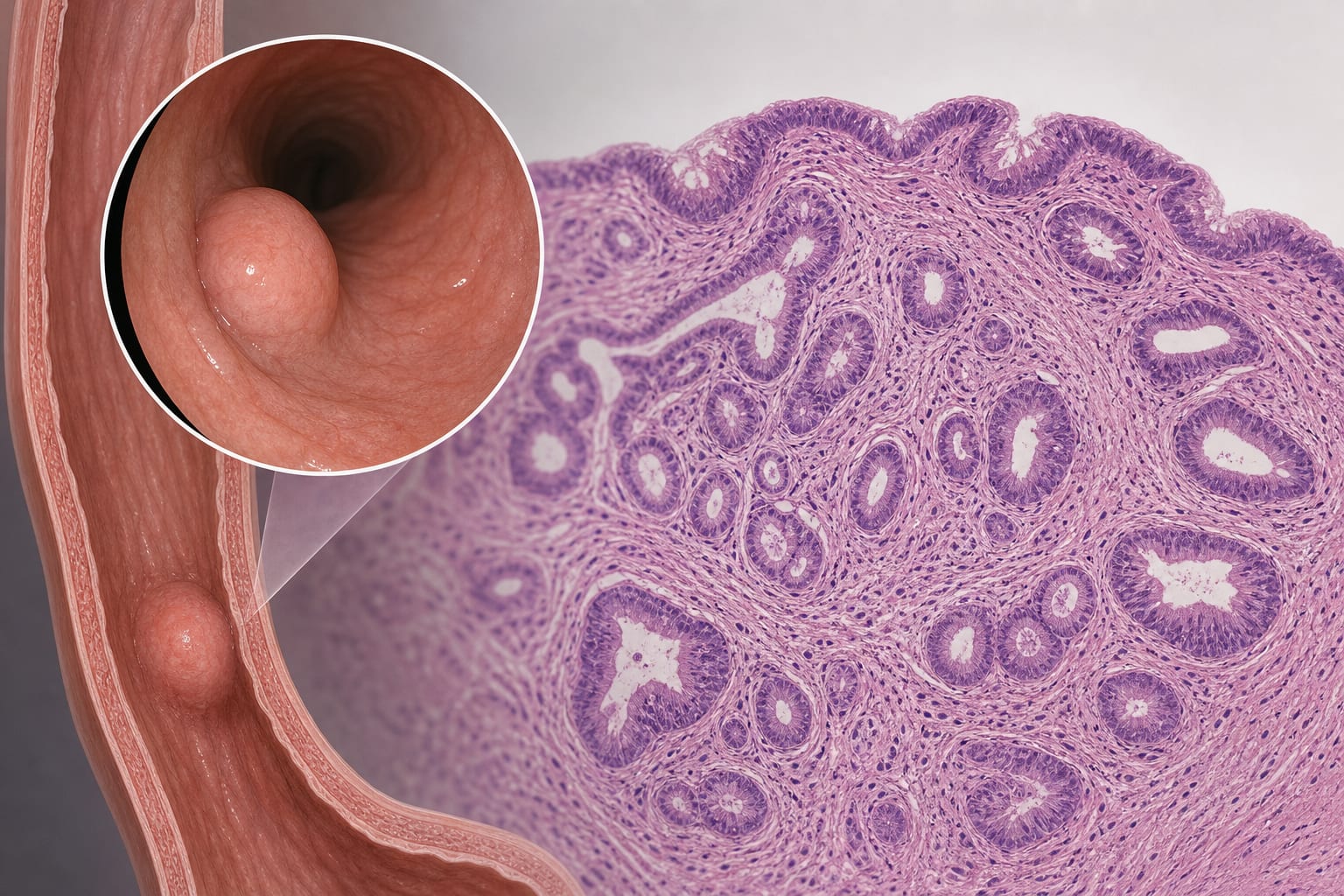
To report a new case of esophageal submucosal gland duct adenoma (ESGDA) and perform a comparative analysis of demographic variations between Eastern and Western populations based on existing literature.
Approach:
Case Introduction: A 61-year-old Asian male with a 1.6 cm submucosal tumor in the distal esophagus was successfully resected via endoscopic submucosal dissection (ESD), with pathological confirmation of ESGDA.
Key Findings:
Eastern cohort showed a 9:1 male-to-female ratio, while Western cohort had a balanced 1:1 ratio (P = 0.141).
100% of Eastern cases were located in the distal esophagus/gastroesophageal junction compared to 40% in Western cases (P = 0.011).
60% of Western cases were found in the mid or upper esophagus, a pattern not seen in the Eastern cohort.
Interpretation:
The clinical presentation of ESGDA shows notable geographic patterns, with Eastern cases presenting exclusively in the distal esophagus and a strong male predominance.
Limitations:
Small sample size limits the generalizability of findings and may obscure significant epidemiological patterns.
Further studies with larger cohorts are needed for confirmation.
Conclusion:
The study highlights potential population-specific differences in ESGDA.