Antibodies against interleukin-10 receptor reduce IL-6 and TNF-α levels and increase TGF‐β levels in patients with severe fever with thrombocytopenia syndrome virus and SARS-CoV-2 infection - Summary - MDSpire

Antibodies against interleukin-10 receptor reduce IL-6 and TNF-α levels and increase TGF‐β levels in patients with severe fever with thrombocytopenia syndrome virus and SARS-CoV-2 infection

  • By

  • Su Yeon Kang

  • Jeong Rae Yoo

  • EunJin Bae

  • Joowan Kim

  • Yejin Park

  • Misun Kim

  • Miyeon Kim

  • Hyo-Jin Ro

  • Daehee Hwang

  • Jeong-Yeon Lee

  • Dongcharn Cho

  • Huy Chau Nguyen

  • Hoai Jaclyn Hallam

  • Sang Taek Heo

  • Nam-Hyuk Cho

  • Kyung-Mi Lee

  • Andrew G. Letizia

  • Keun Hwa Lee

  • June 25, 2026

  • 0 min

Share

Objective:

To investigate the role of IL-10 in patients with Severe Fever with Thrombocytopenia Syndrome (SFTS) and its modulation through IL-10 receptor blockade.

Approach:
  • Patient Analysis: Analyzed macrophage phenotypes, cytokine levels, and signaling pathways in patients with varying severity of SFTS.
  • In Vitro Studies: Examined the effects of IL-10 receptor blockade in THP-1-derived macrophages infected with SFTSV or SARS-CoV-2.
Key Findings:
  • Increased levels of IL-10 (p < 0.0001), IL-6 (p < 0.0001), and TGF-β (p=0.0104) were observed in patients with fatal SFTS.
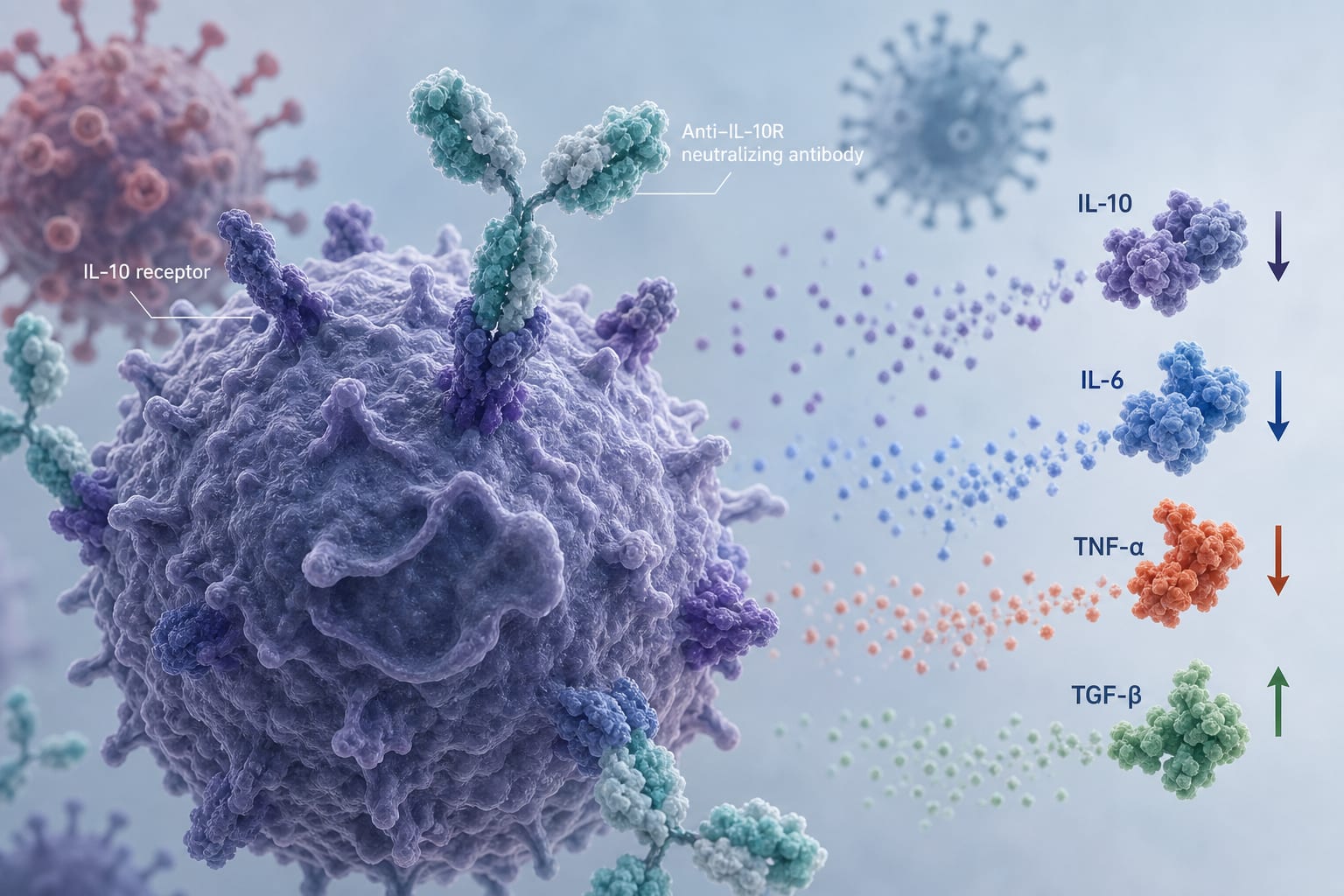
  • Blocking IL-10 signaling reduced the population of HLA-DR+CD86+ macrophages and increased the population of CD163+CD206+ macrophages.
  • IL-10 receptor blockade decreased IL-6 and TNF-α production while increasing TGF-β production.
Interpretation:

HLA-DRhiCD86hi macrophages may be involved in pathological activity, while CD163hiCD206hi macrophages may have protective roles against SFTSV and SARS-CoV-2 infections.

Limitations:
  • The study primarily focuses on a limited patient population.
  • Further research is needed to confirm the findings and explore broader implications.
Conclusion:

Antibodies against the IL-10 receptor may represent a potential intervention for cytokine storms in severe cases of SFTS and COVID-19.

Original Source(s)

Related Content