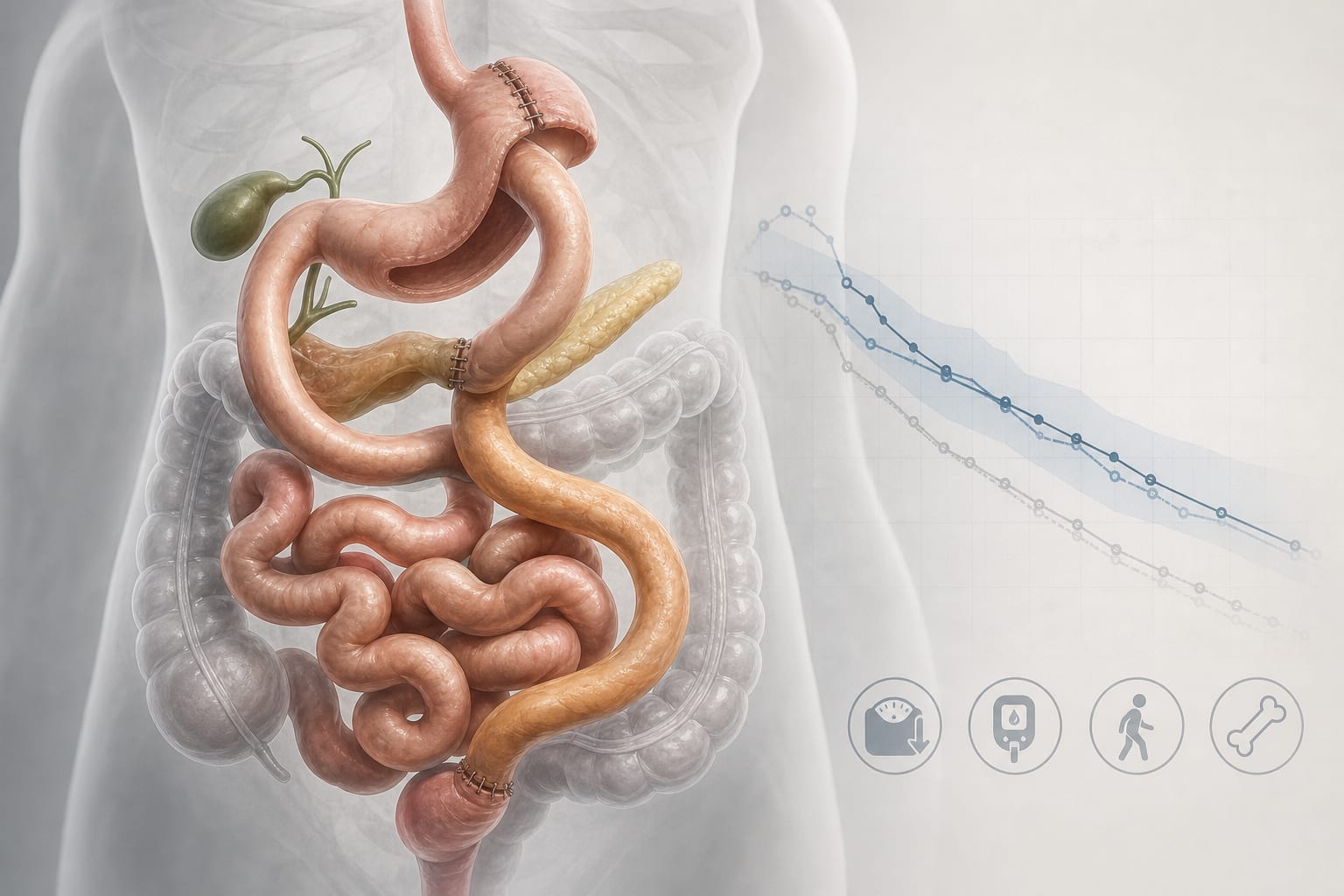
To systematically assess perioperative clinical safety, medium-term weight loss outcomes, multidisciplinary management challenges, and the clinical applicability of laparoscopic sleeve gastrectomy (LSG) in adults with Prader-Willi syndrome (PWS) and super-morbid obesity, with the aim of identifying appropriate candidates for surgical intervention and establishing standardized perioperative management strategies.
Approach:
Key Findings:
Short-term postoperative recovery was uneventful.
Long-term weight reduction outcomes and the risk of postoperative complications remain uncertain.
LSG was associated with modest weight reduction in patients with PWS, but significant postoperative management challenges persisted, necessitating ongoing multidisciplinary support.
Interpretation:
LSG should not be considered a first-line intervention for patients with PWS and should be restricted to carefully selected patients following comprehensive MDT evaluation, highlighting the need for further research into individualized treatment strategies.
Postoperative complications and management challenges were not fully addressed, and the lack of long-term follow-up data is a concern.
Conclusion:
Optimized perioperative behavioral management and emerging therapies may expand surgical eligibility within this patient population, underscoring the importance of individualized treatment strategies.
A four-factor staging system stratified response rates from 90.9% to 37.5% in a retrospective cohort study, although the model showed only moderate discrimination (C statistic, 0.68) and requires external validation