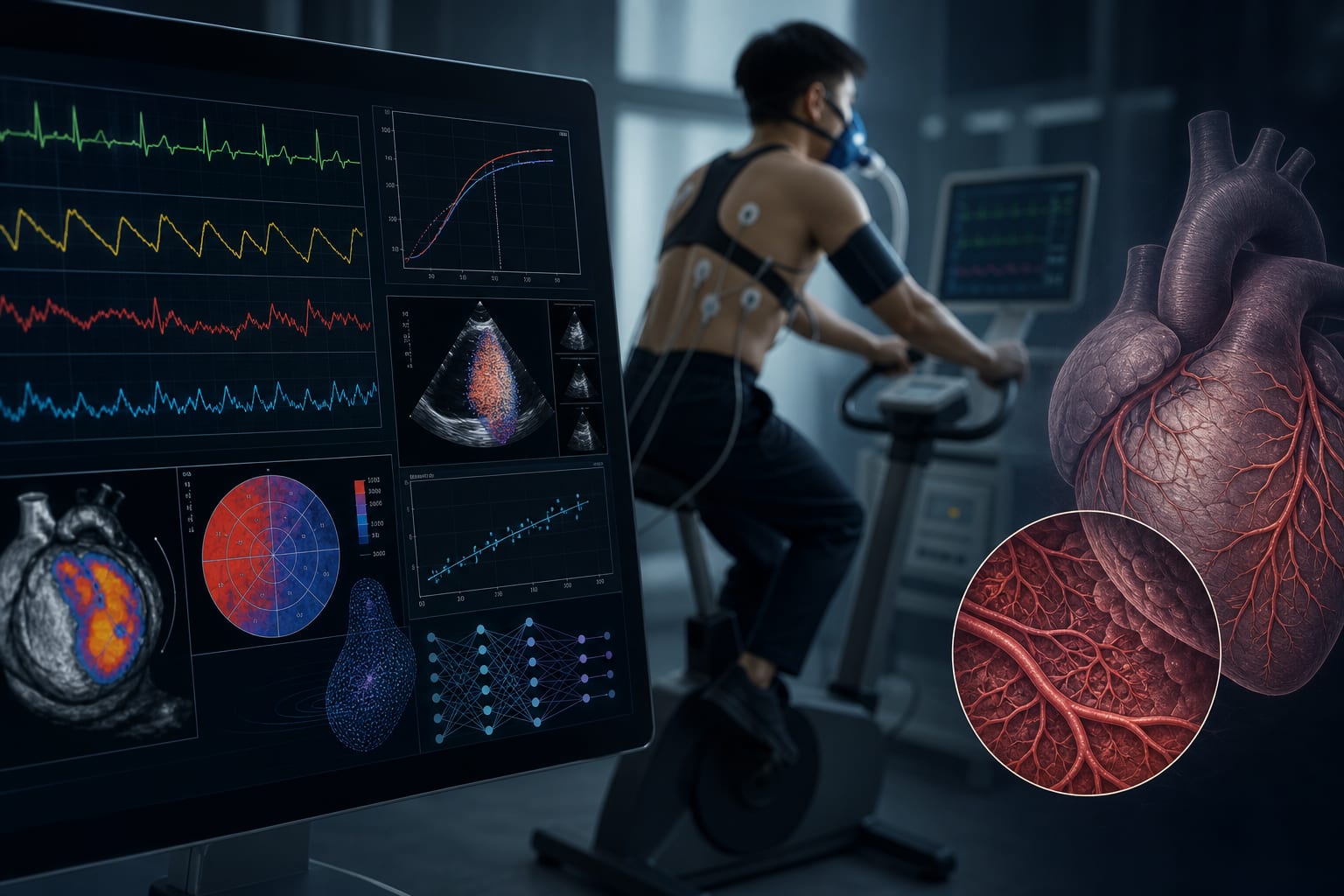
Shexiang Tongxin Dropping Pill for Coronary Microvascular Disease: Rationale and Design of a Multicenter Randomized Trial with a Cardiopulmonary Exercise Testing Primary Endpoint and AI-Enhanced Myocardial Contrast Echocardiograph - Summary - MDSpire
Advertisement
Shexiang Tongxin Dropping Pill for Coronary Microvascular Disease: Rationale and Design of a Multicenter Randomized Trial with a Cardiopulmonary Exercise Testing Primary Endpoint and AI-Enhanced Myocardial Contrast Echocardiograph
To evaluate the efficacy and safety of Shexiang Tongxin Dropping Pill (STDP) in patients with coronary microvascular disease (CMVD) using cardiopulmonary exercise testing (CPET) as the primary functional outcome.
Approach:
Key Findings:
CMVD is a major cause of angina in patients with ischemia and nonobstructive coronary arteries (INOCA) syndrome.
STDP has shown protective effects on the coronary microvasculature in preliminary studies.
High-quality randomized evidence and objective functional validation for STDP in CMVD are lacking.
Interpretation:
The study proposes a therapeutic-diagnostic framework for CMVD by combining quantitative microvascular imaging, functional exercise assessment, and AI-assisted diagnostics.
Limitations:
The study relies on the accuracy of stress MCE for CMVD diagnosis.
The effectiveness of STDP compared to placebo needs to be established through the trial.
Conclusion:
This study aims to provide high-quality randomized evidence for the use of STDP in CMVD and improve diagnosis and management in patients with functional coronary ischemia.
In a target-trial emulation of more than 600,000 veterans, GLP-1 RA initiators saw fewer new substance use disorders—and patients with existing SUDs had fewer overdoses, hospitalizations, and deaths.
Federal prosecutors allege that a Florida physician and research staff fabricated clinical trial records that were submitted into database systems used to evaluate investigational drugs.