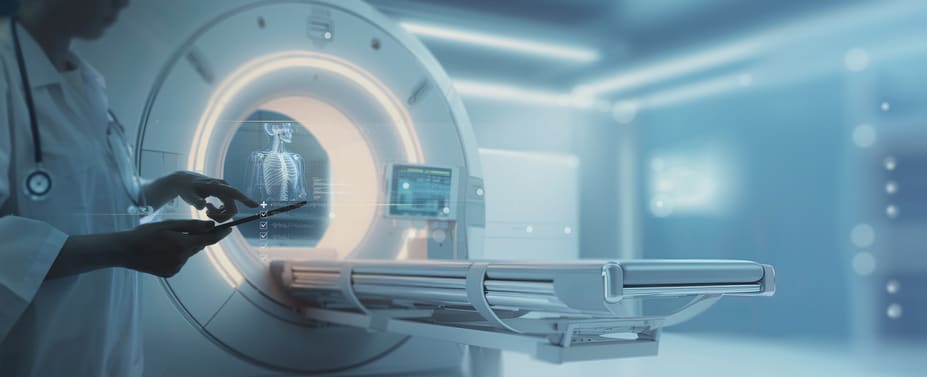
To examine current practical applications and perspectives of AI in musculoskeletal (MSK) radiology, highlighting its significance in enhancing diagnostic capabilities.
Key Findings:
AI has significantly advanced MSK radiology, improving image acquisition and interpretation, with implications for clinical practice.
Deep learning (DL) techniques have reduced scan times by up to 53% without compromising diagnostic performance, enhancing patient throughput.
AI tools for fracture detection have shown clinical value, especially in emergency settings, potentially reducing morbidity.
LLMs are emerging for tasks like automated report generation and classification of MSK disorders, improving communication.
Successful AI deployment requires integration into existing systems, adherence to regulatory standards, and consideration of clinical workflows.
Interpretation:
AI is reshaping MSK radiology by enhancing diagnostic capabilities and workflow efficiency, while also necessitating careful integration and management of associated risks, including potential information loss.
Limitations:
Aggressive under-sampling in AI-based reconstruction may lead to information loss, impacting diagnostic accuracy.
Long-term adoption depends on cost-effectiveness and integration into clinical practices, which must be continuously evaluated.
Conclusion:
AI should serve as an assistive tool to enhance radiologist expertise, with a focus on clear guidelines, performance transparency, and ongoing research to ensure safe adoption.