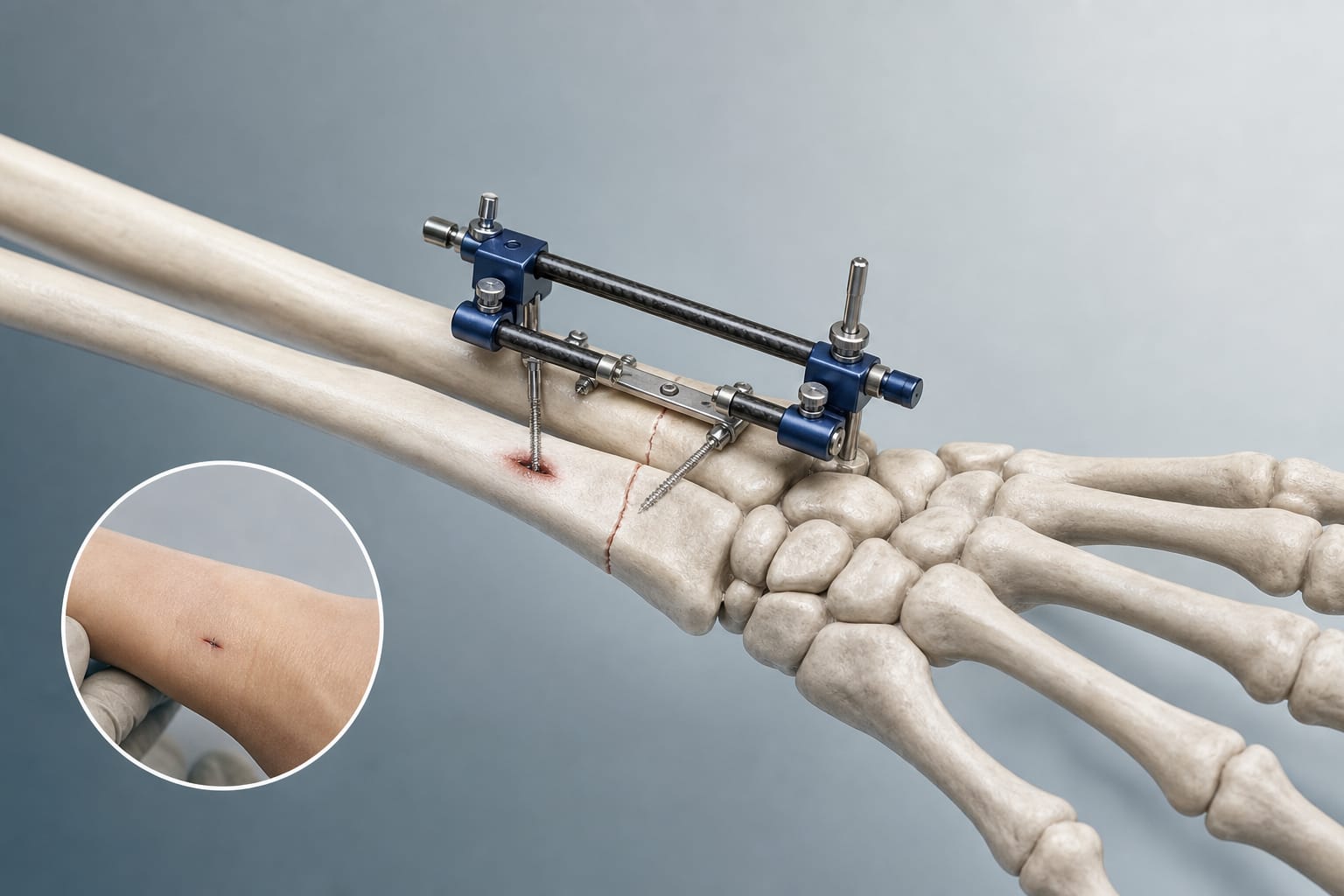
To evaluate the efficiency of correcting depressed distal radial malunions at distal levels via a 5 mm incision.
Approach:
Study Design: Retrospective study comparing 46 patients treated with external fixation through a 5 mm incision to 49 patients treated with conventional open reduction and internal fixation.
Patient Selection: Patients aged 18-65 with specific criteria for distal radius malunion were included; exclusions applied to certain fracture types and comorbidities.
Surgical Technique: Surgery performed under anesthesia with a 5 mm incision; osteotomy and fixation techniques detailed.
Key Findings:
Significant differences in off work time (152 ± 42 vs. 210 ± 72; P < 0.01) and total treatment cost (US$ 32,653 ± 1,234 vs. US$ 43,653 ± 3,234; P < 0.01).
Radial height improved significantly in the external fixation group (12.1 ± 3.9 mm vs. 10.2 ± 2.7 mm; P < 0.05).
No significant difference in Mayo Wrist Scores (94.3 ± 5.7 vs. 92.8 ± 7.1; P > 0.05).
Higher patient aesthetics scores in the external fixation group (8.8 ± 1.8 vs. 8.1 ± 1.1; P < 0.05).
Higher patient satisfaction scores in the external fixation group (8.9 ± 1.6 vs. 8.1 ± 1.2; P < 0.05).
Interpretation:
The technique of external fixation through a 5 mm incision may effectively maintain radial height and improve patient satisfaction while reducing costs and off work time.
Limitations:
Retrospective design may introduce selection bias.
Limited sample size and follow-up duration.
Conclusion:
Minimally invasive correction of depressed distal radial malunions is a viable alternative to conventional methods, particularly beneficial in terms of cost and patient satisfaction.