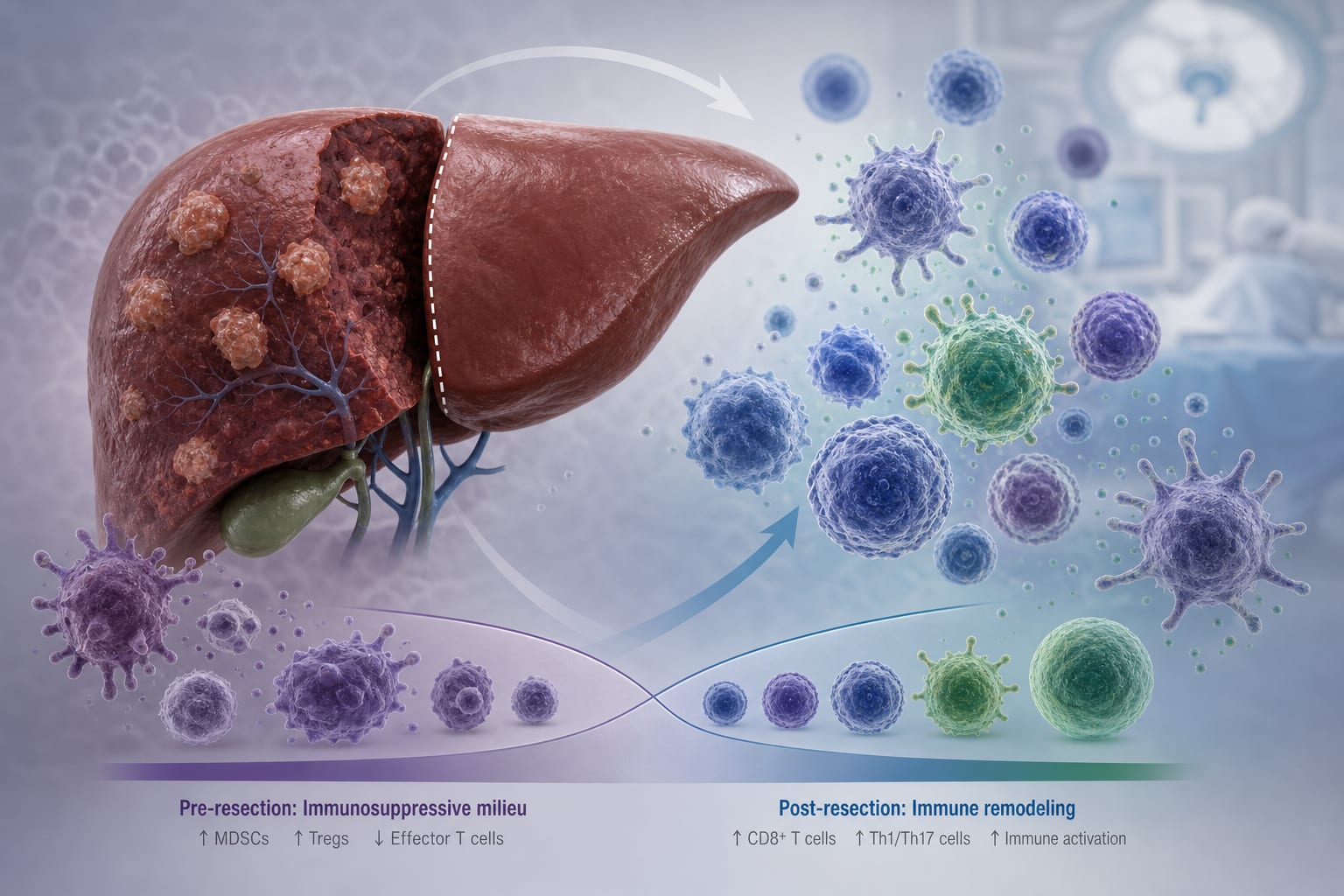
To delineate immune reprogramming following liver resection in colorectal cancer liver metastases (CRLM) patients.
Approach:
Sample Collection: Peripheral blood samples were collected from CRLM patients before and after liver resection.
Analysis Methods: Peripheral blood mononuclear cells were analyzed using multiparameter flow cytometry with adaptive and innate immunity panels.
Tumor Immune Microenvironment Assessment: The tumor immune microenvironment (TIME) was assessed by H&E, immunohistochemistry, and immunofluorescence.
Key Findings:
Postoperative analysis revealed remodeling of T cell composition with increased CD4+ T cells among circulating CD3+ T cells.
The overall proportion of CD8+ T cells among circulating CD3+ T cells was reduced.
Patients with recurrence had a higher postoperative proportion of S100A9+ monocytic myeloid-derived suppressor cells (M-MDSCs).
KRAS-mutated tumors may be associated with distinct postoperative immune profiles.
Interpretation:
Liver metastasis resection is associated with CD4+ T cell-dominant systemic immune remodeling and changes in exhaustion-associated markers, suggesting a potential postoperative window for future immunotherapeutic interventions.
Limitations:
Findings are speculative and require further functional validation.
The study does not provide direct evidence for clinical implications of the altered immune landscape.
Conclusion:
The altered CD4+ T cell landscape warrants further investigation regarding its potential relevance to adoptive cellular therapies or immune checkpoint inhibition.
by Shuo Ren, Migmar Tsamchoe, Stephanie K. Petrillo, Oran Zlotnik, Jessica Bloom, Anastasia Tsatoumas, Vered Domankevich, Anthoula Lazaris, Peter Metrakos