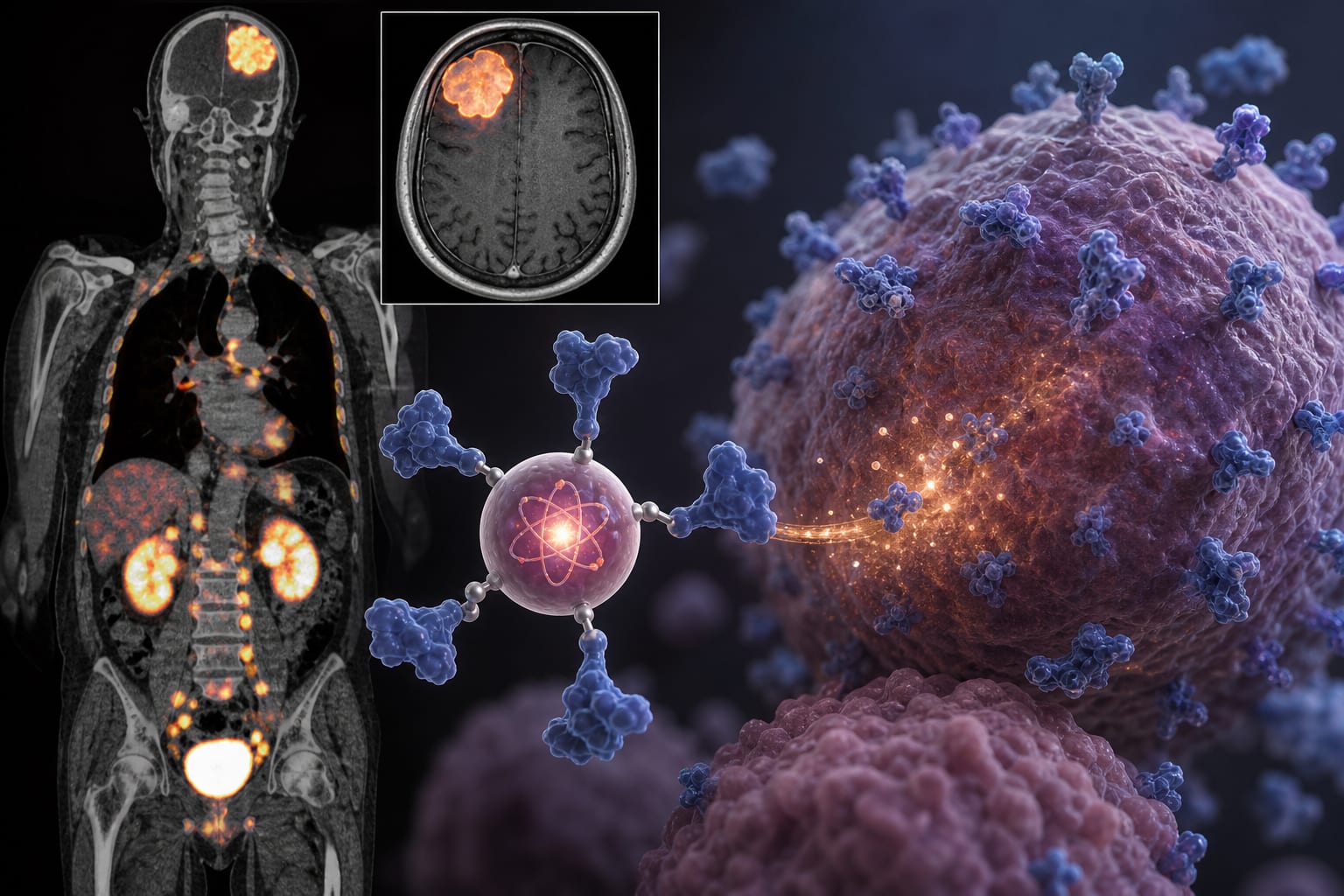
To prospectively compare tumor volumes defined by 18 F-Fluciclovine PET, T1C, and FLAIR at multiple timepoints throughout the treatment course of glioblastoma patients, specifically at baseline, post-surgery, during chemoradiation, and at follow-up.
Key Findings:
18 F-Fluciclovine PET demonstrated hypermetabolic volumes larger than T1C MRI volumes (p-value if available).
Hypermetabolic volumes were more concordant with true disease extent than conventional MRI (p-value if available).
The study faced recruitment challenges, enrolling only 8 participants instead of the target of 25 due to unforeseen circumstances.
Interpretation:
The findings suggest that 18 F-Fluciclovine PET may provide superior assessment of glioblastoma tumor volumes compared to conventional MRI, particularly in identifying non-contrast-enhancing tumor regions, which could influence treatment planning.
Limitations:
Small sample size due to recruitment challenges, which may limit the generalizability of the findings.
Study limited by early termination and unexpected cessation of radiopharmaceutical distribution.
Conclusion:
The study highlights the potential of 18 F-Fluciclovine PET in monitoring glioblastoma treatment response, emphasizing the need for further research with larger cohorts to validate these findings and explore clinical applications.
by Samir A. Dagher, Jason M. Johnson, Rania M.M. Mohamed, Shehbaz Ansari, Osama Mawlawi, Ho-Ling Liu, Max Wintermark, Dawid Schellingerhout, Lesley Flynt, Debra N. Yeboa, Jeffrey S. Weinberg, Sherise D. Ferguson, Maria K. Gule-Monroe