To investigate the impact of HBV on microRNA expression, specifically miR-4461, and its association with hepatocellular carcinoma (HCC) progression, focusing on the underlying mechanisms.
Key Findings:
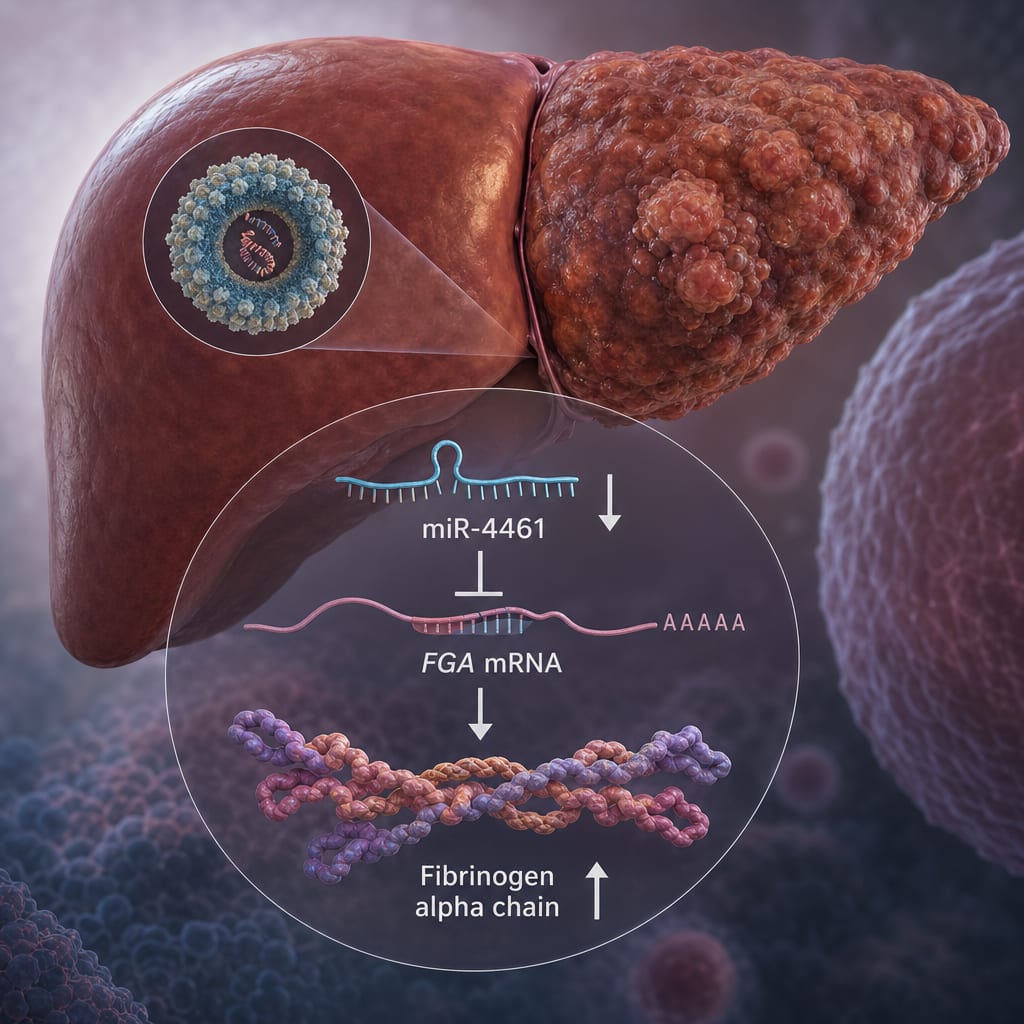
HBV infection leads to the downregulation of miR-4461 in hepatocytes, which may contribute to HCC progression.
Decreased levels of miR-4461 are associated with increased expression of the fibrinogen alpha chain, suggesting a potential oncogenic pathway.
miR-4461 may play a role as a tumor suppressor in the context of HBV-related HCC, warranting further investigation.
Interpretation:
The findings suggest that HBV-induced downregulation of miR-4461 contributes to the oncogenic process in HCC by promoting fibrinogen alpha chain expression, highlighting a potential molecular mechanism linking HBV infection to liver cancer progression and offering insights for therapeutic strategies.
Limitations:
The study primarily focuses on in vitro models, which may not fully replicate in vivo conditions; further research is needed to validate the clinical relevance of miR-4461 and its regulatory network in larger patient cohorts.
Future studies should explore the in vivo implications of miR-4461 modulation in HBV-related HCC.
Conclusion:
Understanding the role of miR-4461 in HBV-related hepatocarcinogenesis could provide insights into potential therapeutic targets for HCC, emphasizing the need for clinical validation.