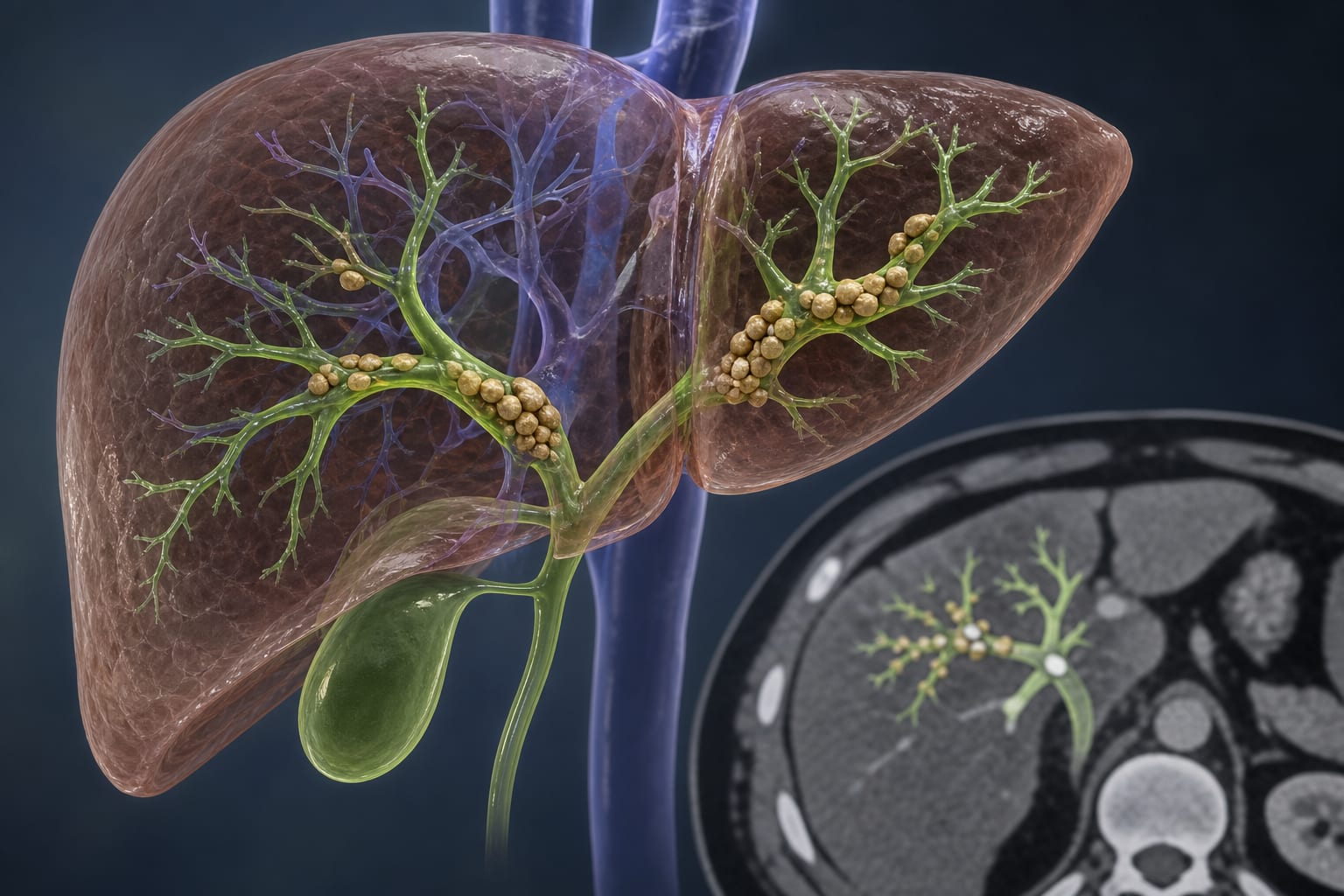
To investigate the benefits of integrating 3D visualization technology into one-step percutaneous transhepatic cholangioscopic lithotripsy (PTCSL) for treating complex hepatolithiasis.
Approach:
Inclusion/Exclusion Criteria: Inclusion criteria included diagnosed hepatolithiasis, Child–Pugh grade A or B liver function, and absence of severe comorbidities. Exclusion criteria included history of liver resection, intrahepatic calcification or tumors, and severe hepatic or renal insufficiency.
Key Findings:
3D visualization improved the precision of stone extraction and reduced intraoperative challenges.
The integration of 3D technology may lead to better short- and long-term clinical outcomes.
Interpretation:
The study suggests that 3D visualization can enhance the surgical approach for complex hepatolithiasis, potentially reducing complications associated with traditional methods.
Limitations:
Retrospective design may introduce selection bias.
Limited sample size and single-center study may affect generalizability.
Conclusion:
The incorporation of 3D visualization in one-step PTCSL shows promise in improving surgical outcomes for patients with complex hepatolithiasis.