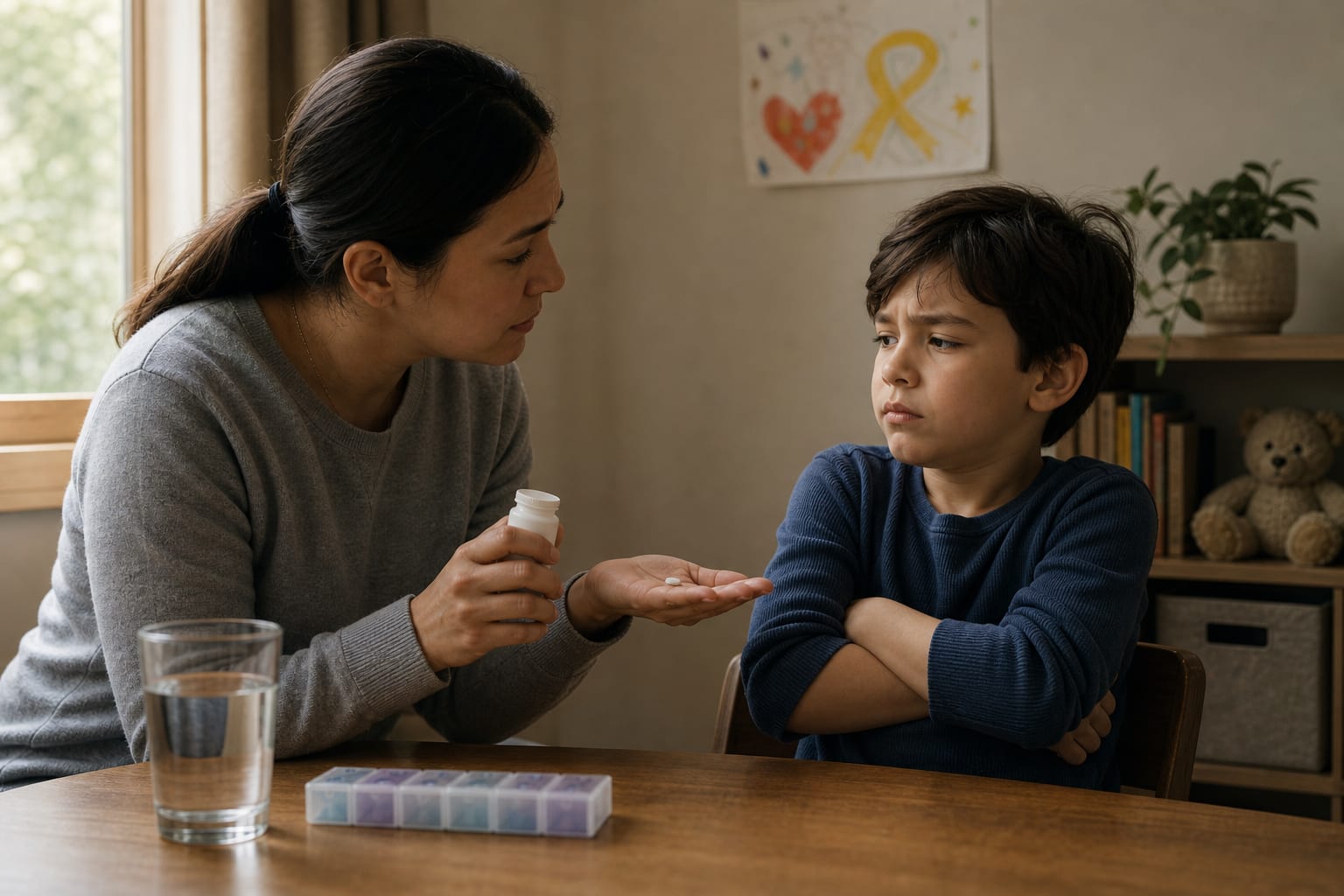
Assess whether observed parenting behaviors and daily family experiences were associated with medication-taking time or missed home chemotherapy doses among children with acute lymphoblastic leukemia (ALL).
Approach:
Participants and observations: This cross-sectional study included 40 children aged 3 to 9 years receiving oral chemotherapy at home. Parents video-recorded one medication-administration episode; three coders assessed parent–child interactions.
Measures and analysis: Researchers assessed time to medication ingestion, parent-reported daily experiences, and medication adherence. Regression models examined associations with ingestion time and missed doses.
Key Findings:
Medication ingestion took 0.1 to 16.8 minutes after administration began; the median was 0.5 minutes.
Unlabeled praise was associated with a 73.0% longer time to ingestion per instance.
Thirteen children (32.5%) missed chemotherapy doses. Mean monitoring-system adherence was 92.2% of prescribed days.
Within families, missed-dose odds were higher on days when reported total daily hassles, challenging child behavior, or parenting-task hassles exceeded that parent's average. Higher average parenting-task hassles were also associated with increased odds of a m…
Interpretation:
The authors report that missed doses were associated with parenting stressors, particularly day-to-day increases within families. They identify these findings as potential targets for future behavioral interventions and suggest studying interventions focused on high-risk days.
Limitations:
The cross-sectional study did not connect episode-level or daily experiences with longer-term adherence patterns or clinical outcomes.
by Elizabeth G. Bouchard, Sharon M. Castellino, Gregory A. Fabiano, Karen Lutfey Spencer, Mark A. Prince, Leonard H. Epstein, Paula C. Vincent, Hital Patel, Diana Fridlyand, Susan A. LaValley, Elisa M. Rodriguez, Kara M. Kelly
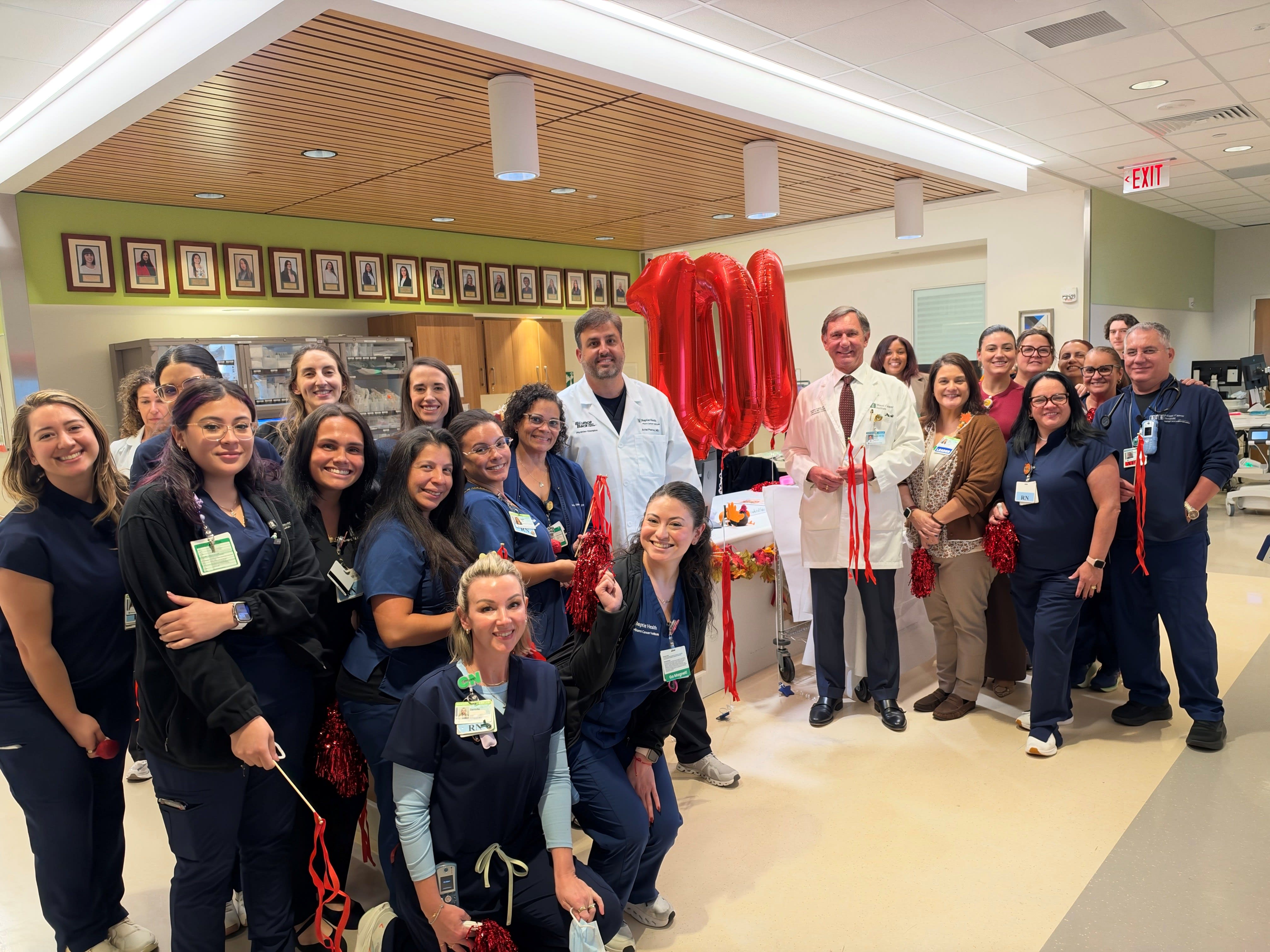
Baptist Health Herbert Wertheim Cancer Institute has reached a significant milestone in cancer care: the treatment of its 100th patient with CAR T-cell therapy.
Antonio Gioradano, MD, presents efficacy and safety of atirmociclib + fulvestrant in HR+/HER2- advanced breast cancer after progressing on prior CDK4/6 inhibitor - data from phase 2 FOURLIGHT-1 study.