30-Day Outcomes of Simultaneous Sleeve Gastrectomy and Kidney Transplantation: An Analysis from the Metabolic and Bariatric Surgery Accreditation and Quality Improvement Program (MBSAQIP) Database - Summary - MDSpire
Advertisement
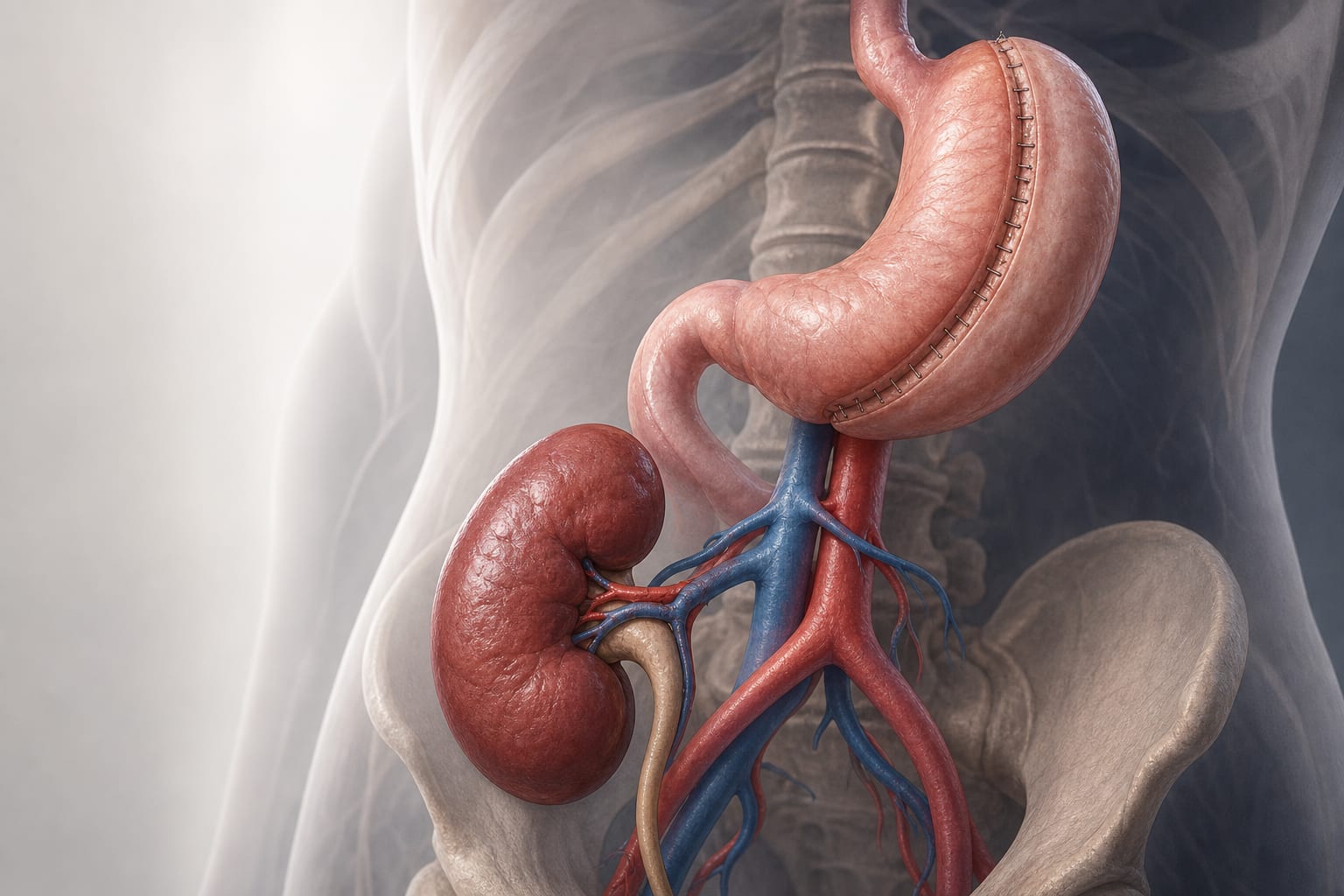
30-Day Outcomes of Simultaneous Sleeve Gastrectomy and Kidney Transplantation: An Analysis from the Metabolic and Bariatric Surgery Accreditation and Quality Improvement Program (MBSAQIP) Database
To assess 30-day perioperative outcomes in patients undergoing simultaneous sleeve gastrectomy and kidney transplantation (SG + KT) using the MBSAQIP database.
Approach:
Study Design: A retrospective analysis utilizing the MBSAQIP database from 2020 to 2023, focusing on standardized clinical data related to renal disease severity and perioperative risk factors.
Patient Selection: Identified adult patients who underwent SG and KT using specific CPT codes, excluding non-elective and certain bariatric procedures.
Outcome Measures: Primary outcomes included prevalence of SG + KT and differences between cohorts; secondary outcomes evaluated 30-day morbidity and mortality.
Statistical Analysis: Used Wilcoxon rank-sum tests, t-tests, chi-square tests, and logistic regression to analyze data and identify predictors of complications and mortality.
Key Findings:
A total of 582,860 patients underwent SG, with only 22 patients (0.004%) undergoing SG + KT.
The study provides insights into the outcomes of simultaneous procedures, although detailed results are not fully presented in the provided context.
Interpretation:
The integration of metabolic and transplant surgery is gaining attention, necessitating further evaluation of outcomes on a broader scale.
Limitations:
The study is limited to data from the MBSAQIP database, which may not capture all relevant outcomes.
The small number of patients undergoing SG + KT limits the generalizability of the findings.
Conclusion:
The study aims to fill a gap in understanding the perioperative outcomes of simultaneous SG and KT.