Distribution characteristics of chronic fatigue syndrome among secondary school students and its association with physical health: a case study in Shaanxi Province - Summary - MDSpire
Advertisement
Distribution characteristics of chronic fatigue syndrome among secondary school students and its association with physical health: a case study in Shaanxi Province
To examine the detection rate of chronic fatigue syndrome (CFS) in secondary school students in Shaanxi Province and its association with physical fitness test outcomes.
Approach:
Survey Methodology: A survey involving the distribution of CFS questionnaires and collection of physical fitness test data was conducted among students from 25 secondary schools, analyzing 8,840 valid questionnaires.
Statistical Analysis: Detection rates for CFS and chronic fatigue (CF) were determined, and gender and year group variances were assessed using chi-square tests. Correlation analyses evaluated the relationship between CFS and physical fitness scores.
Key Findings:
Overall CFS detection rate was 2.059%, with 1.903% for males and 2.234% for females, showing no significant gender difference (χ2 = 1.210, p = 0.546).
CFS detection rate increased from 1.012% in grade 7 to 3.728% in cram schools, with significant differences across grade groups (χ2 = 24.082, p = 0.020).
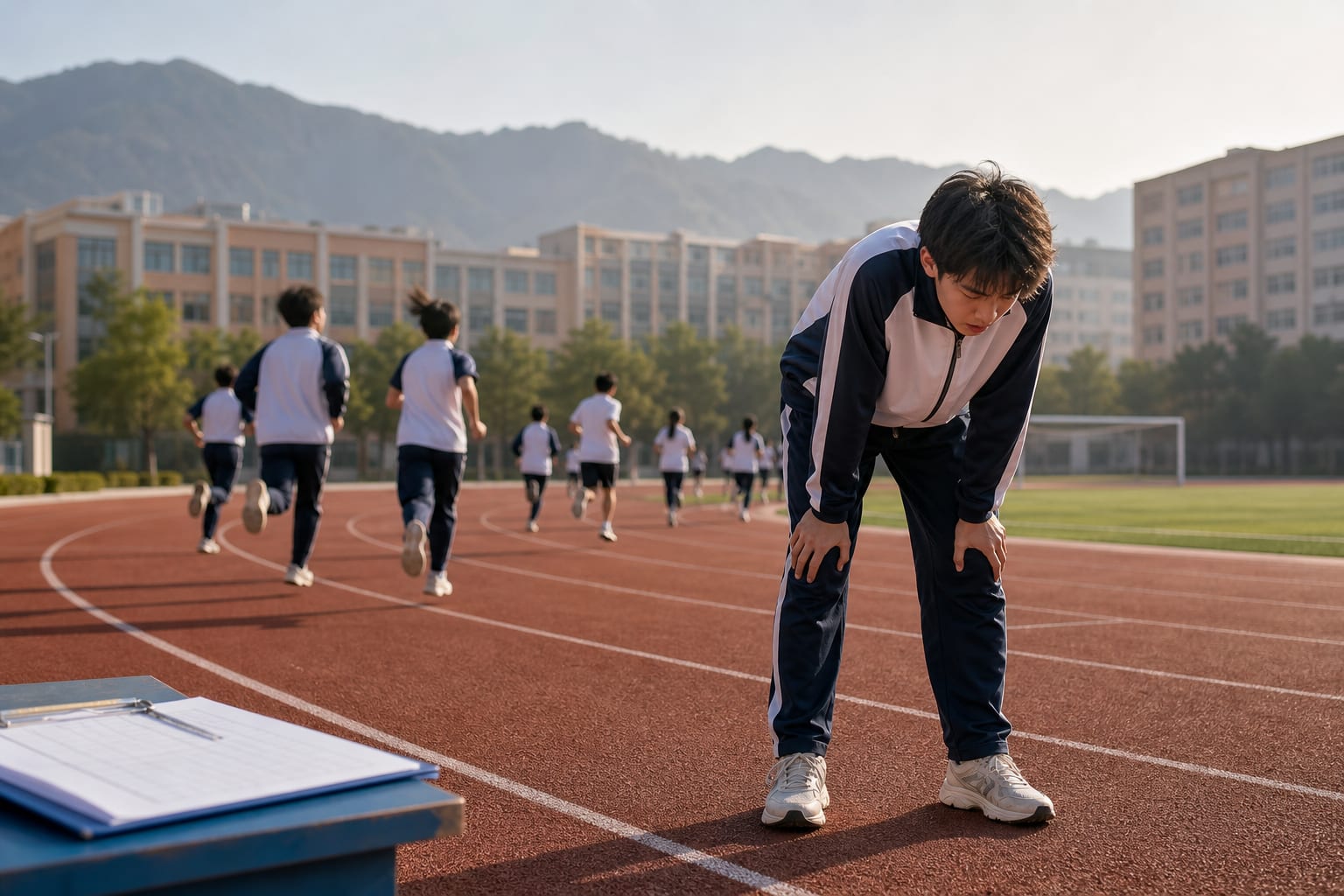
Weak to moderate negative correlations were found between CFS severity and endurance running performance in boys (τ = −0.261, p < 0.001) and girls (τ = −0.385, p < 0.001).
Female students in the CFS group had significantly lower vital capacity compared to the control group (p < 0.05).
Interpretation:
CFS-like symptoms among secondary school students in Shaanxi Province are prevalent and associated with poorer physical fitness, particularly in endurance running.
Limitations:
The study is limited to a specific geographic area and may not be generalizable to other regions.
The reliance on self-reported questionnaires may introduce bias in the detection of CFS.
Conclusion:
CFS symptoms in secondary school students are linked to lower physical fitness performance, particularly as detection rates increase with grade level.