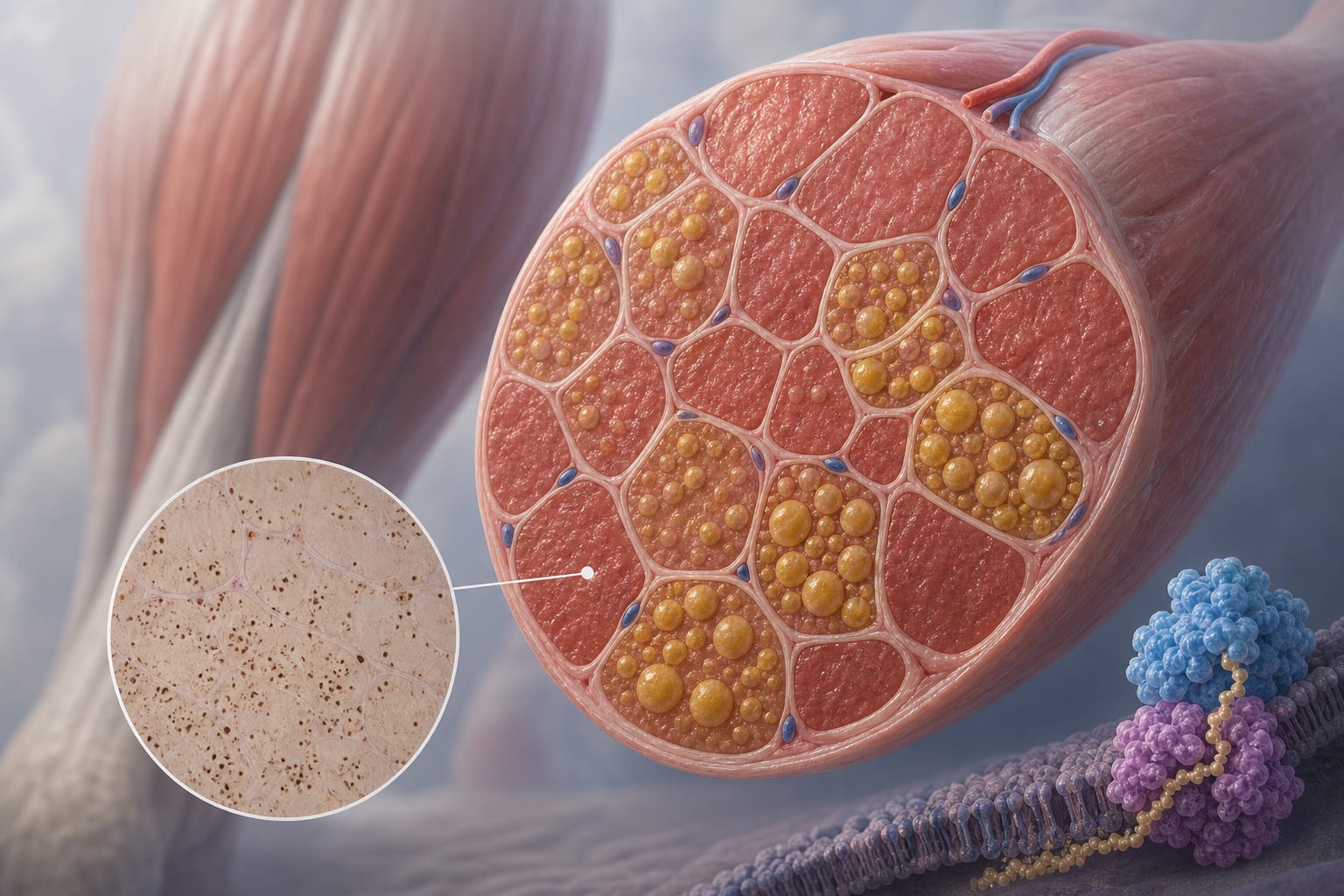
To investigate the role of hyperhomocysteinemia (HHcy) in lipid accumulation in skeletal muscle, highlighting its potential implications for muscle metabolism.
Key Findings:
Four of the six patients exhibited clinical myopathic manifestations, which resolved after B-vitamin supplementation.
All six patients showed abnormal skeletal muscle lipid deposition.
ACACB gene expression was significantly upregulated in muscle tissues (p < 0.001).
ACC2 protein expression was markedly elevated (p < 0.01), leading to increased malonyl-CoA levels (p < 0.01).
Inhibition of CPT1 activity was observed, correlating with lipid accumulation.
Interpretation:
HHcy is associated with abnormal lipid deposition in skeletal muscle, potentially through increased ACC2 expression and subsequent malonyl-CoA elevation, which inhibits fatty acid oxidative metabolism, warranting further investigation into therapeutic strategies.
Limitations:
The small sample size of six patients limits generalizability and may not represent the broader population.
The study does not explore long-term effects of B-vitamin supplementation, which could provide insights into sustained metabolic changes.
Conclusion:
The findings suggest a mechanistic link between HHcy and lipid accumulation in skeletal muscle, highlighting the role of ACC2 and malonyl-CoA, and indicating potential avenues for future research.