To report a case of delirium and complications resulting from withdrawal from compound liquorice tablets.
Approach:
Case Presentation: A 29-year-old male self-medicated with compound liquorice tablets for a dry cough post-COVID-19, escalating to 200–600 tablets daily, leading to drug dependence and withdrawal symptoms.
Management: The patient was treated with a benzodiazepine tapering regimen, antidepressants, and antipsychotics, alongside management of hypertension and electrolyte imbalances.
Key Findings:
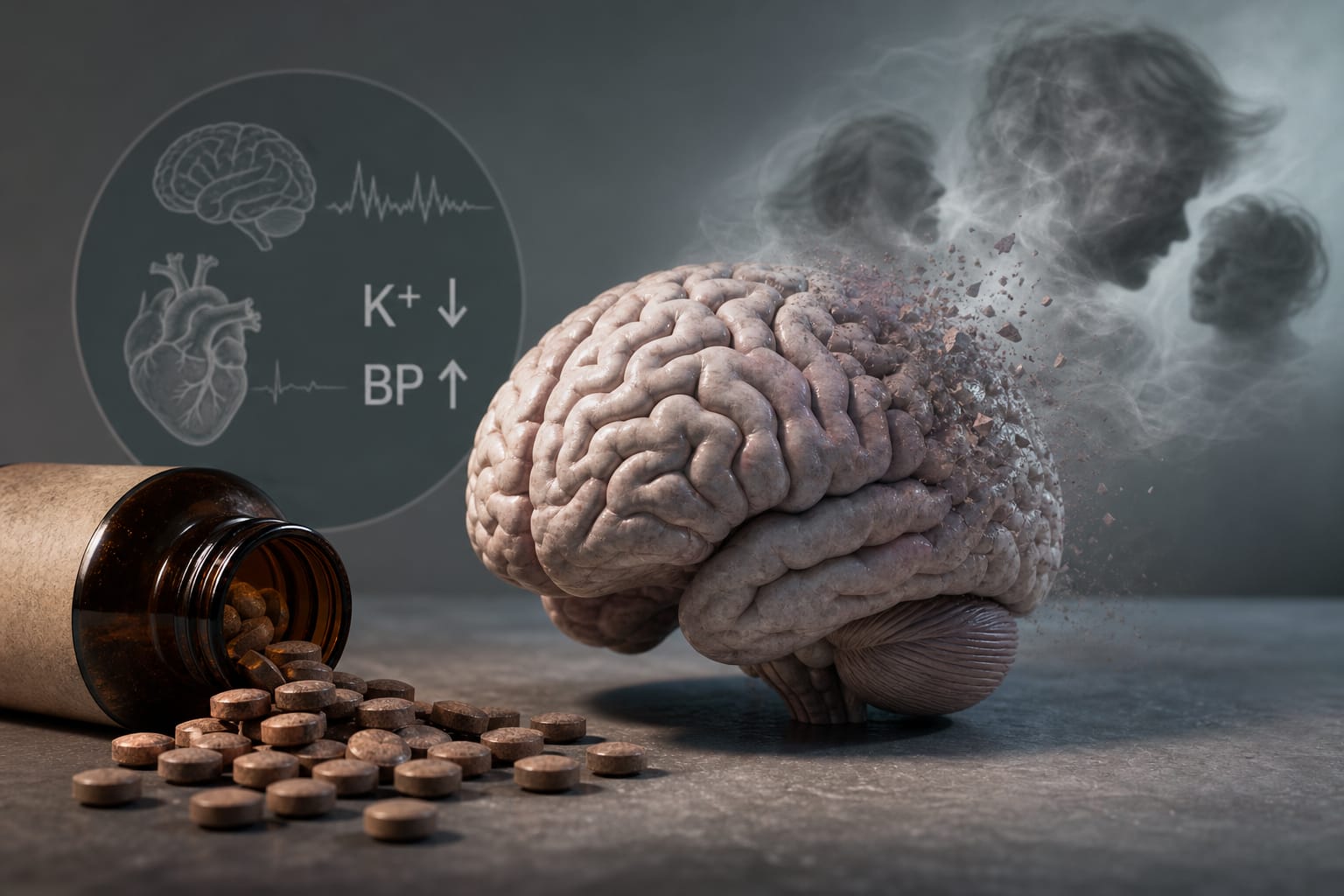
The patient developed delirium characterized by confusion, hallucinations, and agitation after discontinuing compound liquorice tablets.
Withdrawal symptoms included palpitations, hypertension, tremors, and severe hypokalemia.
Comprehensive management led to resolution of withdrawal symptoms and stabilization of the patient's condition.
Interpretation:
This case highlights the potential for severe withdrawal symptoms and complications associated with compound liquorice tablets misuse, emphasizing the need for clinical awareness and management strategies.
Limitations:
This is a single case report, limiting generalizability.
There is a lack of extensive clinical studies on the addiction potential of compound liquorice tablets.
Conclusion:
This case highlights the emerging risk of abuse associated with compound liquorice tablets and the necessity for stricter prescription controls.
Recent CDC advisories, testing updates, and immunization recommendations highlight developments in infectious diseases, immunization, and diagnostic testing relevant to physicians across multiple specialties.