To provide an updated overview on the methodology and clinical applications of non-invasive intracranial pressure (nICP) monitoring tools for clinicians in critical care settings, emphasizing their significance in specific clinical scenarios.
Key Findings:
Non-invasive methods can complement invasive ICP monitoring by providing additional physiological insights.
Transcranial Doppler (TCD) can estimate ICP through changes in cerebral blood flow velocities, with specific formulas linking systemic pressure and Doppler data.
TCD-derived nICP has shown potential for high negative predictive value in screening for intracranial hypertension, but challenges remain regarding accuracy and operator variability.
Interpretation:
While non-invasive techniques like TCD are not replacements for invasive ICP monitoring, they can offer valuable information in various clinical scenarios, particularly where invasive methods are not feasible or contraindicated.
Limitations:
None of the non-invasive methods have demonstrated sufficient accuracy to fully replace invasive ICP monitoring.
Factors such as operator variability, acoustic window failure, and confounding systemic hemodynamics can significantly affect the accuracy of nICP estimations, impacting clinical decision-making.
Conclusion:
Non-invasive ICP monitoring tools are beneficial in critical care settings, particularly when invasive methods are contraindicated or unavailable, but they should be used as complementary tools rather than substitutes, integrating their use into clinical practice.
by Edoardo Picetti, Daniele Guerino Biasucci, Elisa Gouvea Bogossian, Sérgio Brasil, Danilo Cardim, Marek Czosnyka, Daniel A. Godoy, Gregory W. J. Hawryluk, Mohammad I. Hirzallah, Frank A. Rasulo, Carla Bittencourt Rynkowski, Andres M. Rubiano, Fabio Silvio Taccone, Chiara Robba
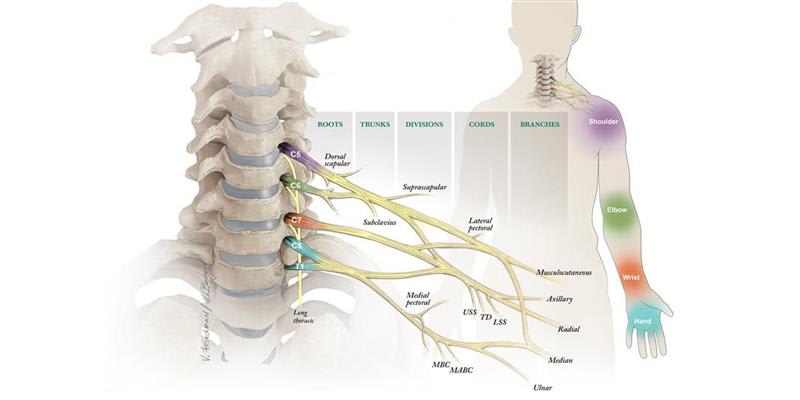
David Brogan, MD, MSc, and Christopher Dy, MD, MPH, who are pioneering new approaches to treating brachial plexus injuries, including those caused by high-velocity trauma such as motor vehicle accidents.
Baptist Health Miami Neuroscience Institute invites Dr. Daniel Barrow to discuss the latest techniques and research advancing cerebrovascular surgery and stroke care.