Shrinkage paradox in intraductal papillary mucinous neoplasms is associated with higher concomitant pancreatic cancer risk - Summary - MDSpire

Shrinkage paradox in intraductal papillary mucinous neoplasms is associated with higher concomitant pancreatic cancer risk

  • By

  • Hideyuki Fukui

  • Teppei Yoshioka

  • Katsuhiko Sato

  • Yuki Makino

  • Hiromitsu Onishi

  • Atsushi Nakamoto

  • Takashi Ota

  • Toru Honda

  • Feier Ding

  • Yukihiro Enchi

  • Daisaku Yamada

  • Yasunari Fukuda

  • Hidetoshi Eguchi

  • Takahiro Kodama

  • Noriyuki Tomiyama

  • July 10, 2026

Share

Objective:

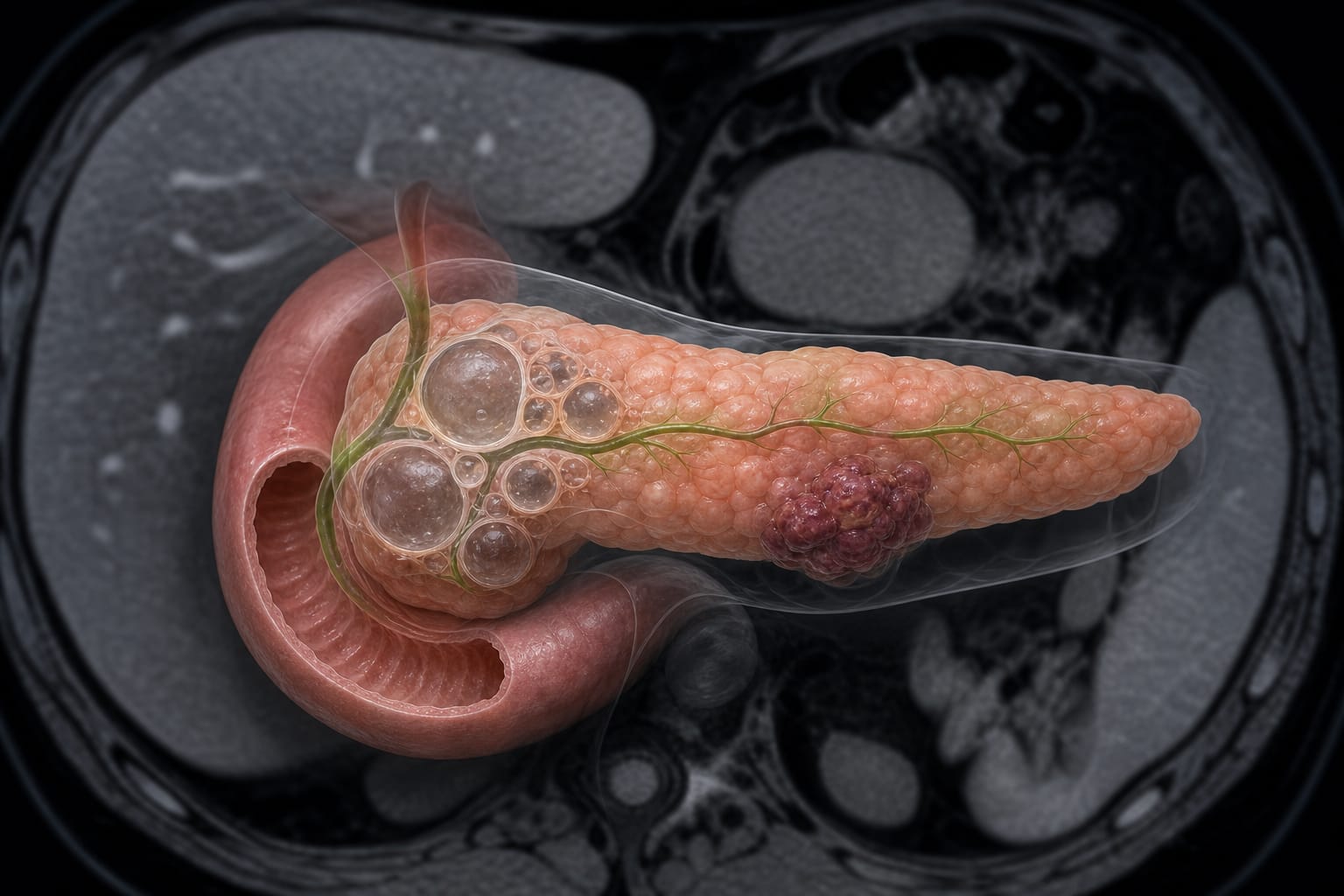
To test the hypothesis that cyst shrinkage in IPMN is associated with a higher risk of concomitant pancreatic ductal adenocarcinoma (PDAC).

Approach:
  • Study Design: A retrospective cohort study reanalyzing a previously described cohort of patients with pancreatic cystic lesions at The University of Osaka Hospital.
  • Patient Selection: From 2030 patients with pancreatic cystic lesions, 1137 patients with presumed IPMN were enrolled after applying specific exclusion criteria.
  • Imaging and Analysis: Cyst size was measured using CT and/or MRI, and the annual cyst size change rate was calculated to assess growth or shrinkage.
Key Findings:
  • Cyst shrinkage may indicate an increased risk of concomitant PDAC rather than benign regression.
  • Prior studies suggested that cyst shrinkage was generally associated with neutral or protective trends regarding malignancy.
Interpretation:

The findings suggest that shrinking cysts in IPMN patients could be a marker for higher PDAC risk.

Limitations:
  • The study is retrospective, which may introduce biases.
  • Exclusion criteria may limit the generalizability of the findings.
Conclusion:

Cyst shrinkage in IPMN may not be a reassuring finding.

Sources:

Original Source(s)

Related Content