Pharmacometric analyses of various ivermectin dose regimens in Kenya to inform dosing in mass drug administration trials for malaria vector control - Summary - MDSpire
To develop a population pharmacokinetic model for mass drug administration-eligible populations receiving two ivermectin regimens in Kenya and characterize variability in drug exposure to inform dose selection for malaria vector control and deployment strategies.
Approach:
Sampling Methods: Healthy adults receiving either a single 400 µg/kg ivermectin dose or 300 µg/kg on 3 consecutive days underwent venous plasma and dried blood spot sampling. Pharmacometric analyses compared the two regimens and evaluated whether dried blood spot sampling could serve as a practical alternative to plasma sampling in field trials.
Key Findings:
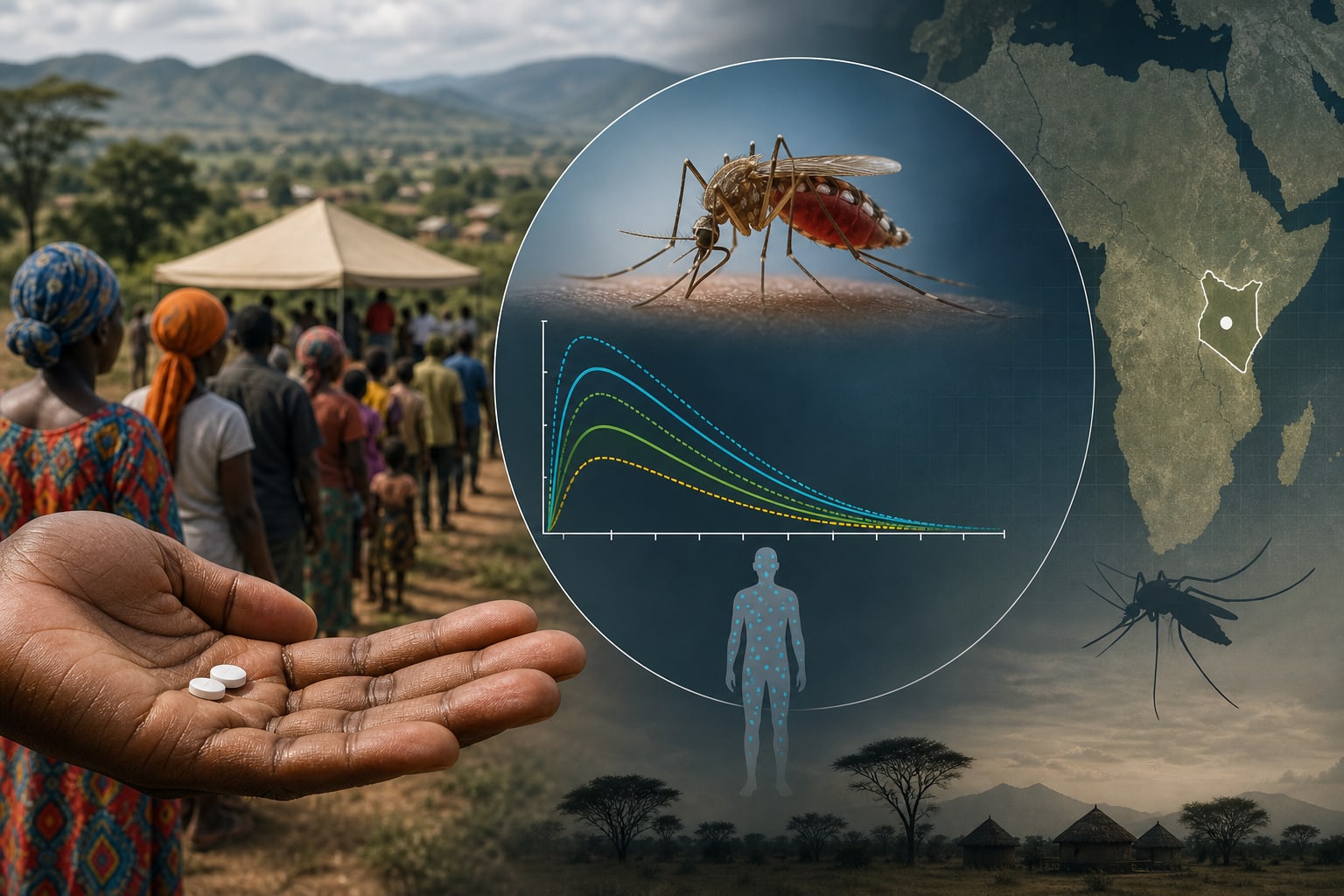
Model-based simulations found that ivermectin concentrations remained above the estimated Anopheles gambiae LC50 for a median of 6.3 days after a single 400 µg/kg dose and 8.5 days after the 3-day 300 µg/kg regimen. Although the multidose regimen provided a longer period above the LC50, the gain largely reflected the 2 additional dosing days, and the regimen was sensitive to missed doses.
Plasma and dried blood spot ivermectin concentrations were strongly correlated (R² = 0.93). After adjustment for hematocrit and protein binding, the mean percentage difference between the two sampling methods was 8.2%, supporting dried blood spot sampling as an alternative for field studies.
Interpretation:
Both ivermectin regimens produced exposure profiles that could provide a reasonable mosquito-killing window for mass drug administration. Although the 3-day regimen maintained concentrations above the estimated LC50 longer, a single 400 µg/kg dose may offer operational advantages by eliminating subsequent doses, while the 3-day regimen is sensitive to missed doses. The findings also support dried blood spot microsampling as a practical approach for pharmacokinetic assessment in field settings.
Limitations:
The pharmacokinetic model was based on only 18 ivermectin-treated participants, limiting characterization of interindividual variability and the generalizability of model predictions.
Only 3 of the 18 participants were women, limiting assessment of potential sex-based pharmacokinetic differences. In addition, sampling extended only to 168 hours for plasma and 96 hours for dried blood spots, restricting the timeframes supporting the exposure simulations.
Conclusion:
The pharmacometric analysis suggests that both a single 400 µg/kg ivermectin dose and 300 µg/kg administered for 3 consecutive days can maintain concentrations above the estimated A gambiae LC50 for several days. Although the multidose regimen produced a longer modeled duration above the LC50, a single-dose strategy may simplify implementation and improve adherence in mass drug administration campaigns. Dried blood spot microsampling also appears to be a viable alternative to plasma sampling for ivermectin pharmacokinetic studies in field settings.
by Charlotte Kern, Yvonne Kamau, Kelly Ominde, Mercy Tuwei, Lawrence Babu, Jonathan Karisa, Jane Adetifa, Marc Pfister, Regina N. Rabinovich, Carlos Chaccour, Marta Maia, Urs Duthaler, Felix Hammann