Conexiant’s news site is now MDSpire News. Learn more
Advertisement
Innovative Immune Cell Engineering: A Focus on Targeting Pathogenic Fibroblast-Like Synoviocytes in Rheumatoid Arthritis with Emphasis on Safety and Selectivity
To discuss CAR-based immune cell therapies targeting fibroblast-like synoviocytes (FLS) in rheumatoid arthritis (RA) with a focus on safety and selectivity.
Approach:
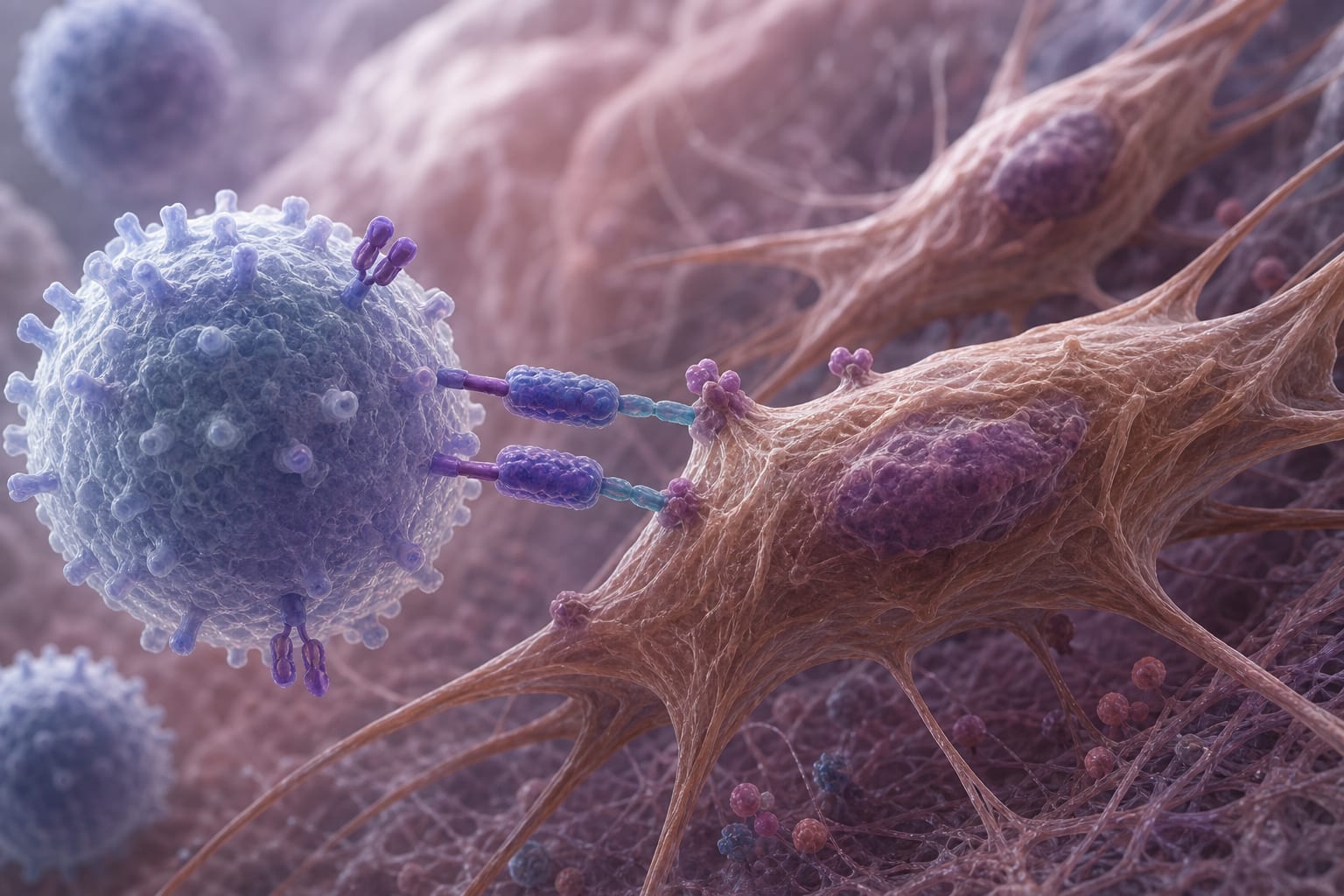
Targeting Pathogenic FLS: The review discusses engineered immune cells (CAR-T, CAR-NK, CAR-macrophages) that target FLS-specific antigens, aiming to eliminate or modulate pathogenic FLS.
Safety-First Roadmap: A 'safety-first' translational roadmap is proposed, incorporating features such as transient CAR expression, safety switches, hypoxia-responsive constructs, and localized delivery.
Key Findings:
Current RA therapies yield low rates of full remission, with many patients experiencing residual synovitis.
Pathogenic FLS are key mediators of RA, showing hyperproliferation and resistance to apoptosis.
Direct targeting of FLS could address limitations of existing therapies and has shown promise in preclinical trials.
Interpretation:
Targeting pathogenic FLS with engineered immune cells could reshape RA treatment by dismantling the inflammation process with precision.
Limitations:
Existing therapies largely ignore stromal drivers of RA.
Clinical translation requires careful validation of targets and patient selection.
Conclusion:
The review advocates for innovative CAR-based therapies targeting FLS to improve RA treatment outcomes while prioritizing safety.