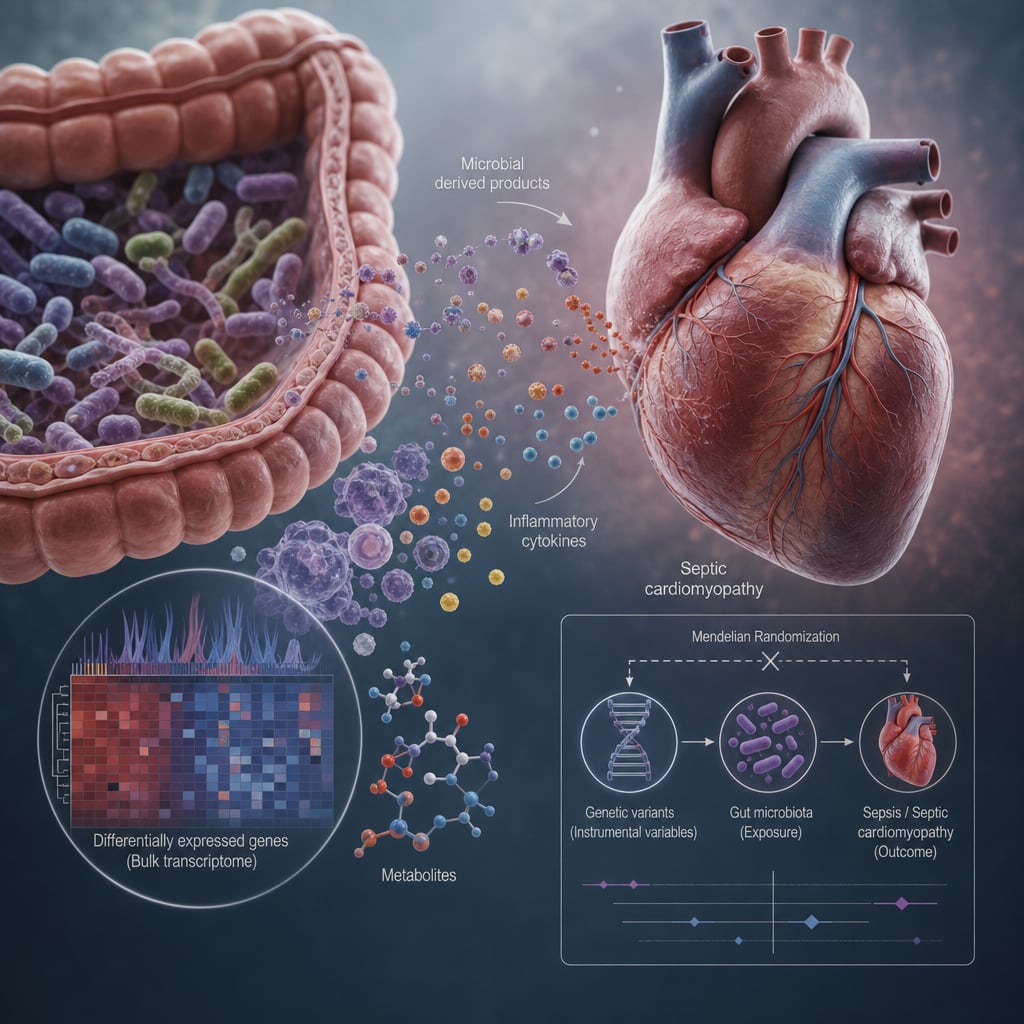
To explore the value of targets of gut microbiota (GM) in the development of septic cardiomyopathy (SCM), particularly focusing on their mechanistic roles.
Key Findings:
Five GM genera and 22 metabolites were identified through MR analysis, highlighting their potential roles in SCM.
A total of 166 DEGs were determined, leading to 11 candidate genes that may serve as biomarkers.
STAT3 and SLC5A1 were identified as biomarkers associated with SCM, suggesting their involvement in the disease process.
Elevated serum IL-6 and cTnI concentrations were found in SCM patients, while propylene glycol levels were decreased, indicating metabolic alterations.
Interpretation:
The study provides insights into the role of gut microbiota in SCM, highlighting potential biomarkers and their regulatory relationships, which could inform future therapeutic strategies.
Limitations:
The study relies on publicly available data, which may have inherent biases that could affect the results.
Further validation in larger cohorts is needed to confirm findings and assess their generalizability.
Conclusion:
STAT3 and SLC5A1 are candidate biomarkers linked to gut microbiota in SCM, paving the way for future mechanistic studies and potential clinical applications.