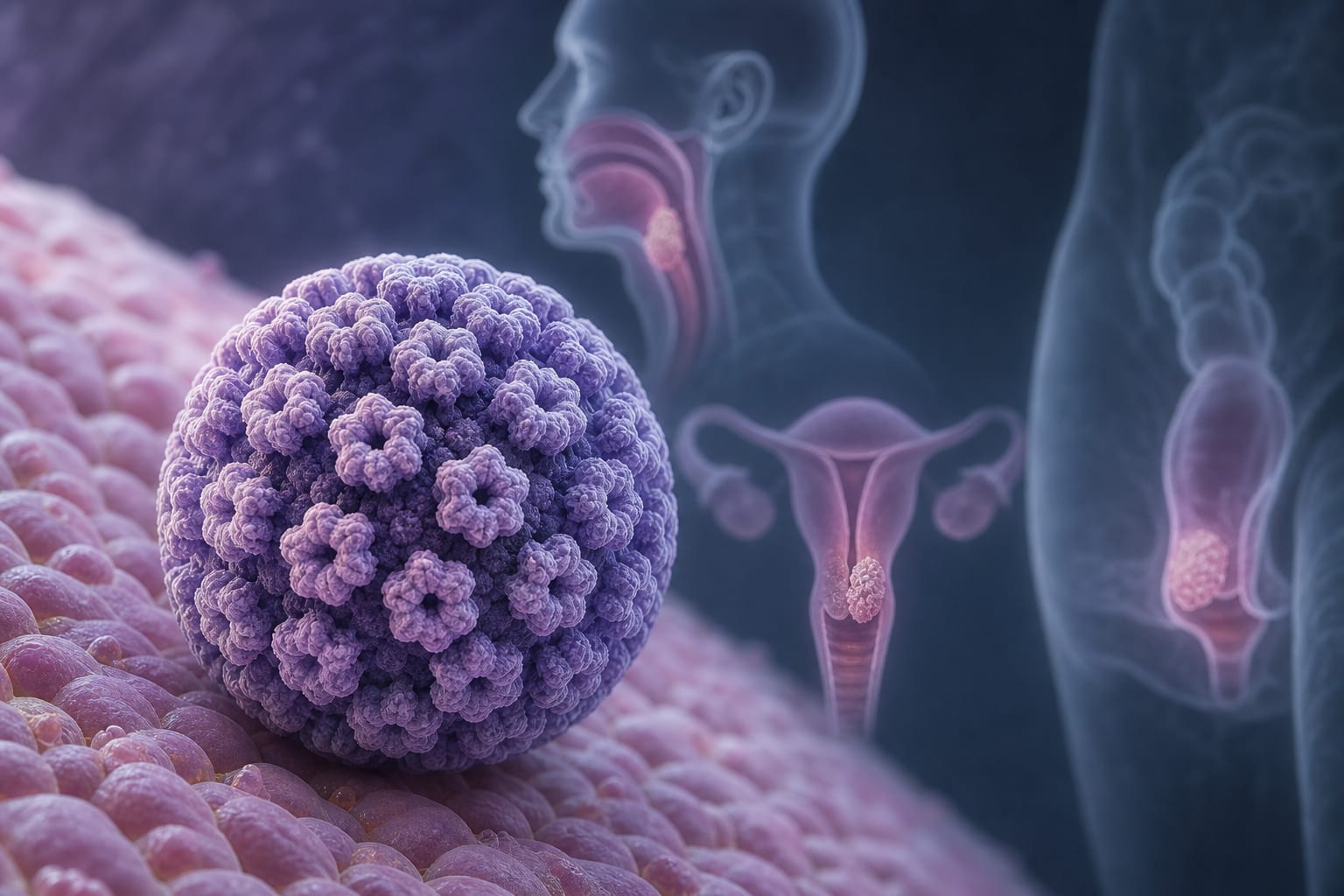
To compare HPV-related cancer odds in individuals with HIV (PWH) and solid organ transplant recipients (SOTRs) with unexposed individuals, while examining clinical and sociodemographic modifiers.
Approach:
Study Design: A nested case-control study was conducted using nationwide Swedish registers, focusing on individuals born between 1940 and 2000.
Data Sources: Data was collected from the Swedish Total Population Register, National HIV Register, Swedish Cancer Register, Patient Register, and Longitudinal Integration Database for Health Insurance and Labour Market Studies.
Case Definition: Cases were defined as HPV-related cancer diagnoses from 1983 to 2024, classified by site (anal, cervical, oropharyngeal, penile, vaginal, vulvar).
Control Selection: Ten controls were randomly selected for each case from the Total Population Register, matched by year of birth, sex, and region of birth.
Statistical Analysis: Odds ratios (ORs) for HPV-related cancers were estimated using conditional logistic regression, adjusting for income, education, civil status, and income type.
Key Findings:
HPV is linked to various cancers, particularly in immunocompromised populations.
Individuals with HIV and SOTRs have a higher risk of HPV-related cancers compared to unexposed individuals.
Sociodemographic factors may influence cancer risk patterns in these populations.
Interpretation:
Limitations:
The study relies on national health registers, which may have limitations in data completeness.
Sociodemographic factors were not explored in detail in previous studies.