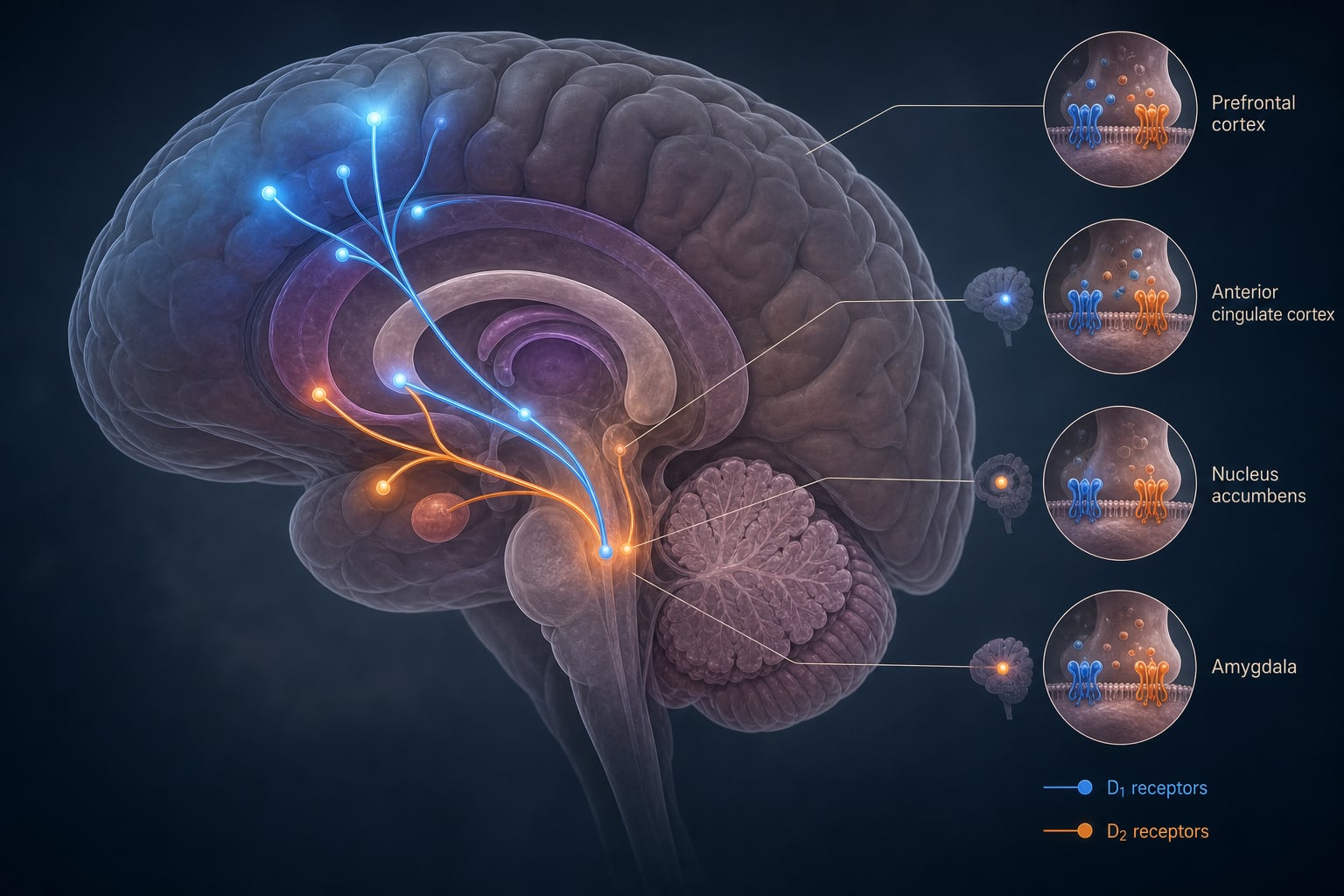
To systematically review the distinct roles of dopamine D1 and D2 receptors in pain regulation across key brain regions, emphasizing the systematic nature of the review.
Key Findings:
D1R and D2R exhibit significant regional heterogeneity and functional complexity in pain regulation, with implications for targeted therapies.
Interpretation:
Dopamine receptor signaling is implicated in chronic pain maintenance, suggesting potential for targeted pain management strategies that address specific receptor functions.
Limitations:
Causal evidence for receptor functions remains limited, particularly in studies exploring interactions between D1 and D2 receptors.
Conclusion:
Further clinical studies are needed to evaluate the efficacy of dopamine receptor-targeted treatments in chronic pain and mood disorders, addressing the identified research gaps.
A small observational study in collegiate football players found microbiome associations after nonconcussive head impacts, though findings were limited by severe underpowering and high attrition