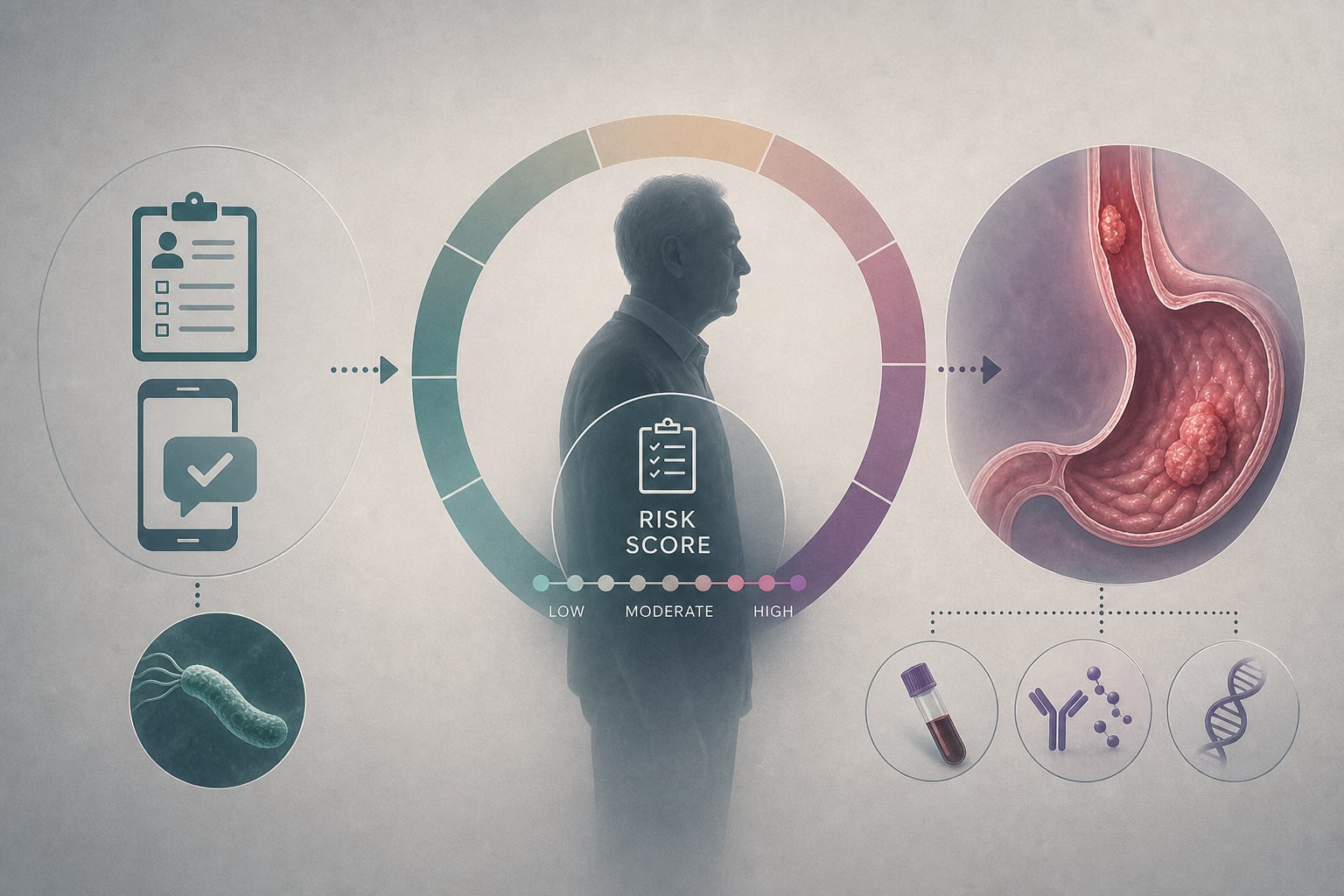
Risk score for esophageal and gastric cancer in the over 50-year-old population based on self-reported information –the RISC-GAP project - Summary - MDSpire
Advertisement
Risk score for esophageal and gastric cancer in the over 50-year-old population based on self-reported information –the RISC-GAP project
To develop a risk-adapted population-based screening program for gastric and esophageal cancer (GEC) using self-reported data from the UK Biobank.
Approach:
Study Sample: Data from the UK Biobank was utilized, focusing on participants aged 50 and above, excluding those with prevalent GEC. A total of 375,280 participants were included for statistical analysis.
Outcome Measurement: The outcome was defined as the diagnosis of gastric or esophageal cancer after the baseline visit, tracked through specific ICD-10 codes.
Statistical Analysis: Cox proportional hazard regression models with LASSO penalization were employed for variable selection to develop the risk score.
Key Findings:
Gastric and esophageal cancers are significant health threats, particularly in older populations.
The study aims to identify high-risk individuals for targeted screening rather than a general screening program.
The risk score (RS1) will be based on easily reportable variables to facilitate broad participation.
Interpretation:
Limitations:
The study is based on self-reported data, which may introduce bias.
The findings are limited to the UK Biobank population and may not be generalizable to other populations.
Conclusion:
The RISC-GAP initiative represents a significant effort to create a risk assessment tool that could lead to more effective screening strategies for gastric and esophageal cancer.