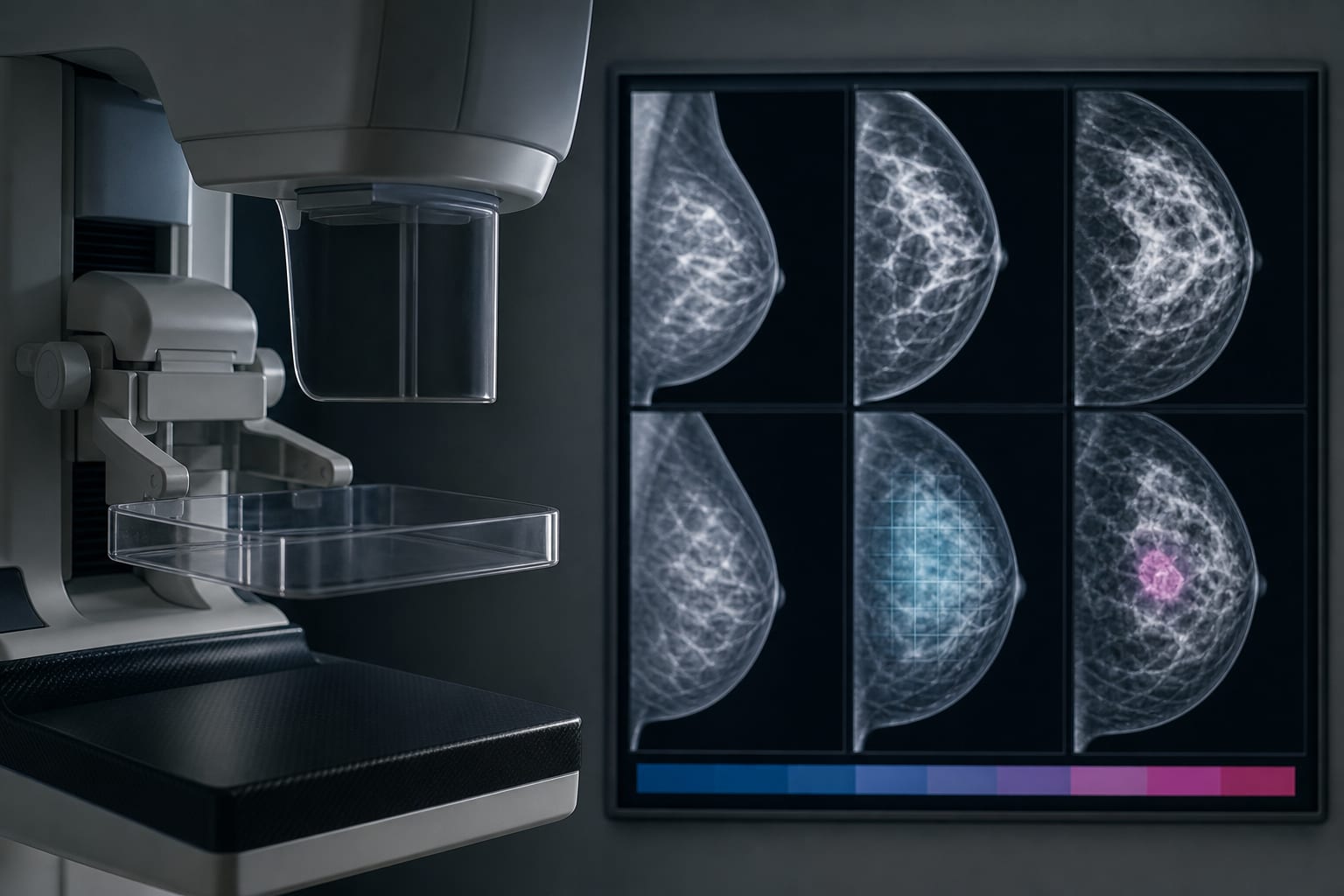
Transforming Imaging Data into Pathological Insights: The Role of AI in Mammographic Risk Assessment and Tumor Biology Understanding - Summary - MDSpire
Advertisement
Transforming Imaging Data into Pathological Insights: The Role of AI in Mammographic Risk Assessment and Tumor Biology Understanding
To evaluate the association of AI-generated risk scores from prior-year screening mammograms with biopsy outcomes, specifically focusing on breast cancer characteristics such as tumor grade and receptor status.
Key Findings:
AI models demonstrated improved performance in breast cancer risk prediction compared to traditional models, indicating a potential shift in clinical practice.
AI-generated risk scores correlated with biopsy-confirmed outcomes and clinical-pathologic features, suggesting a more nuanced understanding of breast cancer risk.
Understanding the relationship between AI risk scores and tumor characteristics enhances clinical trust in AI systems, potentially leading to better patient outcomes.
Interpretation:
The study highlights the potential of AI in improving breast cancer risk assessment and understanding tumor biology, addressing the limitations of traditional models.
Limitations:
The study is retrospective and may be subject to selection bias, which could affect the generalizability of the findings.
The 'black box' nature of AI systems limits the interpretability of risk predictions, posing challenges for clinical application.
The findings may not be generalizable to all populations due to the multicenter design, which may introduce variability in practice.
Conclusion:
AI-generated risk scores can enhance breast cancer risk assessment and provide insights into tumor biology, potentially improving clinical decision-making by offering more accurate risk stratification.