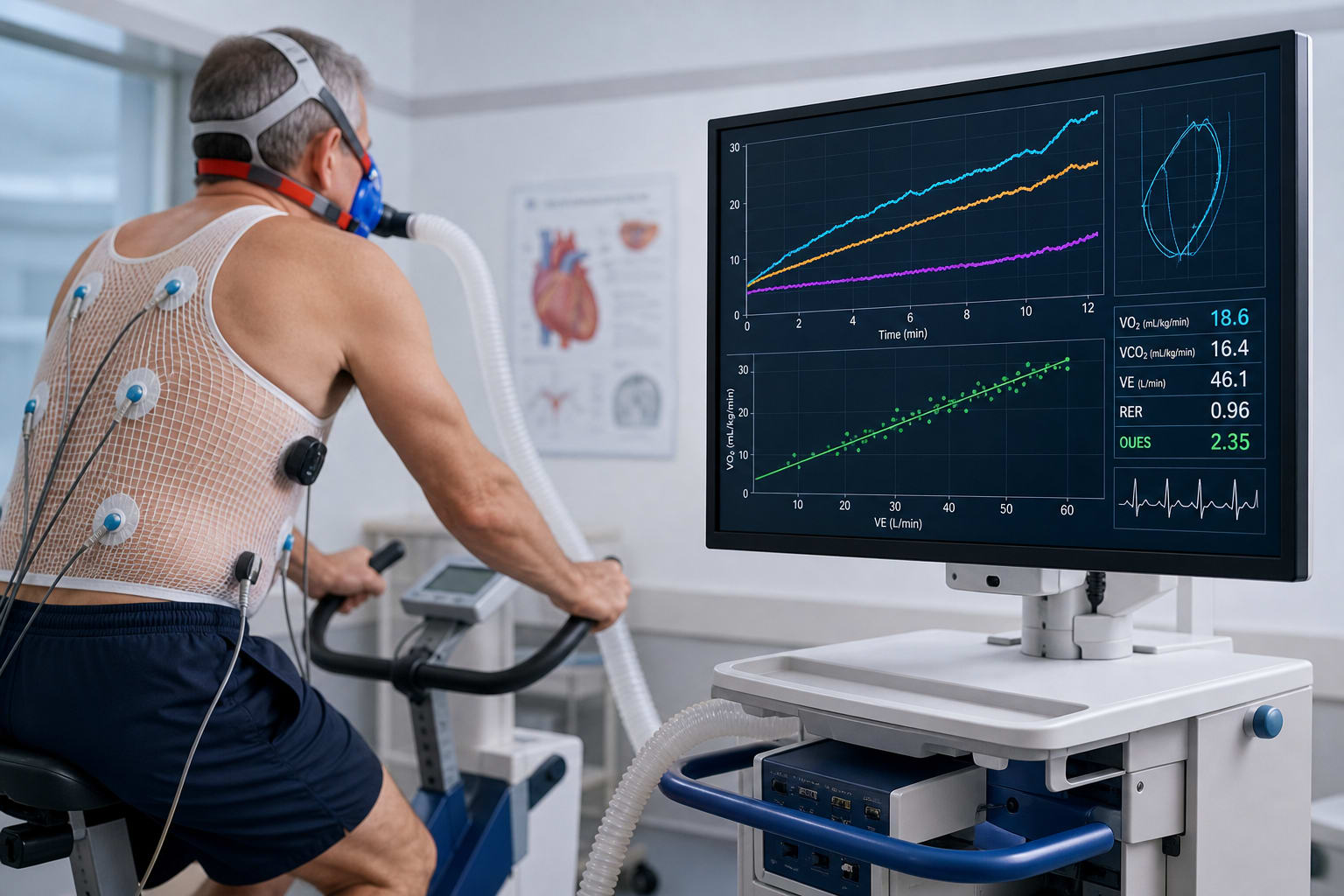
To evaluate the clinical efficacy of a one-month Adaptive Postural Balance Cardiac Rehabilitation (APBCRE) program for patients with cardiovascular disease (CVD) using cardiopulmonary exercise testing (CPET), and to assess the validity of the oxygen uptake efficiency slope (OUES) as a measure of cardiopulmonary rehabilitation outcomes.
Approach:
Program Design: Implemented a one-month exercise rehabilitation program consisting of 12 sessions, held three times a week for 50–70 min each, with direct supervision from certified cardiac rehabilitation nurses and physical therapists.
Testing Methodology: Administered a cardiopulmonary exercise testing (CPET) before and after the program to evaluate changes in exercise metrics.
Key Findings:
Significant improvements in WAT (56.86 ± 25.43 to 71.93 ± 26.64 w, p = 0.0009).
VE at AT improved from 29.64 ± 7.91 to 35.38 ± 12.22 mL/min/kg (p = 0.006).
VO2 at AT increased from 11.74 ± 3.20 to 13.79 ± 3.48 mL/min/kg (p = 0.002).
OUES improved from 1,485.20 ± 377.54 to 1,610.60 ± 419.81 mL/(min·L) (p = 0.035).
Interpretation:
The findings suggest that APBCRE is a potentially effective rehabilitation method for patients with cardiovascular disease, leading to significant improvements in exercise tolerance within one month.
Conclusion:
The OUES was found to be a potentially valuable indicator for assessing changes in cardiorespiratory fitness among young individuals during sports rehabilitation.