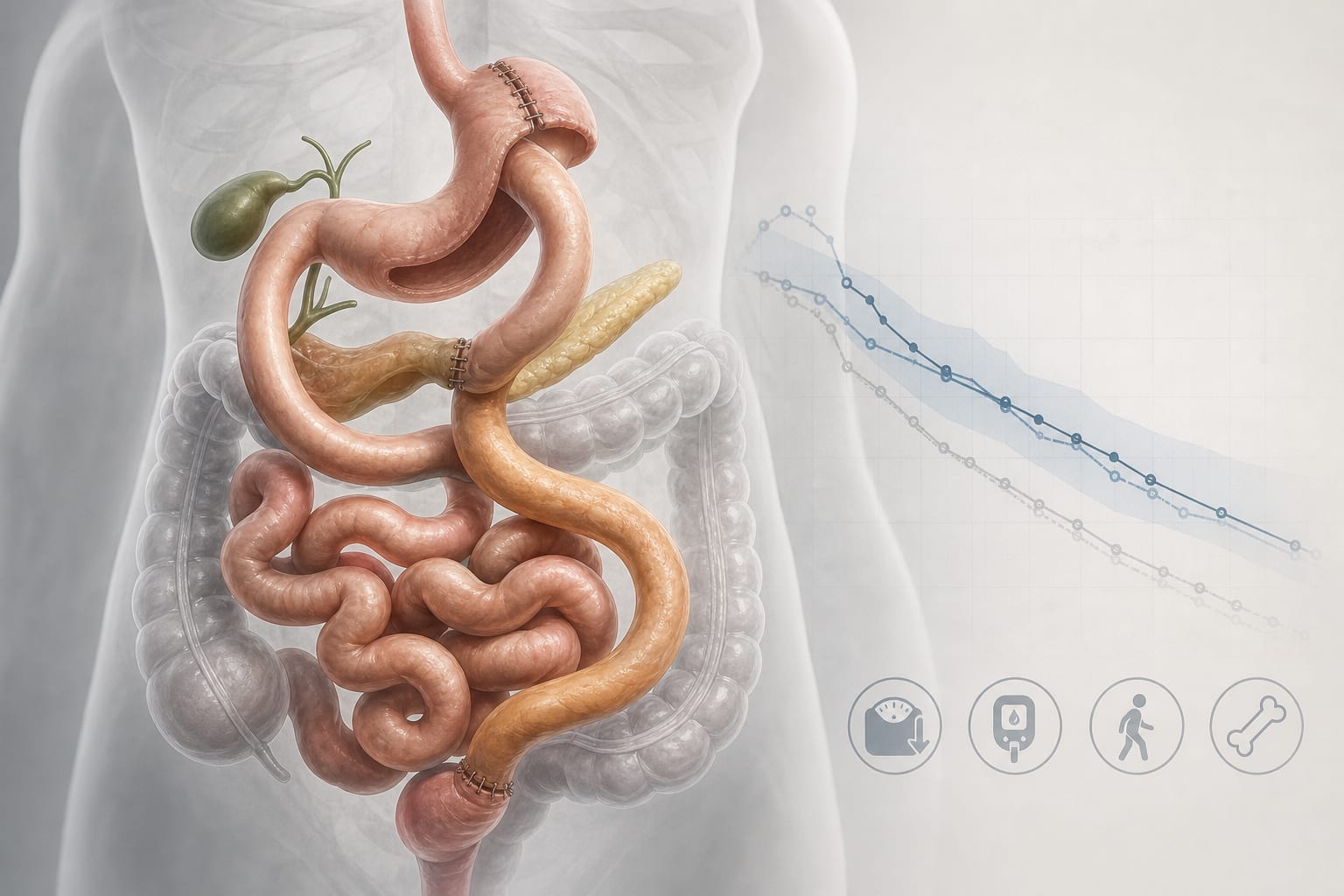
To critically examine the evidence base for hypoabsorptive bariatric surgery, focusing on long-term efficacy and clinical costs, emphasizing the need for a thorough evaluation of its risks and benefits.
Key Findings:
Hypoabsorptive procedures represent less than 3% of bariatric operations in the US despite demonstrating superior weight loss and metabolic comorbidity resolution compared to other common procedures.
Complications occur earlier in frailer patients, with significant predictors including age and nutritional reserves.
Long-term weight loss outcomes show BPD/DS achieving 40.6% %TWL at 24 months, with sustained results over 30 years, indicating durability.
Diabetes remission rates are high post-hypoabsorptive procedures, with 92.8% for DS and 85.7% for SADI-S, suggesting effective metabolic outcomes.
Nutritional complications increase progressively over time, with 74% of patients experiencing complications by 30 years post-BPD, highlighting the need for long-term monitoring.
Interpretation:
Contemporary evidence suggests that hypoabsorptive procedures may have risk profiles comparable to established operations, such as Roux-en-Y gastric bypass, when adjusted for baseline characteristics.
Limitations:
The review is narrative and may not encompass all relevant studies, potentially limiting the comprehensiveness of the findings.
Potential biases in the included studies and their methodologies could affect the reliability of the conclusions drawn.
Conclusion:
Hypoabsorptive bariatric surgery demonstrates remarkable long-term efficacy, but complications, particularly nutritional, accumulate over time, especially in frail patients, necessitating careful patient selection and follow-up.