Effect of training on navigated frameless and frame-based stereotactic brain biopsies: a retrospective comparison of staff neurosurgeon and trainee perioperative performance and complications - Summary - MDSpire
Conexiant’s news site is now MDSpire News. Learn more
Advertisement
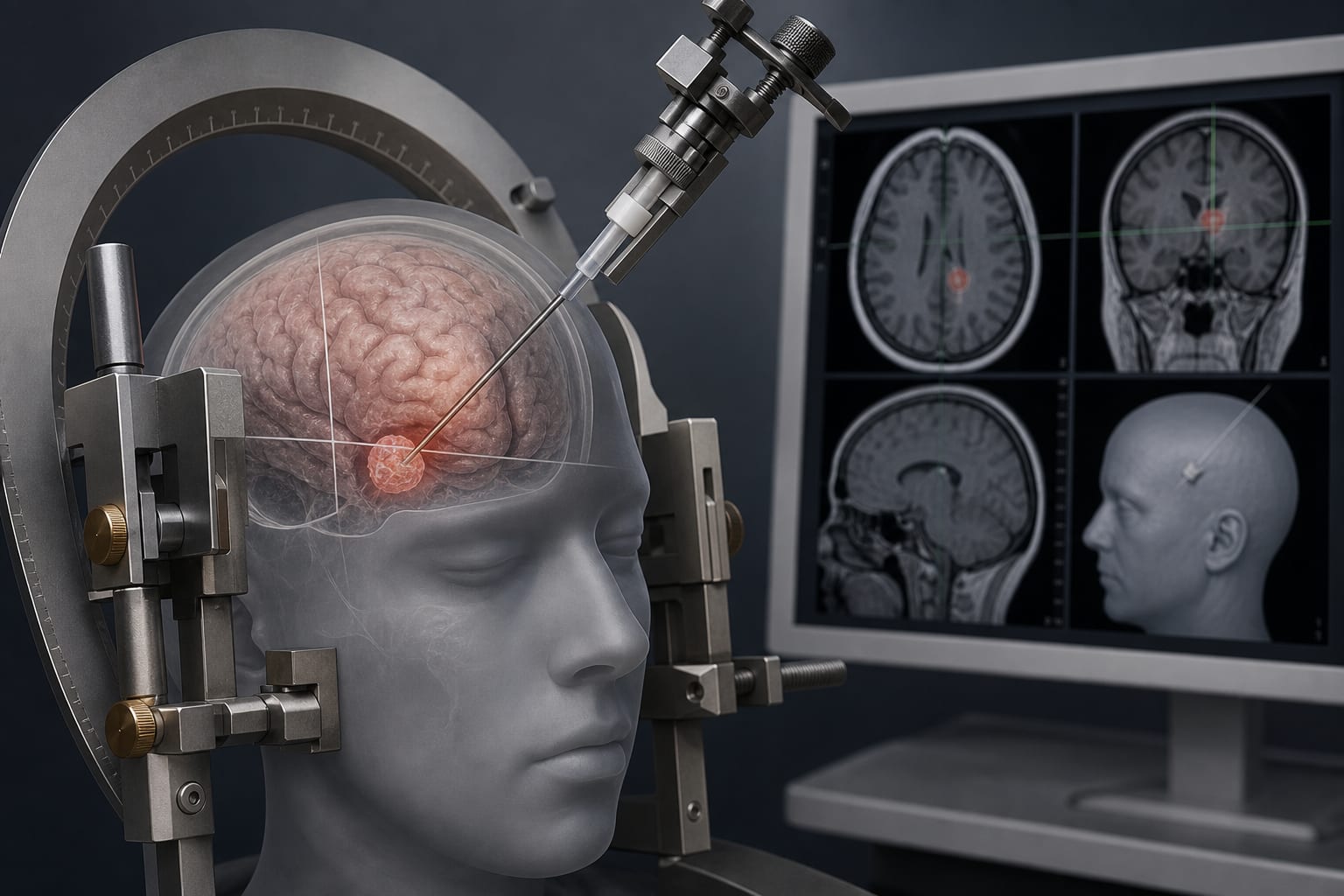
Impact of Training on Performance and Complications in Navigated Frameless versus Frame-Based Stereotactic Brain Biopsies: A Retrospective Analysis of Neurosurgeons and Trainees
To test the null hypothesis that complication rates of procedures performed by supervised residents do not differ from those performed by experienced board-certified faculty neurosurgeons (BCFNs), highlighting the significance of this comparison in surgical training.
Key Findings:
Out of 217 cases, 60 (27.6%) were performed by supervised residents and 157 (72.4%) by BCFNs.
An assistant was present in 100% of trainee cases and 84.7% of BCFN procedures (p < 0.01).
Trainee cohort had a significantly higher average age (67.3 years) compared to BCFN cohort (61.9 years; p < 0.01).
Mean hospitalization time was longer for BCFN group (12.5 days) than for trainee group (7.52 days; p = 0.015).
Interpretation:
The study suggests that supervised residents can perform brain biopsies with comparable safety to experienced neurosurgeons, although further analysis is needed to fully understand the implications of the findings, particularly regarding long-term outcomes and patient safety.
Limitations:
Retrospective design may introduce bias, including selection bias and reporting bias.
Sample size may limit the generalizability of findings, particularly in diverse patient populations.
Conclusion:
The study provides insights into the safety of resident-performed brain biopsies under supervision, highlighting the need for further research in this area to ensure optimal training and patient outcomes.
In this procedural case review, vascular surgeon Dr. Samuel Steerman and neurosurgeon Dr. Shannon Clark collaborate to perform an anterior lumbar interbody fusion (ALIF).