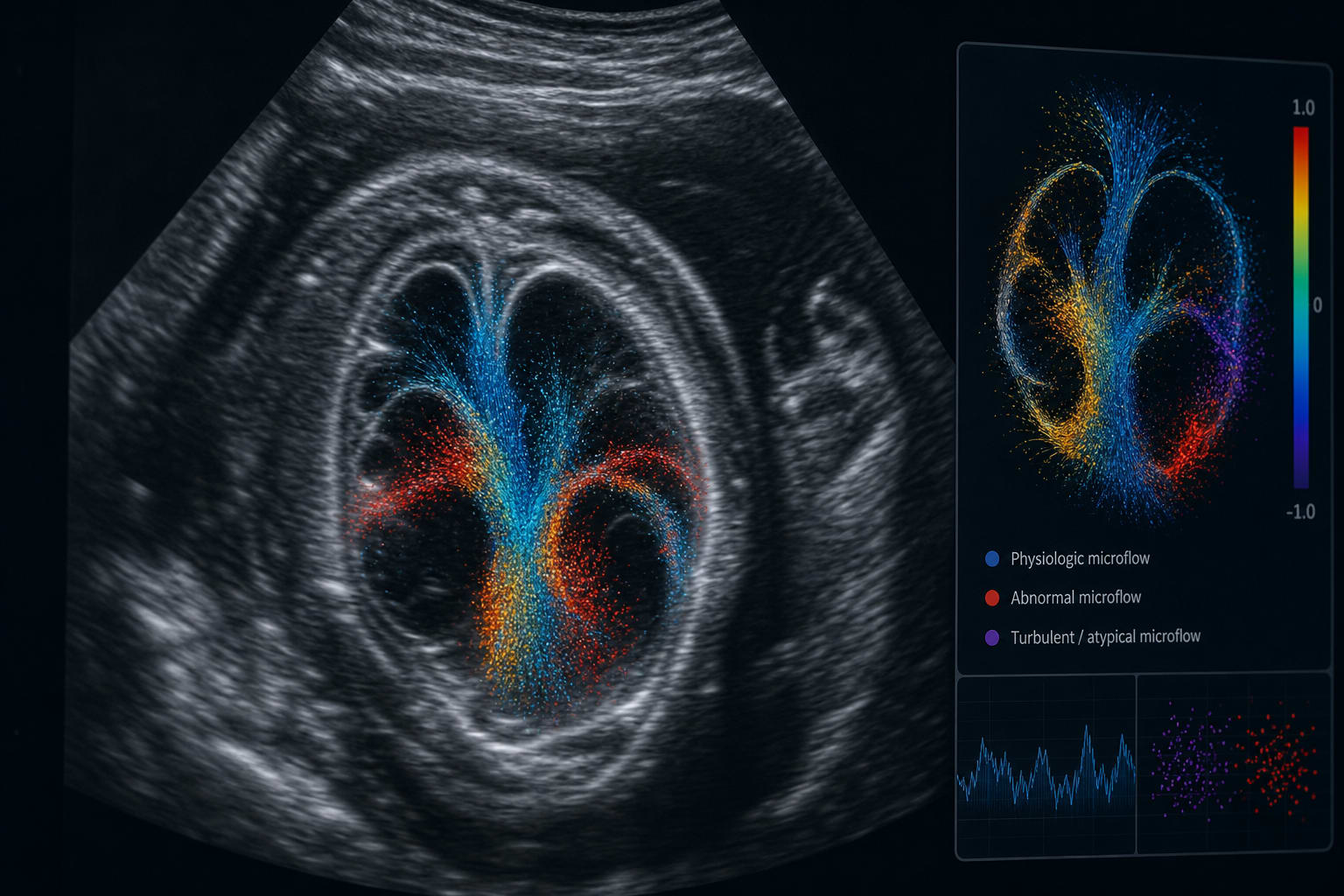
uFlowAM: an unsupervised framework for detection and visualization of abnormal intracardiac microflow on early-pregnancy fetal cardiac microflow imaging - Summary - MDSpire
Advertisement
uFlowAM: an unsupervised framework for detection and visualization of abnormal intracardiac microflow on early-pregnancy fetal cardiac microflow imaging
To evaluate uFlowAM for fetus-level detection and visualization of abnormal intracardiac microflow patterns on early-pregnancy FCMI.
Approach:
Study Design: Multicenter diagnostic accuracy study analyzing 650 early-pregnancy FCMI examinations from fetuses referred for suspected CHD or CHD risk assessment.
Methodology: Standard clips were processed using microflow extraction, cardiac-cycle alignment, and self-supervised training to learn control fetal microflow patterns.
Validation: Internal validation was performed to calibrate the operating threshold, followed by external testing and clinical utility assessment in a multi-reader multi-case study.
Key Findings:
uFlowAM achieved an AUC of 0.94 in the internal cohort and 0.92 in the external cohort.
Sensitivity was 0.92 and specificity was 0.88 in the internal cohort; sensitivity was 0.90 and specificity was 0.86 in the external cohort.
Median reader-level AUC increased from 0.85 to 0.92 with uFlowAM assistance.
Weighted kappa for subtype agreement increased from 0.62 to 0.78.
Median reading time decreased from 78 seconds to 59 seconds.
Interpretation:
uFlowAM detected abnormal early-pregnancy fetal cardiac microflow patterns and improved reader consistency and efficiency.
Limitations:
The framework should not replace a complete fetal echocardiographic examination.
Examinations were excluded for severe fetal or maternal motion artifact and other quality issues.
Conclusion:
uFlowAM is proposed as an assistive second-reader tool for early fetal CHD assessment.