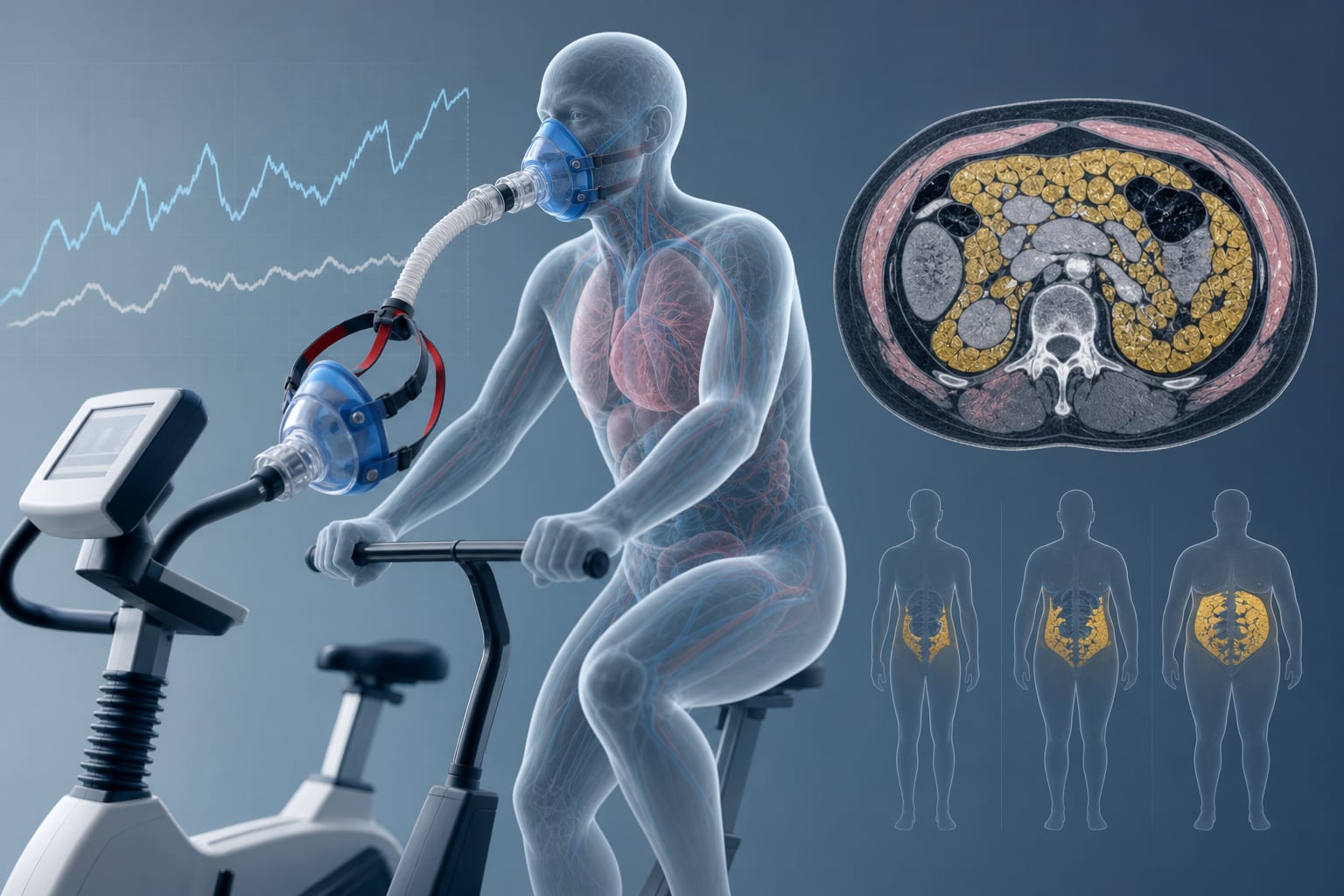
To investigate Cardiorespiratory Fitness indicators in populations with different glucose metabolism statuses and analyze their correlation with body composition, highlighting the significance of these relationships in clinical settings.
Key Findings:
Significant differences in various health indicators among Normal Glucose Tolerance, Prediabetes, and Diabetes Mellitus groups (P < 0.05).
Age, BMI, FPG, HDL-C, VFA, and skeletal muscle mass were identified as independent influencing factors for maximal VO2/kg, explaining 50.9% of the variance.
Interpretation:
The findings may provide a basis for identifying high-risk populations with declining Cardiorespiratory Fitness among individuals with abnormal glucose metabolism, suggesting targeted interventions.
Limitations:
Study limited to individuals free from diabetes mellitus, which may affect the applicability of results to broader populations.
Retrospective design may introduce bias, and the sample may not represent all demographics.
Conclusion:
Age, BMI, FPG, HDL-C, VFA, and skeletal muscle mass significantly influence maximal VO2/kg, underscoring the importance of body composition in assessing Cardiorespiratory Fitness and guiding clinical interventions.
In a target-trial emulation of more than 600,000 veterans, GLP-1 RA initiators saw fewer new substance use disorders—and patients with existing SUDs had fewer overdoses, hospitalizations, and deaths.