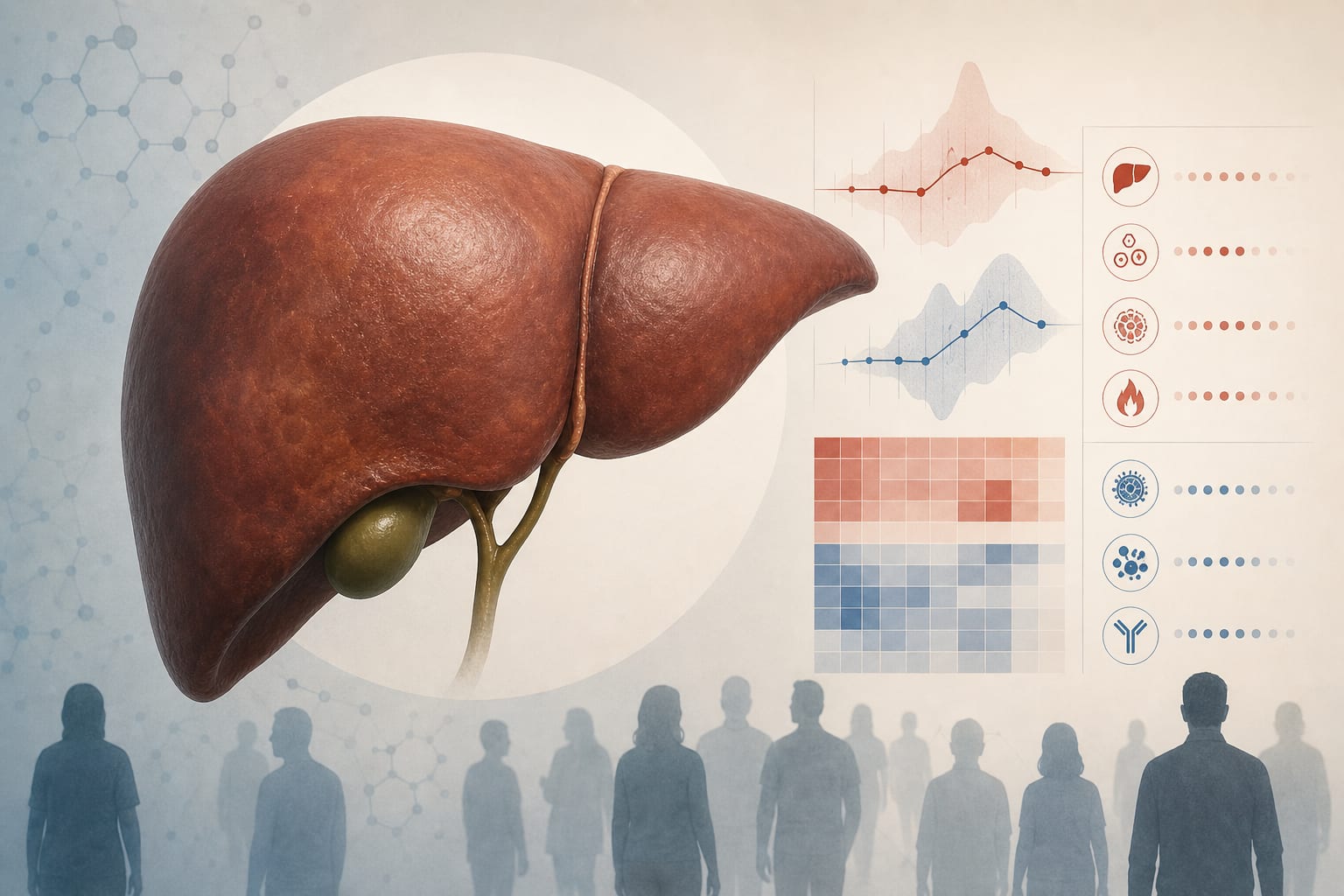
To investigate the metabolic and inflammatory profiles associated with borderline liver enzyme elevations in adult outpatients.
Key Findings:
Hepatocellular pattern associated with higher ferritin, serum iron, and lower AST/ALT ratio; ferritin was the only independent correlate.
Cholestatic pattern associated with higher HbA1c, higher systemic immune-inflammation index (SII), and lower transferrin saturation (TSAT); HbA1c, SII, and TSAT were independent predictors.
Interpretation:
Persistent borderline liver enzyme elevation can be stratified into distinct subphenotypes, with specific metabolic and inflammatory associations that may enhance outpatient management.
Limitations:
Findings are hypothesis-generating and require longitudinal validation, particularly due to limited events-per-variable in full models, especially for SII.
Conclusion:
A pattern-based approach to borderline liver enzyme elevation, particularly using sex-specific reference ranges, may enhance outpatient management by identifying distinct metabolic and inflammatory profiles.