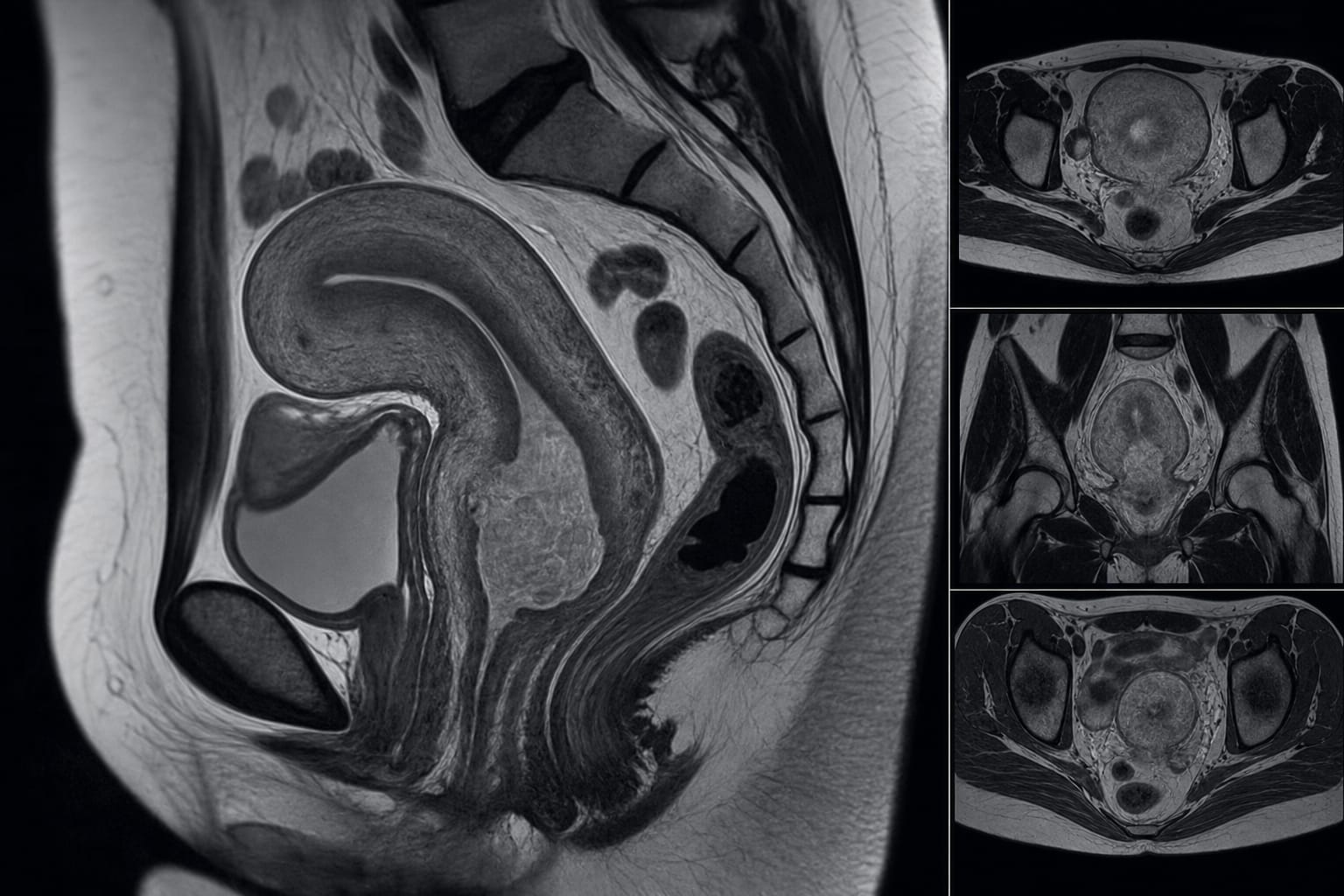
To provide guidelines for the use of MRI in the assessment and treatment planning of cervical and endometrial cancers.
Approach:
Cervical Cancer: MRI is recommended for assessing local tumor extent, confirming eligibility for fertility-sparing surgery, and evaluating tumor characteristics.
Endometrial Cancer: MRI should be utilized to evaluate myometrial invasion and cervical stromal involvement, particularly before fertility-sparing treatments.
Indeterminate Myometrial Lesions: MRI is the preferred imaging modality for differentiating uterine leiomyomas from leiomyosarcomas.
Key Findings:
MRI is mandatory for assessing local tumor extent in cervical cancer and confirming eligibility for fertility-sparing surgery (level of evidence: moderate).
In endometrial cancer, MRI is essential for evaluating myometrial invasion and cervical stromal involvement (level of evidence: high).
MRI is the imaging modality of choice for indeterminate myometrial lesions, such as differentiating uterine leiomyomas from leiomyosarcomas (level of evidence: high).
Interpretation:
The guidelines emphasize the role of MRI in staging and treatment planning for uterine cancers, highlighting specific imaging features that influence management decisions.
Limitations:
The guidelines do not address the use of other imaging modalities such as FDG-PET in detail.
The evidence levels for recommendations vary, with some being moderate and others high.
Conclusion:
Adherence to the ESUR guidelines for MRI in uterine cancers is strongly recommended to optimize treatment planning.