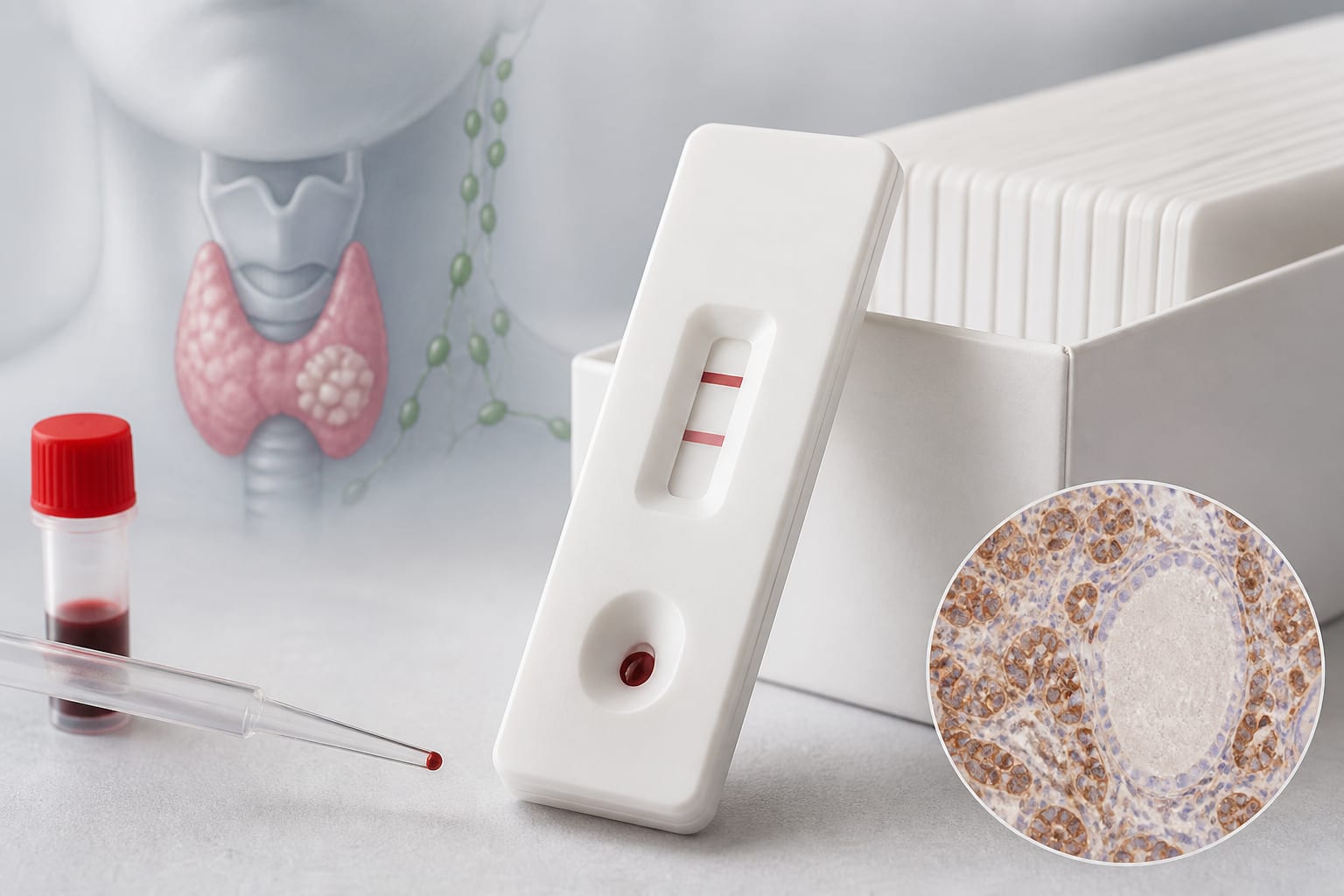
To develop a novel colloidal gold immunochromatographic assay (CGICA) for the rapid detection of thyroglobulin, facilitating the diagnosis of lymph node metastasis in differentiated thyroid carcinoma (DTC).
Approach:
Sample Collection: 185 serum samples and 120 lymph node samples were collected from patients scheduled for thyroid lateral neck lymph node resection or biopsy.
Assay Methods: The CGICA method was compared with the traditional Roche electrochemiluminescence immunoassay (ECLIA) using paraffin pathology results as the gold standard.
Key Findings:
The CGICA method showed comparable performance to the Roche ECLIA method in detecting serum samples (r=0.996).
In lymph node specimens, CGICA demonstrated greater sensitivity (90%) compared to Roche ECLIA (86.25%).
CGICA provided diagnostic accuracy similar to intraoperative frozen section histopathology.
Interpretation:
The CGICA method facilitates rapid quantification of thyroglobulin, aiding in the swift identification of cervical lymph node metastases in thyroid cancer patients.
Limitations:
The study was conducted in a single center, which may limit generalizability.
Further validation in larger, multi-center studies is needed.
Conclusion:
The CGICA method is effective for detecting thyroglobulin and may enhance the preoperative assessment of lymph node metastasis in DTC.
An updated clinical practice guideline from the American Society for Radiation Oncology substantially expands and modernizes recommendations for the use of radiation therapy in pancreatic cancer.