BCOR-CCNB3 fusion–positive sarcoma treated with chemotherapy and carbon-ion radiotherapy: a case report of long-term disease control of a cervical spine case with a 12-year follow-up - Summary - MDSpire
Conexiant’s news site is now MDSpire News. Learn more
Advertisement
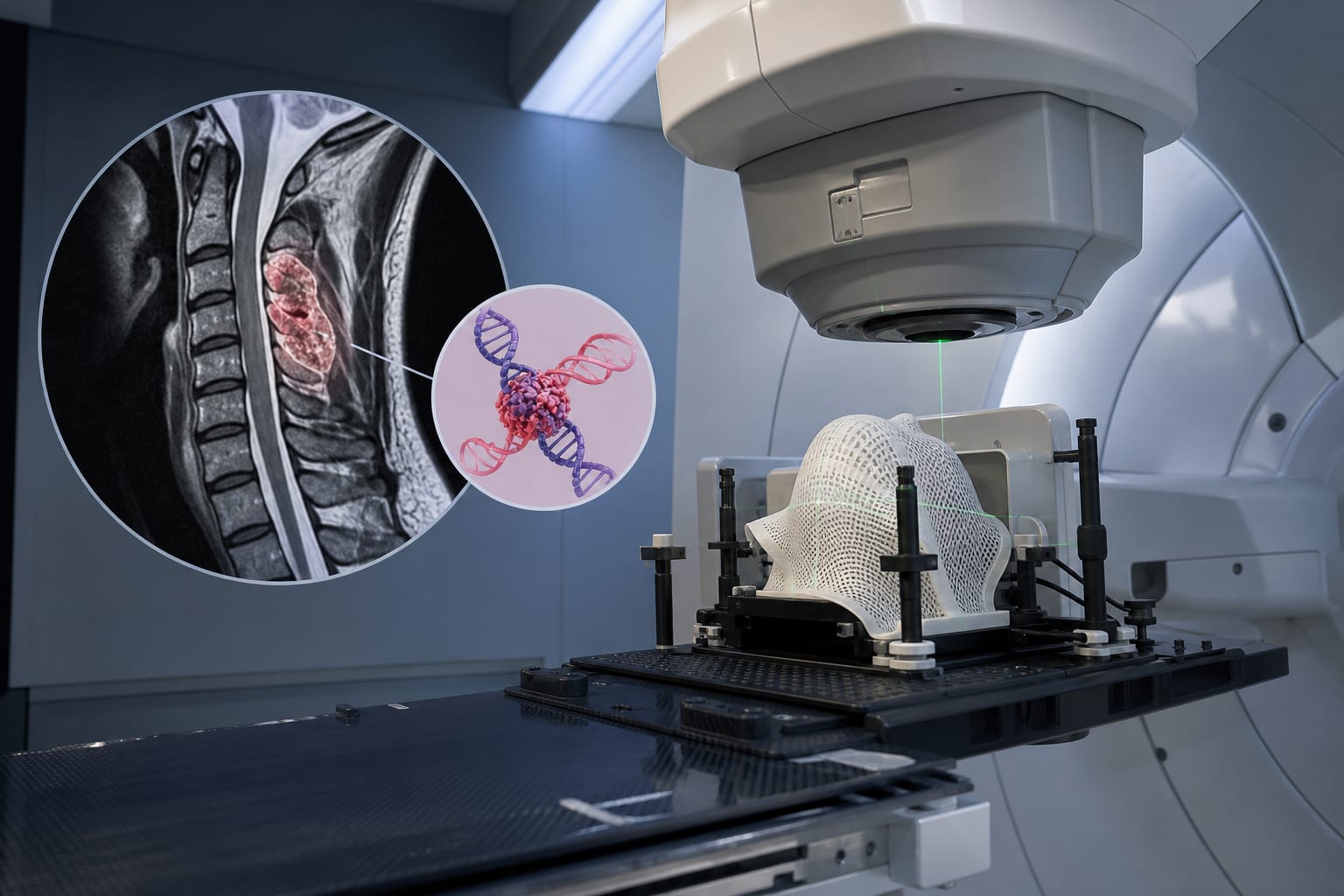
Management of BCOR-CCNB3 Fusion-Positive Sarcoma with Chemotherapy and Carbon-Ion Radiotherapy: A Case Study Highlighting Long-Term Disease Control in a Cervical Spine Patient Over 12 Years
To report a case of BCOR–CCNB3 fusion-positive sarcoma (BCS) treated with chemotherapy and carbon-ion radiotherapy (CIRT), highlighting long-term disease control and the first reported use of CIRT for this condition.
Approach:
Key Findings:
The patient achieved complete response (CR) after treatment.
No neurological deficits or tumor recurrence were observed over 12 years.
Cervical kyphosis was noted radiographically.
Genetic analysis confirmed the presence of the BCOR–CCNB3 fusion gene.
Interpretation:
This case suggests that CIRT may be a promising treatment option for BCS when surgical resection is challenging, marking a significant advancement in treatment options.
Limitations:
The rarity of BCS limits the generalizability of findings.
Long-term outcomes for BCS involving the spine are not well documented, and specific studies on CIRT for BCS are lacking.
Conclusion:
CIRT combined with chemotherapy may provide durable local control in BCS, as demonstrated in this case.
An updated clinical practice guideline from the American Society for Radiation Oncology substantially expands and modernizes recommendations for the use of radiation therapy in pancreatic cancer.